Quick AnswerFood delivery license Dubai 2026 — cloud kitchen vs restaurant licence, AED 25,000-80,000 cost, Talabat/Careem onboarding, real economics.
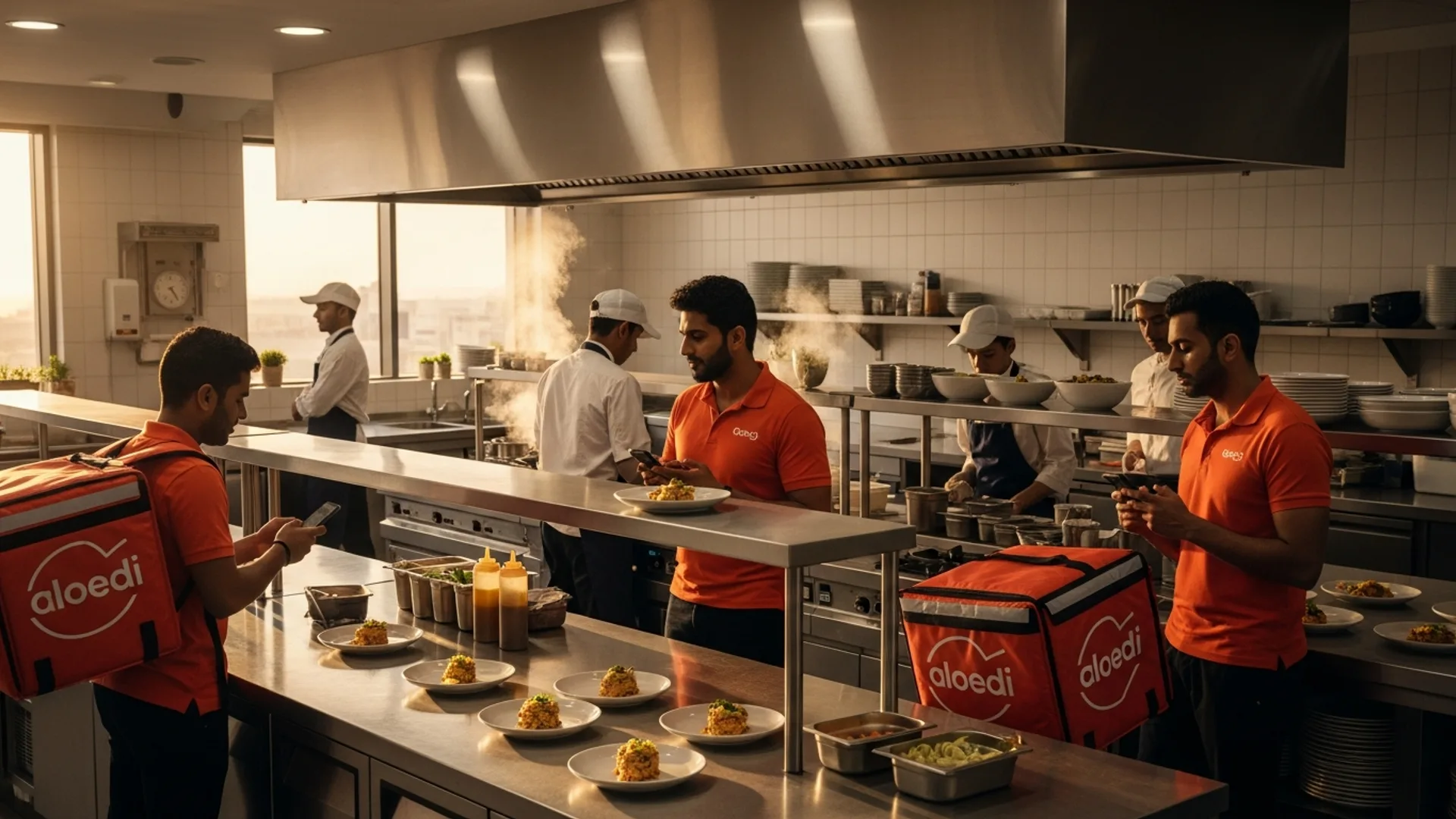
The Dubai food delivery business is one of the fastest-growing and most competitive segments in the local economy. Cloud kitchens have transformed the entry barrier for new food entrepreneurs by eliminating the cost of physical restaurant space while keeping the core economic model intact. This guide covers the actual licensing path, realistic costs, platform onboarding process, and the unit economics that determine which delivery operations survive and which fail in 2026.
Your setup cost, in 10 seconds
Package prices. Health insurance is required by law and not included.
Thank you.
Your written quote follows on WhatsApp.
What food delivery business actually means in Dubai 2026
Dubai's food delivery ecosystem spans multiple models:
Traditional restaurant with delivery: Established dine-in restaurant adding delivery channels via Talabat, Careem, Deliveroo. Delivery is incremental revenue.
Cloud kitchen (single brand): Delivery-only food business with no dine-in. One brand operating from a dedicated kitchen space. Lower cost than full restaurant.
Cloud kitchen (multi-brand): Single kitchen operating multiple delivery brands. Each brand has separate menu, branding, platform listing, but shares kitchen infrastructure.
Ghost kitchen rental: Shared commercial kitchen facilities (like Kitopi, City Storage Systems) renting kitchen space to multiple operators. Cheapest entry path.
Direct-to-consumer delivery: Independent operations using own website + WhatsApp + own delivery (no platform commission). Niche and small-scale typically.
The Dubai Department of Economy and Tourism (det.gov.ae) handles trade licensing. Dubai Municipality handles food safety permits. Dubai Civil Defence handles fit-out approvals.
Licensing path
Step 1 — DET Dubai trade licence
Apply for commercial licence with activity classification:
- "Restaurant" (for sit-down restaurants)
- "Cloud kitchen" or "Kitchen Only" (for delivery-only)
- "Food preparation" (for catering-style operations)
- Multiple activities possible
Cost: AED 15,000-30,000 for the licence depending on activity.
Step 2 — Premises lease
Cloud kitchens typically lease industrial or commercial kitchen space. Options:
- Shared cloud kitchen (Kitopi, CSS, others): AED 5,000-15,000/month rental, equipment included
- Independent commercial kitchen: AED 15,000-50,000/month lease, fit-out required
- Industrial area space (Al Quoz, Dubai Investment Park): AED 50,000-150,000+ annual
Ejari registration mandatory.
Step 3 — Dubai Municipality food safety
Mandatory for any food business. Requirements:
- Food Safety Manager (PIC certified)
- Kitchen layout meeting hygiene standards
- HACCP compliance
- Pest control contract
- Cleaning protocols documented
- Annual inspections
Cost: AED 3,000-8,000 + ongoing compliance.
Step 4 — Civil Defence approval
Kitchen layout reviewed for fire safety. Critical for any food operation with gas appliances, deep frying, or grill equipment.
Cost: AED 2,000-5,000 + any modifications.
Step 5 — Establishment card and visas
Standard process. Staff visas needed for cooks, helpers, delivery coordinators.
Cost: AED 2,000 establishment card + AED 4,500-6,500 per staff visa.
Step 6 — Platform onboarding
Apply to Talabat, Careem, Deliveroo, NoonFood. Documentation:
- Trade licence and Municipality permit
- Menu and pricing
- Photos of food and packaging
- Operating hours
- Delivery area definition
Onboarding 2-4 weeks per platform typically.
Full cost breakdown — single-brand cloud kitchen
Realistic year-1 cost for an independent single-brand cloud kitchen in mid-tier Dubai location:
| Item | Cost (AED) |
|---|---|
| DET trade licence (Cloud Kitchen activity) | 22,000 |
| Trade name + initial | 1,500 |
| Establishment card | 2,000 |
| Dubai Municipality food safety | 5,000 |
| Civil Defence approval | 3,500 |
| Commercial kitchen lease (year) | 60,000 |
| Ejari | 220 |
| Kitchen fit-out and equipment | 80,000 |
| Initial inventory and supplies | 25,000 |
| 3 staff salaries (cooks + helper, year 1) | 130,000 |
| Visa fees (3 staff) | 16,500 |
| Utilities + gas (year) | 30,000 |
| POS and kitchen management system | 8,000 |
| Branding, packaging, photography | 18,000 |
| Platform onboarding (free, but operational setup) | 0 |
| Marketing first 3 months | 30,000 |
| Insurance | 8,000 |
| Working capital reserve | 50,000 |
| Year 1 total realistic | AED 489,720 |
For shared cloud kitchen entry (Kitopi, CSS, similar):
| Item | Cost (AED) |
|---|---|
| DET trade licence | 22,000 |
| Establishment card + visa | 7,500 |
| Shared kitchen rental (year, monthly AED 8,000) | 96,000 |
| Branding and menu setup | 12,000 |
| Initial inventory | 8,000 |
| Marketing first 3 months | 20,000 |
| Working capital | 30,000 |
| Year 1 total (shared kitchen) | AED 195,500 |
Shared kitchen route is faster, cheaper, lower-risk for testing concepts. Independent kitchen is better for scaling proven concepts.
Contact Us For Free Consultation
or
Ask on WhatsApp insteadLicensed UAE consultancy. One reply, no spam.
Thank you.
A consultant will reply on WhatsApp shortly.
Unit economics
Average order economics for Dubai cloud kitchens 2026:
| Component | Value | Notes |
|---|---|---|
| Average order value (AOV) | AED 65-95 | Varies by cuisine |
| Customer pays | AED 65-95 | Plus delivery fee |
| Platform commission (Talabat, etc.) | -28% to -35% | After negotiation |
| Food cost | -25% to -35% | Of revenue |
| Packaging cost | -3% to -5% | Of revenue |
| Operations (rent, staff, utilities) | -20% to -30% | Allocated per order |
| Net margin per order | 5-15% | Varies by efficiency |
A successful cloud kitchen doing 80-150 orders daily generates AED 5,200-14,250 daily revenue. Net margin 5-15% means AED 260-2,140 net per day. Multi-brand operations can multiply revenue without proportionally multiplying costs.
Failed operations typically have:
- AOV too low to cover platform commission and food cost
- Order volume below operational break-even
- High operational costs disproportionate to revenue
- Marketing spend not generating sustainable orders
Platform comparison — Talabat, Careem, Deliveroo, NoonFood
Talabat:
- Largest UAE platform share (~50%+)
- Commission 25-35%
- Strong UAE brand awareness
- Aggressive growth incentives for new restaurants
- Most demanding on operational reliability
Careem Food (Uber-owned):
- Second largest share
- Commission 25-32%
- Integration with Careem ride-hailing
- Stable platform
Deliveroo:
- Premium positioning
- Commission 28-35%
- Higher AOV typically
- Stronger Western/expat customer base
- Quality-focused customer expectations
NoonFood:
- Newer platform, growing
- Commission 22-30%
- Aggressive promotion of new restaurants
- Smaller market share but gaining
Successful cloud kitchens typically list on all four platforms. Multi-platform strategy maximises reach while accepting commission cost on each.
Multi-brand cloud kitchen strategy
The dominant cloud kitchen model in 2026 is multi-brand from single kitchen:
Example multi-brand operation:
- Single kitchen lease AED 60,000/year
- Brand 1: "Mumbai Spice" — Indian cuisine
- Brand 2: "Beirut Express" — Lebanese
- Brand 3: "Tokyo Bowl" — Japanese rice bowls
- Brand 4: "Mediterranean Grill" — Mediterranean salads
Each brand operates as separate listing on Talabat, Careem, etc. Customers see distinct restaurants. Kitchen operates with shared staff but separate menu execution.
Economic advantages:
- Fixed costs spread across multiple revenue streams
- Cross-pollination of customer attention
- Lower risk per brand (one failure doesn't kill operation)
- Higher revenue per kitchen sqft
Operational challenges:
- Menu complexity affects kitchen flow
- Brand differentiation requires effort
- Customer service complexity
- Quality consistency across brands
Multi-brand is the proven model in 2026. Most successful Dubai cloud kitchen operators run 3-6 brands per location.
Common Mistakes founders make in food delivery
Mistake 1: Underestimating platform commission impact. 25-35% commission is brutal. Pricing must absorb this and still leave margin. Many new entrants price at retail levels then watch margins evaporate.
Mistake 2: Poor packaging. Cheap packaging that leaks or destroys food destroys customer reviews. Spend on proper packaging.
Mistake 3: Slow kitchen execution. Delivery customers expect 30-45 minute total time. Kitchen prep over 20 minutes kills the operation. Optimise for speed.
Mistake 4: Wrong menu for delivery. Some dishes travel poorly. Soups, crispy items, delicate plating — these arrive looking different than the menu photo. Design menu for delivery, not for dine-in.
Mistake 5: Inadequate marketing budget. Platform algorithms favour restaurants with established order volume. Initial paid promotion and platform-paid placements are critical to scale.
Mistake 6: Single platform dependency. Talabat changes commission, you have no leverage. Multi-platform is risk management.
Mistake 7: Poor unit economics tracking. Many operators don't actually know their true cost per order. Track rigorously.
Mistake 8: Misaligned brand and price point. Premium branding at budget prices confuses customers. Budget branding at premium prices fails to attract premium customers. Align positioning.
Marketing for food delivery
Marketing channels for cloud kitchens:
Platform sponsorships: Paid placement within Talabat/Careem app. Often necessary for visibility in crowded markets.
Social media: Instagram, TikTok for food content. Visual platform fit.
Influencer partnerships: Food influencers reviewing new brands. UAE has strong food influencer ecosystem.
Email/SMS retention: Customer database from platforms, retention campaigns.
Direct ordering: WhatsApp business, own website. Saves commission but lower volume.
Cross-promotion: Partner with complementary businesses (gyms, offices) for B2B catering and lunch programs.
Most successful cloud kitchens spend 8-15% of revenue on marketing once established. New launches may spend 20-30% during scaling phase.
What changes for free zone vs mainland
Food delivery is mandatorily mainland — kitchen requires Dubai Municipality food safety permit which is mainland-jurisdiction. Free zone licences don't qualify. Always DET Dubai for restaurant/cloud kitchen activities.
What changes for foreign vs UAE-resident founders
100% foreign ownership applies. Same setup process. Practical advantage to having UAE-resident operations manager familiar with:
- Dubai Municipality processes
- Talabat/Careem account management
- Local supplier relationships
- Staff hiring (often Indian/Pakistani/Filipino kitchen staff)
Foreign owners can fully own and operate but benefit from local operational expertise during ramp.
VAT and corporate tax
Food delivery subject to standard UAE tax:
- VAT 5% mandatory above AED 375,000 revenue
- Corporate tax 9% above AED 375,000 profit
- VAT registration relatively early for most operations
- Most platforms charge VAT-inclusive consumer pricing
- Proper VAT structuring on commission is critical
Plan AED 15-30k annually for accounting and compliance.
Year 1 ramp expectations
Realistic ramp for new cloud kitchen:
- Month 1-2: Launch phase. AED 30-80k revenue. Operating loss.
- Month 3-4: Initial traction. AED 80-180k revenue. Near break-even.
- Month 5-6: Scaling. AED 150-300k revenue. Profitable.
- Month 7-12: Growth phase. AED 200-500k+ revenue. Solid profitability.
Many cloud kitchens never reach month 6 due to inadequate marketing or wrong unit economics. The 6-month survival threshold is critical.
Specific operational considerations for new cloud kitchen operators
The operational reality of running a cloud kitchen differs substantially from running a traditional restaurant. There are no walk-in customers to absorb mistakes. Every order is a delivery order with a customer who never sees the kitchen. The customer's entire experience comes through packaging, food quality on arrival, and platform reviews. This shifts the operational priorities significantly.
Kitchen execution speed becomes paramount. From order receipt to handoff to delivery driver should typically complete within 12 to 18 minutes for the operation to maintain platform performance metrics. Slower kitchens get demoted in platform algorithms, receiving fewer orders. The kitchen flow design needs to be optimised for this speed from the menu engineering through cooking station layout through packaging stations.
Packaging quality and presentation become the entire physical brand experience. Cheap packaging that leaks, deforms, or arrives looking unprofessional creates negative reviews that compound. Investment in proper packaging is not optional — it's a critical operational expense. Most successful cloud kitchens budget 4 to 6 percent of revenue for packaging.
Food preparation consistency matters enormously. The customer ordering pad thai tonight expects identical quality to the pad thai they ordered last week. Variation in cooking, portion sizes, or ingredient quality creates customer disappointment that shows up in platform ratings within days. Standardisation of recipes, portion controls, and quality checks becomes essential operational discipline.
Platform algorithm management is its own discipline. Each platform has metrics that determine listing prominence — order acceptance rate, order completion rate, customer ratings, response time. Operators who treat these metrics seriously consistently outperform operators who treat platforms as passive sales channels. Promotional placement, sponsored listings, and platform-specific campaigns require dedicated attention.
Staff training and retention shapes operational quality. Kitchen staff turnover is high in Dubai F&B generally. Cloud kitchens with high turnover face quality consistency issues. Investing in proper training, reasonable working conditions, and retention measures pays back through operational stability. The cheapest staff approach typically produces the most expensive operational problems.
Supply chain reliability affects daily operations. Ingredient supplier issues, packaging supplier delays, or equipment failures all cascade into customer impact. Building relationships with backup suppliers and maintaining buffer inventory protects against single-supplier dependency.
Marketing investment beyond setup phase remains essential. Platform listings alone rarely drive sustainable order volume. Ongoing promotional spend, social media presence, and brand building keep order volume growing rather than declining. Many cloud kitchens make the mistake of cutting marketing once launched, then watch order volume erode over subsequent months.
Honest framing for cloud kitchen entrepreneurs
The Dubai cloud kitchen market in 2026 rewards disciplined operators and punishes casual entries. The casual approach of cheap setup combined with hope-based scaling rarely produces sustainable outcomes in the current competitive environment. Successful operators consistently demonstrate four characteristics that distinguish them from struggling competitors.
The first is adequate capitalisation. Cloud kitchens that survive past month six typically committed AED 300,000 to AED 700,000 total available capital, including marketing reserve and working capital. Undercapitalised operations consistently fail during the difficult middle months when initial promotional momentum fades and sustained marketing investment becomes essential.
The second is operational discipline. Successful operators track unit economics weekly, monitor platform metrics daily, manage kitchen execution speed rigorously, and respond to customer feedback systematically. Casual operators treat operations as a passive afterthought and watch quality erode while wondering why orders decline.
The third is differentiated positioning. Successful operators identify specific niches or customer segments rather than competing on generic offerings. Whether by cuisine specialisation, dietary positioning (healthy, keto, vegan), customer demographic targeting, or operational model (premium ingredients, family-portion focus), differentiation enables sustainable customer acquisition.
The fourth is sustained marketing investment. Cloud kitchen success requires continuous marketing across platform sponsored placements, social media presence, influencer partnerships, and retention campaigns. Operators who cut marketing budget after launch watch order volume decline systematically. Marketing is operational expense, not setup expense.
These four characteristics are not luck. They are choices that founders make consistently or inconsistently. Founders who invest in all four consistently outperform founders who optimise one or two while neglecting others. The Dubai cloud kitchen market is competitive but the success patterns are well-documented and reproducible for founders committed to the discipline.
For founders weighing entry into the Dubai cloud kitchen segment, the honest assessment combines genuine market opportunity with realistic capital and operational requirements. The opportunity is real because UAE delivery demand continues growing across cuisines and price points. The requirements are real because competition has intensified and casual entries no longer succeed reliably. Match the level of commitment to the level of opportunity and the path becomes navigable. Treat entry as a casual venture and the typical outcome is capital loss within the first six to twelve months of operations.
The Dubai cloud kitchen opportunity in 2026 remains genuine for founders who approach the model with adequate capital, operational discipline, and clear positioning, while remaining brutal for casual entries without these foundations. Match commitment level to opportunity scale and the path becomes navigable.
The cloud kitchen and food delivery segment in Dubai continues to grow in 2026 as consumer preferences shift further toward delivery over dine-in for many occasions. Founders entering this market need to combine adequate capital, operational discipline, and clear positioning to capture sustainable share. Match commitment level to market reality and the path becomes navigable. Treat the entry as a casual venture and the typical outcome is capital loss within the difficult first year of operations as competitive pressure and operational complexity overwhelm undercapitalised entrants.
The success patterns are documented and reproducible for founders committed to the operational discipline that cloud kitchens require.
Cloud kitchen operators who execute these fundamentals consistently outperform those who treat them as optional.
For founders entering this segment, the right framing is treating cloud kitchen as a serious operational business deserving serious investment and continuous discipline rather than as a passive opportunity.
What to do next
If you're planning a food delivery business in Dubai 2026, the next step is matching your model (single brand, multi-brand, shared kitchen entry) to your available capital and operational capability. We help founders structure the licensing path, kitchen setup decisions, and platform onboarding to avoid the common over-investment that traps undercapitalised operators. A 20-minute call clarifies the right cost tier — shared kitchen entry for testing, independent kitchen for proven concepts, multi-brand for scale.
The pattern across successful Dubai cloud kitchens is disciplined unit economics combined with multi-platform reach and operationally tight kitchen execution. Founders who treat cloud kitchen as a low-investment side venture rarely succeed. Founders who plan AED 200-500k for proper launch including marketing and the 6-month working capital cushion consistently outperform. Match capital to ambition and the path becomes manageable.
The Dubai food delivery market continues growing but competitive intensity has risen substantially. New entrants need clearer differentiation, better unit economics, and stronger operational discipline than was required in 2020-2022. Successful operations in 2026 combine sharp brand positioning, optimised menu for delivery, multi-platform strategy, and rigorous cost management. The opportunity remains real for serious operators with adequate capital and clear execution. The casual entry path that worked five years ago no longer produces sustainable outcomes in the current market environment.
For founders with AED 150-300k available capital, shared cloud kitchen entry (Kitopi, CSS, similar) is the right starting point. Test the concept, prove the model, then scale to independent kitchen if economics work. For founders with AED 300-700k available, independent cloud kitchen with multi-brand strategy is the optimal path from day one. For founders with capital beyond AED 700k, premium positioning with own kitchen and brand investment captures higher AOV and better unit economics.
Match the capital tier to the model honestly. Plan the marketing investment alongside setup. Pay attention to unit economics weekly. The Dubai food delivery business is rewarding for disciplined operators and brutal for casual entries. Position yourself in the disciplined category from day one.
Talk to Our Experts
food delivery business license
Frequently Asked Questions
What licence do I need for a food delivery business in Dubai 2026?
You need a Dubai DET commercial trade licence with F&B / restaurant activity, Dubai Municipality food safety permit, Dubai Civil Defence approval, and platform onboarding (Talabat, Careem, Deliveroo, NoonFood). Cloud kitchen model requires kitchen-only activity classification at AED 15,000-30,000 licence. Full restaurant licence higher.
How much does a food delivery licence cost in Dubai 2026?
Total realistic setup cost AED 80,000-350,000 year 1 depending on model. Cloud kitchen entry (shared kitchen rental): AED 80-150k. Single-brand cloud kitchen (own kitchen): AED 200-350k. Multi-brand cloud kitchen: AED 350-700k. Traditional restaurant with delivery: AED 400k-2M+.
What’s the difference between cloud kitchen and dark kitchen?
Both terms refer to the same model — a delivery-only food business with no dine-in. ‘Cloud kitchen’ and ‘dark kitchen’ are interchangeable. Variations include ‘ghost kitchen’ (same concept) and ‘virtual brand’ (multiple delivery brands operating from same kitchen). Dubai regulates all under similar F&B framework.
Can I run multiple delivery brands from one kitchen?
Yes. Multi-brand cloud kitchens are popular in Dubai 2026. Multiple virtual brands (different cuisines/concepts) operate from single kitchen with separate Talabat/Careem listings. Each brand needs trade name registration but can share kitchen infrastructure. Effectively operationally efficient model.
How long does it take to start a food delivery business in Dubai?
Realistic timeline 10-16 weeks. Licence and Municipality approvals 6-10 weeks. Civil Defence 2-4 weeks parallel. Kitchen setup or rental 2-6 weeks. Platform onboarding 2-4 weeks parallel. Marketing setup 2 weeks. Total kickoff to live orders: 3-4 months typical.
Can a foreigner own a food delivery business in Dubai 2026?
Yes. 100% foreign ownership applies to F&B activities under 2021 reforms. No Emirati partner required. Setup process identical for foreign and Emirati founders. Customer-facing Arabic-speaking staff often beneficial for service quality but not legally required.
How profitable is a Dubai food delivery business?
Profitability varies dramatically. Successful single-brand cloud kitchens: AED 100k-500k+ monthly revenue, 5-15% net margin = AED 5k-75k monthly net. Multi-brand operations can multiply this. Restaurant + delivery hybrid: AED 200k-1M+ monthly. Failed operations (50%+ of new entries) lose AED 50-150k before closing. Execution quality is the dominant variable.
What platforms should I use for Dubai food delivery?
Top platforms: Talabat (largest UAE share), Careem Food, Deliveroo, NoonFood. Most cloud kitchens list on multiple platforms simultaneously. Each platform takes 25-35% commission. Direct ordering via WhatsApp or own app possible but typically <10% of cloud kitchen revenue.
Related Noble Core deep-dives