Business Setup in Dubai | Company Formation UAE & KSA | Noble Core Ventures

Visa Stamping in Dubai 2026: Cost, Process & Timeline

Visa Stamping in Dubai 2026: Cost, Process & Timeline


Quick answer

Dubai visa stamping costs AED 500–1,200 for standard visas, taking 3–5 working days. Most applicants receive digital ICP registration instead of physical passport stamps in 2026.

  • Standard employee visa: AED 500–700 stamping fee plus AED 200–400 service centre fee
  • Golden Visa (10-year): AED 1,000–1,500 stamping fee plus AED 500–800 service centre fee
  • Digital ICP stamping is the 2026 default — typically 2–4 working days, no physical stamp required

Best for: Expats planning UAE residence visa applications in 2026
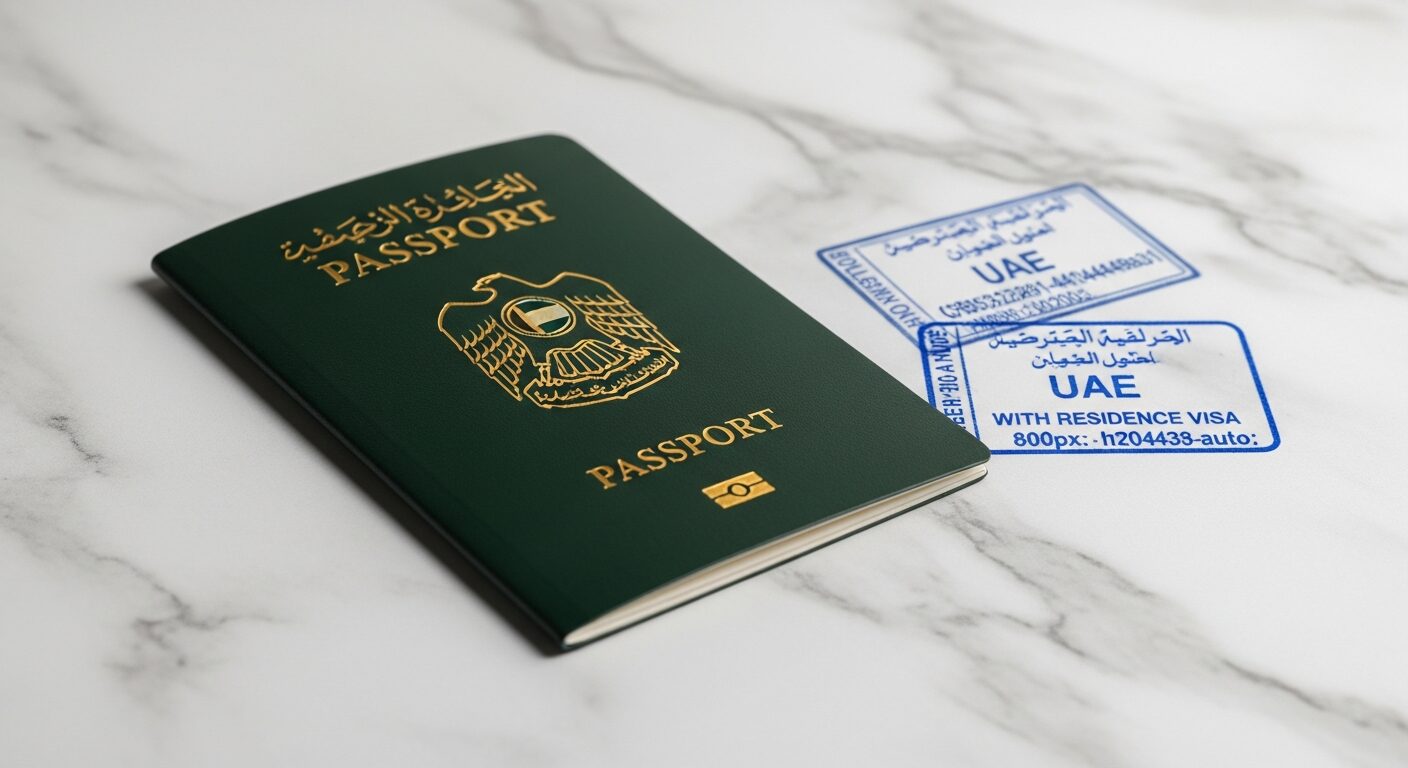
visa stamping Dubai 2026 — Noble Core
By Ankita Peter · Senior Business Setup Advisor, Noble Core Ventures
Hands-on UAE company-formation specialists since 2020 · Reviewed for accuracy · Updated May 2026
QUICK ANSWERDubai visa stamping is the final step in the UAE residence visa process — the ICP digital registration (the 2026 default) or GDRFA in-person stamp confirming legal right to reside and work in UAE. Cost: AED 500-1,200 for standard employee/family visas, AED 1,500-2,300 for Golden Visa. Timeline: 3-5 working days from biometrics + medical clearance to fully stamped visa.

Visa stamping is the final step in the UAE residence visa process — the moment your passport is physically stamped (or, increasingly in 2026, digitally registered) with the residence visa label confirming your right to live and work in the UAE. For most applicants, stamping happens after biometrics, medical fitness, and Emirates ID issuance — typically 3-5 working days from completing the previous steps. The 2026 reality blends digital ICP-based stamping (no physical passport stamp) with traditional GDRFA in-person stamping at specific scenarios.

This guide covers Dubai visa stamping for 2026: the actual process, cost AED 500-1,200, ICP digital vs GDRFA in-person paths, common delay reasons, and what to do if your stamp is taking longer than expected.

Where Visa Stamping Sits in the Full Visa Process

  1. Initial visa approval / entry permit issuance (5-10 days)
  2. Status change if currently UAE-resident (5-10 days)
  3. Medical fitness test at approved DHA centre (1-2 days)
  4. Biometrics + Emirates ID application (1-2 days)
  5. Visa stamping ← THIS STEP (3-5 working days)
  6. Emirates ID physical card delivery (1-2 weeks separately)

Visa Stamping Cost Breakdown 2026

Visa type Stamping fee (AED) Service centre fee Total realistic
Standard employee visa 500–700 200–400 (typing) 700–1,100
Investor / Partner visa 700–1,000 250–500 950–1,500
Family / dependent visa 500–800 200–400 700–1,200
Golden Visa (10-year) 1,000–1,500 500–800 1,500–2,300
Remote work / freelance 500–1,000 200–400 700–1,400

ICP Digital Stamping (the 2026 Default)

For most new visa applicants in 2026, stamping is fully digital through the ICP (Identity, Citizenship, Customs and Ports Authority) system:

  • No physical passport stamp required
  • Electronic visa registration linked to your passport number + Emirates ID
  • Verifiable through ICP smart services portal
  • Faster — typically 2-4 working days from biometrics
  • Standard for all GDRFA-issued visas in Dubai post-2024

The digital stamp is legally equivalent to a physical stamp — banks, employers, landlords, and government services accept the ICP digital verification.

GDRFA In-Person Stamping (Specific Scenarios)

Physical stamping at GDRFA service centres is still required for:

  • Visa types not yet integrated with ICP digital
  • Re-stamping after passport renewal mid-visa-validity
  • Certain regional travel scenarios where physical stamp simplifies border crossing
  • Legacy visa categories under transition

GDRFA service centre locations across Dubai: Al Awir (main HQ), Bur Dubai, Al Quoz, Al Twar, Hatta. Appointments available via the GDRFA app or smart services portal.

Common Stamping Delays and How to Avoid Each

  1. Medical fitness validity expired. Medical results valid 90 days for stamping. Late stamping triggers repeat medical (AED 350-500).
  2. Biometrics not completed. Stamping requires biometrics on file. If you skipped this step thinking it was optional, you’ll need to schedule it.
  3. Documents missing or mismatched. Stamping requires passport + entry permit + medical clearance + biometrics + Emirates ID application. Any gap pauses the process.
  4. System backlogs at peak times. Post-summer return (September) and post-winter return (March) see system backlogs of 2-4 extra days. Avoid these windows if possible.
  5. Visa fee unpaid or partially paid. Verify all fees marked paid in the issuer portal before stamping submission.

2026 Regulatory Reality You Should Know

The UAE regulatory landscape in 2026 has evolved meaningfully from even 18 months ago. Understanding the layers that affect your specific structure saves both money and compliance risk:

Corporate Tax + Small Business Relief

UAE Corporate Tax operates at 9% on profits above AED 375,000. Companies under AED 3 million revenue can elect Small Business Relief (0% rate) through 2026. Free Zone companies meeting Qualifying Free Zone Person criteria get 0% on qualifying income — but 2026 substance enforcement is significantly stricter than 2024-2025: directors must hold board meetings in UAE, decisions must be documented as taking place in UAE, and the entity must demonstrate adequate operating substance.

VAT Compliance

UAE VAT operates at 5% with mandatory registration at AED 375,000 annual taxable supplies (within 30 days of crossing). Voluntary registration available from AED 187,500 — useful when your customers are VAT-registered B2B and can recover. Late registration penalty is AED 10,000 plus retroactive VAT obligations.

Beneficial Ownership and ESR

All UAE companies must maintain Beneficial Ownership Register filings — penalties for non-disclosure start AED 50,000. Banking, fund management, IP holding, distribution-and-service-centre, headquarters, holding company, lease-finance, and certain other activities trigger Economic Substance Regulations (ESR) annual notifications. Most setup providers don’t mention ESR; founders are routinely surprised in Year 2 audits.

Pillar Two Global Minimum Tax

Multinational groups with consolidated revenue above EUR 750M face the 15% global minimum tax. Standalone businesses below this threshold are unaffected. Subsidiaries of larger groups must restructure for compliance.

The Bottom Line

UAE setup decisions in 2026 are meaningfully more strategic than even 18 months ago. The Corporate Tax framework, stricter QFZP substance enforcement, beneficial ownership disclosure penalties, and the Economic Substance Regulations all combine to mean that the right structure today is not just about the cheapest license — it is about minimising 24-month total cost-of-ownership while keeping your operations audit-ready and growth-ready. Founders who succeed in 2026 model their customer mix carefully, choose jurisdictions based on substance and taxation rather than vanity address, run all approval tracks in parallel rather than sequentially, pre-engage their banking partner before license submission, and build compliance routines into onboarding rather than retrofitting in Year 2 audits.

If you are weighing this option against alternatives, the right next step is a 20-minute strategic consultation that maps your specific situation against the available structures. Most founders haven’t thought through these considerations explicitly before they choose a path. The advisors who don’t ask are setting you up to overpay, to face surprise compliance issues in Year 2, or to lock into the wrong structure by Year 3.

Common Mistakes Founders Make in 2026

1. Choosing structure on price alone, not 24-month TCO

The cheapest Year-1 license is rarely the cheapest 24-month total cost-of-ownership. Founders consistently miss the compounding effect of mid-year package upgrades, additional visa fees, banking complications, and Year-2 renewal cost differences. The right framework: model 24-month TCO before signing anything, including realistic team-size projection, expected revenue trajectory, customer mix (UAE-domestic vs international), and likelihood of needing additional licenses or restructuring.

2. Sequencing approvals instead of parallelizing

Trade license, regulatory approvals (Civil Defense, MOCCAE, food safety, Ministry of Health), workspace allocation, banking — these all run in parallel for efficient setup. Founders who submit them sequentially turn 4-week setups into 4-month nightmares. Submit all approval tracks in week 1-2, not week 6 after license is issued.

3. Treating banking as a week-6 problem

UAE bank accounts now take 2-12 weeks depending on jurisdiction, structure, and beneficial-owner profile. Pre-engage your banking partner in week 1, not after license issuance. Most setup delays in 2026 are banking-side, not licensing-side. Mashreq Neo and RAKBANK Liv direct partnerships with specific free zones offer 48-hour to 2-week onboarding when correctly pre-engaged.

4. Mismatched visa quota assumptions

Picking Promotional package and assuming you will add visas later costs significantly more than starting with Standard or Premium when you need 3+ visas. Add-on visa fees of AED 4,200+ each erase package savings within 2-3 visa additions. Always run team-size projection BEFORE selecting package tier.

5. UAE-mainland customer 5% customs blindness

Free zone licenses cannot directly invoice UAE-mainland customers without 5% customs duty on physical goods. Founders who plan UAE-domestic distribution from a free zone face surprise margin compression in Year 1. The right structure: hybrid mainland LLC + free zone entity, or mainland-only license if 50%+ of customers are UAE-domestic. Plan this from Day 1, not Year 2.

Strategic Use-Case Deep Dives (2026)

Use Case A: Solo Founder Bootstrap

Pre-revenue solo founder testing market fit. Year-1 priorities: cheapest viable license, flexi-desk workspace, fast banking (Mashreq Neo / RAKBANK direct partnerships), 1 visa quota, no premature hiring. Total Year-1 fixed: AED 12,000-20,000. Goal: validate product-market fit before scaling structure. Common mistake: over-investing in premium structure before revenue justifies the spend. Right approach: start lean, upgrade once monthly revenue exceeds AED 30,000 sustained.

Use Case B: Mid-Market Operator (3-8 person team)

Established business with revenue and team. Year-1 priorities: Standard or Premium tier, dedicated office or workspace, 3-6 visa quota, multi-bank relationships, possible mainland sister entity for UAE-domestic sales. Total Year-1 fixed: AED 60,000-150,000. Goal: optimize unit economics + tax structure (consider QFZP eligibility maintenance, mainland sister LLC for direct UAE-domestic invoicing). At this stage, 5-7% structural inefficiency compounds into AED 50,000-150,000 of unrecoverable cost over 24 months — get the structure right.

Use Case C: Series-A+ Funded Startup

VC-backed scaleup. Year-1 priorities: premium jurisdiction (DIFC/ADGM/DMCC) for VC-friendly Common Law contracts, formal office presence, 8-15 visa quota, premium banking (HSBC Private, Emirates NBD Private). Total Year-1 fixed: AED 200,000-500,000. Goal: investor-grade structure + Series-B readiness. Top-tier investors require Common Law jurisdiction, audit-ready financials from month 1, and dedicated tax advisor for QFZP substance compliance. Getting this right at Series-A round closes the door on expensive restructuring before Series-B.

Your 2026 Action Checklist

  1. Run 24-month team-size + revenue + customer-mix projection (week 0)
  2. Jurisdiction decision based on customer mix + tax + visa quota + prestige requirements (week 1)
  3. Pre-engage banking partner — pre-introduce structure to 2-3 banks before license submission (week 1)
  4. Trade name reservation with appropriate suffix (FZ-LLC for FZ, LLC for mainland) (week 1)
  5. Activity code mapping — confirm all intended activities covered without surprise restrictions (week 1)
  6. Submit license + parallel regulatory approvals + workspace pre-allocation (week 2)
  7. Document attestation: passport, NOC if applicable, address proof, MOA (week 2)
  8. License issuance + share certificate + establishment card (week 2-4)
  9. Workspace allocation or office tenancy + Ejari (mainland only) (week 3-6)
  10. Bank account opening + payment gateway integration (week 3-8)
  11. Visa processing for founders + first hires (week 4-8)
  12. VAT pre-registration if revenue projection above AED 187,500 (week 4)
  13. Operational systems setup: accounting, CRM, payment processing (week 5-9)
  14. First customer onboarding + revenue capture (week 6-12)
  15. 90-day post-launch audit: structure efficiency confirmed, tax optimization in place, growth bottlenecks identified
  16. 12-month substance audit: QFZP eligibility maintained, ESR notifications filed, beneficial ownership current

2026 Regulatory Reality You Should Know

The UAE regulatory landscape in 2026 has evolved meaningfully from even 18 months ago. Understanding the layers that affect your specific structure saves both money and compliance risk:

Corporate Tax + Small Business Relief

UAE Corporate Tax operates at 9% on profits above AED 375,000. Companies under AED 3 million revenue can elect Small Business Relief (0% rate) through 2026. Free Zone companies meeting Qualifying Free Zone Person criteria get 0% on qualifying income — but 2026 substance enforcement is significantly stricter than 2024-2025: directors must hold board meetings in UAE, decisions must be documented as taking place in UAE, and the entity must demonstrate adequate operating substance.

VAT Compliance

UAE VAT operates at 5% with mandatory registration at AED 375,000 annual taxable supplies (within 30 days of crossing). Voluntary registration available from AED 187,500 — useful when your customers are VAT-registered B2B and can recover. Late registration penalty is AED 10,000 plus retroactive VAT obligations.

Beneficial Ownership and ESR

All UAE companies must maintain Beneficial Ownership Register filings — penalties for non-disclosure start AED 50,000. Banking, fund management, IP holding, distribution-and-service-centre, headquarters, holding company, lease-finance, and certain other activities trigger Economic Substance Regulations (ESR) annual notifications. Most setup providers don’t mention ESR; founders are routinely surprised in Year 2 audits.

Pillar Two Global Minimum Tax

Multinational groups with consolidated revenue above EUR 750M face the 15% global minimum tax. Standalone businesses below this threshold are unaffected. Subsidiaries of larger groups must restructure for compliance.

The Bottom Line

UAE setup decisions in 2026 are meaningfully more strategic than even 18 months ago. The Corporate Tax framework, stricter QFZP substance enforcement, beneficial ownership disclosure penalties, and the Economic Substance Regulations all combine to mean that the right structure today is not just about the cheapest license — it is about minimising 24-month total cost-of-ownership while keeping your operations audit-ready and growth-ready. Founders who succeed in 2026 model their customer mix carefully, choose jurisdictions based on substance and taxation rather than vanity address, run all approval tracks in parallel rather than sequentially, pre-engage their banking partner before license submission, and build compliance routines into onboarding rather than retrofitting in Year 2 audits.

If you are weighing this option against alternatives, the right next step is a 20-minute strategic consultation that maps your specific situation against the available structures. Most founders haven’t thought through these considerations explicitly before they choose a path. The advisors who don’t ask are setting you up to overpay, to face surprise compliance issues in Year 2, or to lock into the wrong structure by Year 3.

2026 Regulatory Reality You Should Know

The UAE regulatory landscape in 2026 has evolved meaningfully from even 18 months ago. Understanding the layers that affect your specific structure saves both money and compliance risk:

Corporate Tax + Small Business Relief

UAE Corporate Tax operates at 9% on profits above AED 375,000. Companies under AED 3 million revenue can elect Small Business Relief (0% rate) through 2026. Free Zone companies meeting Qualifying Free Zone Person criteria get 0% on qualifying income — but 2026 substance enforcement is significantly stricter than 2024-2025: directors must hold board meetings in UAE, decisions must be documented as taking place in UAE, and the entity must demonstrate adequate operating substance.

VAT Compliance

UAE VAT operates at 5% with mandatory registration at AED 375,000 annual taxable supplies (within 30 days of crossing). Voluntary registration available from AED 187,500 — useful when your customers are VAT-registered B2B and can recover. Late registration penalty is AED 10,000 plus retroactive VAT obligations.

Beneficial Ownership and ESR

All UAE companies must maintain Beneficial Ownership Register filings — penalties for non-disclosure start AED 50,000. Banking, fund management, IP holding, distribution-and-service-centre, headquarters, holding company, lease-finance, and certain other activities trigger Economic Substance Regulations (ESR) annual notifications. Most setup providers don’t mention ESR; founders are routinely surprised in Year 2 audits.

Pillar Two Global Minimum Tax

Multinational groups with consolidated revenue above EUR 750M face the 15% global minimum tax. Standalone businesses below this threshold are unaffected. Subsidiaries of larger groups must restructure for compliance.

The Bottom Line

UAE setup decisions in 2026 are meaningfully more strategic than even 18 months ago. The Corporate Tax framework, stricter QFZP substance enforcement, beneficial ownership disclosure penalties, and the Economic Substance Regulations all combine to mean that the right structure today is not just about the cheapest license — it is about minimising 24-month total cost-of-ownership while keeping your operations audit-ready and growth-ready. Founders who succeed in 2026 model their customer mix carefully, choose jurisdictions based on substance and taxation rather than vanity address, run all approval tracks in parallel rather than sequentially, pre-engage their banking partner before license submission, and build compliance routines into onboarding rather than retrofitting in Year 2 audits.

If you are weighing this option against alternatives, the right next step is a 20-minute strategic consultation that maps your specific situation against the available structures. Most founders haven’t thought through these considerations explicitly before they choose a path. The advisors who don’t ask are setting you up to overpay, to face surprise compliance issues in Year 2, or to lock into the wrong structure by Year 3.

Why Most Founders Get This Wrong on the First Try

Most UAE setup decisions are made in less than a week — chosen by a brief Google search, an introductory call with the cheapest setup provider, and one weekend of reading. The result: founders frequently lock into the wrong jurisdiction, the wrong tier, the wrong visa structure, or the wrong banking partner — and then spend Year 2 paying restructuring fees and unwinding bad early decisions. The right approach treats setup as a strategic infrastructure decision worth a 20-minute conversation rather than a paperwork exercise. Founders who model their realistic 24-month customer mix, project their team-size growth, account for likely product-market evolution, and pre-engage banking before license submission consistently end up with structures that compound favourably over 5-10 years rather than requiring expensive restructuring at 18-24 months.

Talk to Our Experts

Get your Dubai visa stamping done right — ICP digital path, in-person scheduling, document handling. Free 20-minute consultation.

or use our contact form · info@noblecoreventures.com

Frequently Asked Questions

What is visa stamping in Dubai 2026?

The final step in the UAE residence visa process where your residence visa is officially registered (digitally via ICP for most 2026 applications, or physically stamped at GDRFA for specific scenarios). Confirms your legal right to reside and work in the UAE.

How long does visa stamping take in Dubai 2026?

Realistic 3-5 working days from biometrics + medical clearance to fully stamped visa. ICP digital stamping (the 2026 default) typically faster (2-4 days). Peak system backlog times (September, March) can extend by 2-4 days.

How much does visa stamping cost?

AED 500-1,200 for standard employee or family visa (including service centre typing fees). Investor/partner visas: AED 950-1,500. Golden Visa: AED 1,500-2,300. Costs vary slightly by visa type and whether using digital ICP path or GDRFA in-person.

Is the digital ICP stamp legally equivalent to a passport stamp?

Yes. The 2026 ICP digital stamp is legally equivalent to a physical passport stamp. Banks, employers, landlords, and government services all accept the digital verification through the ICP smart services portal. Some travellers prefer physical stamps for psychological clarity but digital is the legal standard.

Where do I do visa stamping if it’s required in person?

GDRFA service centres in Dubai: Al Awir (main HQ), Bur Dubai, Al Quoz, Al Twar, Hatta. Appointments available via GDRFA app or smart services portal. Most stamping in 2026 is digital, so in-person rarely required for new applications.

What happens if my medical fitness expires before stamping?

Medical results valid 90 days for stamping. If 90 days lapse, repeat medical fitness test required (AED 350-500). Always schedule stamping shortly after medical clearance to avoid this.

Can I leave UAE before visa stamping is complete?

Generally no — once you’ve started the visa process and obtained entry permit, you’re expected to remain in UAE through stamping. Leaving before stamping creates compliance issues. If urgent travel is unavoidable, contact GDRFA to secure exit permission before departure.

What documents do I need for visa stamping?

Passport (with 6+ months validity), entry permit (if applicable), medical fitness certificate, biometrics confirmation, Emirates ID application receipt, and visa fee payment confirmation. The issuing authority (employer or sponsor) typically handles document submission on your behalf.





More Posts

Contact us for Free Consultation

Free guideMainland vs Free Zone