Quick AnswerRAKEZ vs IFZA compared for 2026: licence cost, visa quotas, activities and location trade-offs, with a clear pick-X-if verdict for your UAE setup.
Compare the RAK trade licence cost in detail.
Your setup cost, in 10 seconds
Package prices. Health insurance is required by law and not included.
Thank you.
Your written quote follows on WhatsApp.
RAKEZ vs IFZA: which UAE free zone should you pick in 2026?
For most founders comparing rakez vs ifza in 2026, both are strong, affordable UAE free zones, with entry licences commonly quoted from around AED 11,000 to AED 14,500 for a zero-visa package (indicative 2026 estimates — confirm current fees with the authority). Pick IFZA if you want a Dubai address, one of the largest consultant networks in the country, and a flexi-desk-friendly home for service and trading firms. Pick RAKEZ (Ras Al Khaimah Economic Zone) if you need affordable warehousing, industrial land, generous visa quotas, or a lean cost base for trading and light manufacturing. Neither is universally "cheaper" — the winner depends on your activities, visa count, and whether your goods live in a warehouse or move on paper. This guide breaks down the real differences so you can choose with confidence.
This article is the head-to-head comparison. If you want the deep individual breakdowns, read our dedicated guides on the RAKEZ free zone setup cost for 2026 and the IFZA free zone Dubai setup cost for 2026, and see how both sit against the wider market in our UAE free zone cost comparison for 2026. Here, Noble Core Ventures focuses on the decision: when one zone genuinely serves you better than the other, and why the answer changes depending on what you actually do.
A quick orientation: what RAKEZ and IFZA actually are
Before comparing line items, it helps to understand what each free zone is and the kind of founder it tends to attract, because the right choice is rarely about a single headline number. Both RAKEZ and IFZA operate as UAE free zones offering 100% foreign ownership, full profit repatriation, residence-visa eligibility, and a streamlined incorporation process designed for international entrepreneurs. That shared foundation is why they so frequently end up on the same shortlist. The real differences emerge in location, package design, the scale of physical space available, and the ecosystems that have grown around each one over the years.
RAKEZ, the Ras Al Khaimah Economic Zone, is one of the largest economic zones in the region by number of registered companies, and it is built around a simple proposition: the cost of operating in Ras Al Khaimah is structurally lower than in the busier central emirates, while you remain fully inside the UAE with the same federal visa and tax framework. RAKEZ caters to an unusually broad spread of business types, from solo consultants and freelancers right through to large industrial manufacturers occupying serviced land. Its defining strength is the full ladder of physical options it offers within a single authority. A founder can start on a flexi-desk, move to an executive office, then graduate to a warehouse, and eventually to a custom industrial plot, all without leaving the zone. For anyone whose business involves storing, assembling, or shipping physical goods, this matters enormously, because Ras Al Khaimah's land economics and proximity to Saqr Port and the northern road network make it a genuinely cost-effective base for trading and light manufacturing.
IFZA, the International Free Zone Authority, took a different route to prominence. Based in Dubai, it built one of the most extensive networks of approved registration partners and consultants in the country, which means that almost anywhere a founder seeks advice, IFZA is likely to be on the table. This broad distribution has practical benefits. A very large pool of professionals understand IFZA's processes intimately, pricing stays competitive because of that ecosystem, and the activity catalogue is wide. IFZA has positioned itself as a flexible, scalable, cost-conscious home for everything from solo consultants to multi-activity trading operations, and it does so primarily on a flexi-desk model that keeps overheads low for service businesses. For many entrepreneurs, the first free zone they hear recommended by name is IFZA, and the Dubai address that comes with it carries real weight for client-facing firms.
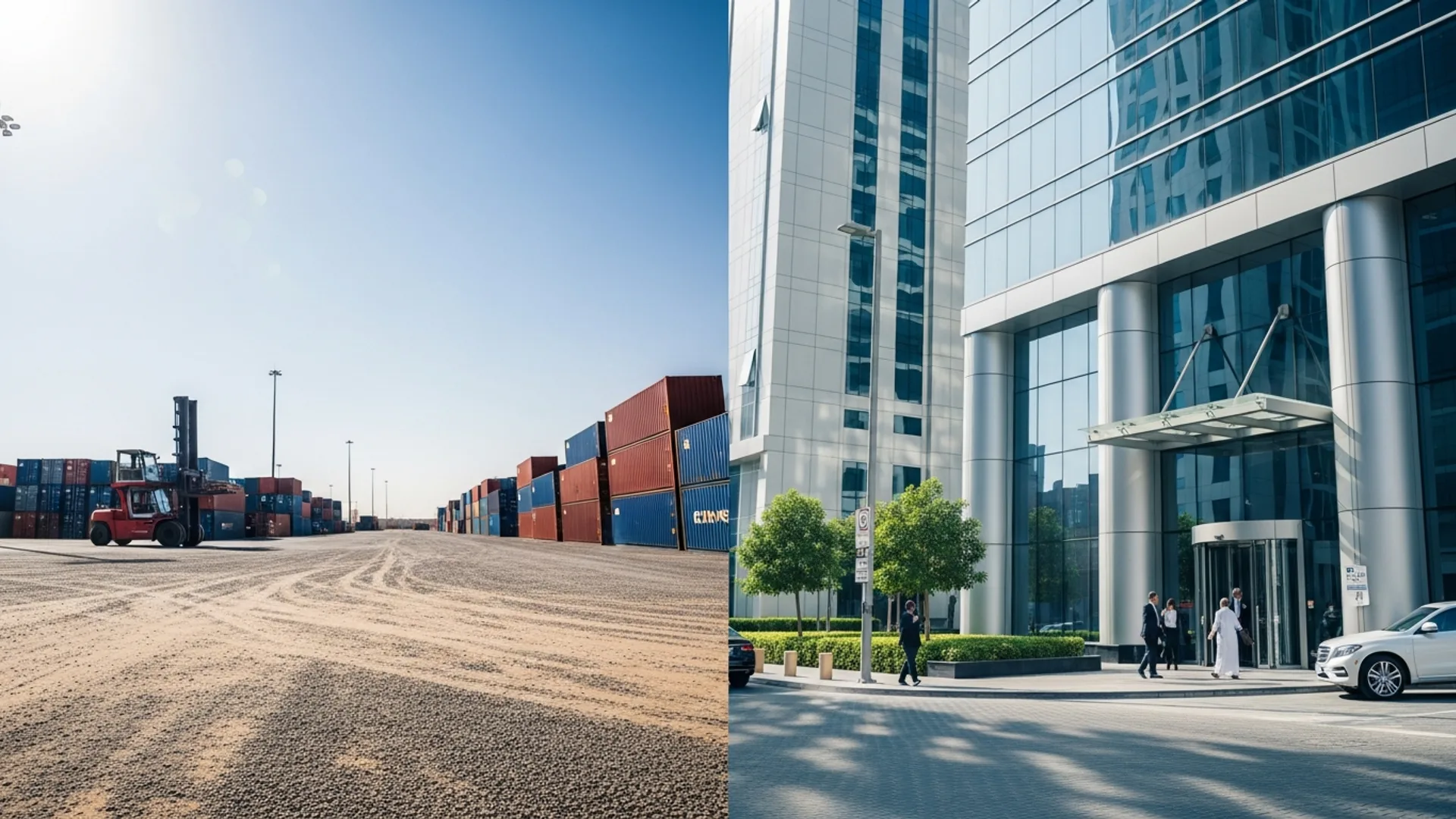
So the headline framing is this: both are affordable, both are credible, and both will get you a compliant UAE company with visas. IFZA leans into a Dubai address, ecosystem reach, and a lean flexi-desk model that suits service and paper-trading firms. RAKEZ leans into low operating costs, generous physical space, strong visa quotas, and the ability to scale from a desk to an industrial plot inside one authority. The rest of this guide turns that high-level contrast into the specific factors you should weigh before you commit.
Licence cost: how the numbers really compare
Cost is almost always the first question, and it is also the most misunderstood, because the price you see advertised is rarely the price you actually pay once your real requirements are added. Both RAKEZ and IFZA market themselves firmly in the affordable segment of the UAE free zone landscape, and at the entry level — a single licence with no visas and a modest activity selection — they are genuinely close. RAKEZ frequently edges slightly lower at the very bottom of the range because Ras Al Khaimah operating costs are lower, while IFZA stays highly competitive on Dubai service licences thanks to its dense consultant ecosystem. The interesting differences appear as you layer on the things most real businesses need: visa allocations, multiple activities, an establishment card, and eventually an office or warehouse.
A zero-visa starter licence in either zone commonly sits in a similar band, which is why so many comparison articles declare them "basically the same price." That is misleading. The moment you add an investor visa, the total jumps in both zones because visa-enabled packages require an establishment card and immigration setup. Add a second or third visa and the curve continues. This is where the structural difference between the two zones starts to show. RAKEZ tends to offer generous visa allocations once you take physical space, so a firm that needs to hire often finds the cost per visa more favourable in Ras Al Khaimah. IFZA, by contrast, keeps service founders lean by bundling a small number of visas into competitively priced flexi-desk packages, which is ideal if your headcount stays small. The right comparison is therefore never "IFZA's headline versus RAKEZ's headline." It is "your specific bundle in IFZA versus the same bundle in RAKEZ."
It is also worth separating one-time setup costs from recurring annual costs. The first-year figure includes incorporation, the licence, your initial activities, and any visa and establishment-card setup. The renewal figure, which recurs every year, is typically close to the licence and workspace portion but not identical, and it is the number that determines the long-run cost of ownership. A founder who only looks at year one can be surprised by renewal budgeting, especially if a warehouse lease in RAKEZ or an upgraded office in IFZA is part of the package. Model at least three years when you compare, because the cheapest first-year option is not always the cheapest over the life of the company. Below is an indicative cost framework to orient your thinking — treat every figure as a typical 2026 range to verify, never as a quoted fee.
| Cost element (indicative 2026 estimates — confirm current fees with the authority) | RAKEZ (typical range, AED) | IFZA (typical range, AED) |
|---|---|---|
| Zero-visa starter licence (single activity) | 11,000 – 14,000 | 12,500 – 14,500 |
| Licence with one investor/partner visa | 18,000 – 24,000 | 17,500 – 23,000 |
| Each additional residence visa (setup) | 3,500 – 6,000 | 4,000 – 6,500 |
| Flexi-desk / shared workspace (annual) | 5,000 – 12,000 | included in many packages |
| Dedicated office (annual, indicative) | 15,000 – 40,000+ | 20,000 – 50,000+ |
| Warehouse / industrial space (annual, indicative) | from ~25,000 per unit | limited / not core offering |
| Annual licence renewal (excl. space) | 10,000 – 14,000 | 11,000 – 14,500 |
Read that table as a map, not a quote. The single most important takeaway is the bottom three rows. RAKEZ has a clear cost path into warehousing and industrial space that IFZA simply does not specialise in, while IFZA's flexi-desk-inclusive service packages can be wonderfully economical for a consultant who never needs a square metre of storage. The "right" price depends entirely on which rows of that table actually apply to your business model.
Visa quotas: how many people can you put on the licence?
Visa quota is where the two zones diverge in a way that catches many founders by surprise, because the number of residence visas you can hold is tied directly to your package and your physical space rather than to the licence in isolation. A bare flexi-desk package in either zone typically supports a small number of visas, often one to a handful, which is perfectly adequate for a solo founder, a small consultancy, or a holding structure. The differences become material the moment you intend to hire a team.
RAKEZ is widely regarded as one of the more generous free zones for visa allocation once you take physical space. Because Ras Al Khaimah has abundant land and the zone is built to host genuine operating businesses, an office or warehouse lease in RAKEZ tends to unlock a comfortable number of visas relative to the space taken. A firm planning to employ ten, twenty, or more staff often finds that the visa-to-space ratio in RAKEZ works in its favour, and the lower cost of that space compounds the advantage. This is one of the strongest reasons logistics, trading, and light-manufacturing companies gravitate toward Ras Al Khaimah: they can house both their people and their goods affordably under one roof.
IFZA approaches visas from the opposite direction. Its model is optimised for lean, service-oriented businesses that want a small, predictable number of visas without committing to a large office. That makes IFZA superb for founders who will stay small for the foreseeable future — a two-to-five-person agency, a consultancy, or a trading firm that operates on paperwork rather than warehousing. If your headcount plans are modest, IFZA's bundled approach keeps your cost per person low and your administration simple. If you expect rapid hiring, you will want to model how IFZA's office options raise the quota and compare that carefully against RAKEZ's space-linked allocations.
Whichever zone you choose, remember that the visa quota set by the free zone is only the ceiling. The actual issuance of every residence visa runs through federal channels — the entry permit, the medical examination, Emirates ID enrolment through the ICP, and visa stamping coordinated with the GDRFA. These steps and their standards are identical regardless of whether your licence is in Ras Al Khaimah or Dubai, because immigration is a federal function. The free zone determines how many visas you may apply for; the federal authorities determine how each one is processed. Plan your timeline around both layers, and never assume a quota equals an instant visa.
Activities: matching the licence to what you actually do
Both RAKEZ and IFZA maintain broad activity catalogues spanning commercial, professional, service, trading, and industrial categories, and both allow multiple activities on a single licence in many cases, which is one reason founders favour them. The practical question is not whether your activity exists in the catalogue — it almost certainly does in both — but whether the zone is built to support how you will carry it out in practice.
For pure service and professional activities — consulting, marketing, design, IT services, management advisory, and similar — both zones are excellent, and the decision usually comes down to location, cost, and visa needs rather than the activity itself. A consultant can run a clean, compliant, fully visa-enabled company from either zone on a flexi-desk, and neither will hold them back. Here, IFZA's Dubai address and large advisory network often tip the scales for client-facing professionals who value how their company is perceived.
For trading activities, the comparison becomes more interesting and depends heavily on whether you handle physical inventory. A general trading licence run on documentation alone — where goods ship directly from supplier to customer and never sit in your own store — works beautifully in either zone, and again the choice is mostly about cost and location. But the instant you need to receive, store, consolidate, or re-export physical stock, RAKEZ pulls ahead decisively. Its warehousing and proximity to Saqr Port and the northern logistics corridor make it a natural home for import-export and distribution businesses. The activity might be identically named in both catalogues, yet the operating reality is very different.
For industrial and light-manufacturing activities, there is genuinely no contest in most cases. RAKEZ is purpose-built for production, with serviced industrial land, power and utility provisioning, and a long history of hosting manufacturers across sectors. IFZA is not designed as a manufacturing base. If your business assembles, fabricates, processes, or produces physical goods at any meaningful scale, RAKEZ should be your default starting point, and IFZA should only enter the conversation if a separate, non-manufacturing entity makes sense for part of your group. Always give your consultant the complete list of what you plan to do now and within the next two years, because structuring the activities correctly at the outset avoids costly licence amendments later, and the two zones reward different structures.
Location and the operating-economics trade-off
The location question between RAKEZ and IFZA is really a question about perception versus operating economics, and honest founders weigh both. IFZA offers a Dubai address, which carries undeniable brand value. For a consultancy pitching multinational clients, an agency courting prestige accounts, or any firm where the address on a proposal subtly shapes credibility, a Dubai licence can be worth paying a small premium for. Dubai's connectivity, airport access, and concentration of corporate activity are real advantages for businesses that meet clients frequently or need to be at the centre of the action.
RAKEZ offers a different and equally valid value proposition. Ras Al Khaimah is a well-developed emirate with excellent infrastructure, lower operating costs, and a relaxed, business-friendly environment, and it sits within comfortable reach of Dubai and the northern emirates by road. For founders whose customers are reached digitally, whose goods move through ports and warehouses, or who simply want to keep their cost base lean, the Ras Al Khaimah location is an advantage rather than a compromise. Many highly successful UAE businesses run efficiently from RAKEZ and serve the entire country and beyond without ever needing a downtown Dubai office. The emirate's lower rents and land costs mean that money saved on premises can go straight into product, marketing, or hiring.
There is no universally correct answer here, and that is the point. If your business sells perception — advisory, creative, professional services to image-conscious clients — IFZA's Dubai positioning is a feature worth paying for. If your business sells throughput — goods, logistics, manufacturing, or any cost-sensitive model — RAKEZ's operating economics are likely to serve you better. A surprising number of founders also run hybrid structures over time, beginning lean in one zone and adding a presence elsewhere as the business matures. The key is to choose deliberately based on what drives your revenue, not on a vague sense that one emirate is inherently "better" than another. Both are firmly inside the UAE, and both sit under the same federal framework for visas, taxation, and compliance.
Banking, compliance, and the federal layer
It is worth being clear that the most important parts of running a UAE company — banking, taxation, and immigration — operate at the federal level and do not change based on whether your licence is in Ras Al Khaimah or Dubai. This is reassuring, because it means the choice between RAKEZ and IFZA is a choice about cost, space, location, and ecosystem, not about fundamentally different legal regimes.
On banking, both RAKEZ and IFZA companies open UAE corporate accounts successfully every day, and the determining factors are your business activity, shareholder profile, expected transaction flows, and demonstrable substance rather than the emirate on your trade licence. Banks want to understand the nature of your business and see a coherent story. A clean activity list, a clear business plan, and where relevant a tenancy or physical presence all help. RAKEZ companies that take real warehousing or office space often find it straightforward to demonstrate substance, while IFZA service firms succeed by presenting a clear, credible service model. A good consultant matches your company to banks that are comfortable with your specific profile, which is far more decisive than the free zone label.
On tax, every UAE company answers to the Federal Tax Authority regardless of free zone. UAE corporate tax and VAT rules, registration thresholds, and any qualifying free zone person treatment are set federally and apply identically to RAKEZ and IFZA entities. Neither emirate offers a special carve-out from these national rules, and any claim to the contrary should be treated with caution. The Ministry of Economy also governs broader commercial regulation nationally, so the regulatory backbone is consistent across the country. You can review the federal government's official corporate tax guidance through the Federal Tax Authority at tax.gov.ae, which is a useful neutral reference point before you commit to any zone.
On compliance generally, both zones require the standard annual licence renewal, the maintenance of an establishment card where visas are held, and adherence to economic substance and ultimate-beneficial-owner reporting where applicable. These obligations are comparable across the two zones, and a competent consultant will keep you compliant in either. The practical lesson is that you should not over-weight the free zone label when thinking about compliance; the heavy lifting happens at the federal level, and your choice between RAKEZ and IFZA is properly about operating fit.
A simple decision framework
Faced with a genuine choice between the two, the cleanest way to decide is to ask a short series of questions in order, because the first one that returns a strong answer usually settles it. Start with physical goods. Do you import, store, assemble, manufacture, or re-export anything tangible at scale? If yes, RAKEZ is your strong default, full stop, because its warehousing, industrial land, port access, and space-linked visa quotas are built for exactly that, and the cost advantage is real. IFZA only re-enters the conversation if a separate non-storage entity makes sense.
If your business is purely service or paper-based — consulting, agency work, IT, professional services, or trading that ships supplier-to-customer without inventory — then ask the second question: how much does a Dubai address matter to your clients and your brand? If the answer is "a lot," IFZA's Dubai positioning and consultant ecosystem make it an excellent, lean choice. If the answer is "not much, and I care more about keeping costs low," then RAKEZ becomes very attractive again, because you can run the same compliant, visa-enabled company from Ras Al Khaimah at a lean cost base.
Finally, ask about hiring. If you plan to build a team of any meaningful size, model the visa-to-space economics in both zones carefully, because RAKEZ's generous space-linked visa allocations and lower facility costs often make it the more affordable home for a growing headcount, while IFZA suits teams that will stay small. Layer these three questions — goods, address, hiring — and the right zone almost always reveals itself. When two answers point different ways, that is precisely the moment to bring in a consultant who can model your exact bundle in both zones and show you the three-year cost side by side rather than the headline price.
Common Mistakes to Avoid
The single most common mistake founders make when comparing RAKEZ and IFZA is anchoring on the advertised entry price and treating the two as interchangeable because the starter numbers look similar. As the cost section showed, the zero-visa headline is the least useful number in the comparison. The differences that matter — visa allocations, warehouse and industrial costs, flexi-desk inclusions, and three-year renewal totals — only appear once you add your real requirements. Always compare your full, specific bundle, not the marketing figure.
A second frequent error is choosing the zone before clarifying the business model. Founders sometimes pick IFZA for the Dubai address and then discover they need affordable warehousing, or pick RAKEZ for the low cost and then realise their clients expect a Dubai presence. Decide what actually drives your revenue first — goods versus services, perception versus throughput — and let that determine the zone. Choosing the licence before the strategy is backwards and leads to expensive restructuring.
A third mistake is underestimating the federal layer and assuming the free zone handles everything. Visa issuance still runs through the GDRFA and the ICP, tax obligations are owned by the Federal Tax Authority, and broader commercial regulation sits with the Ministry of Economy. Neither RAKEZ nor IFZA changes any of this, and founders who treat the free zone as a one-stop shield from federal compliance are setting themselves up for surprises. Budget time and attention for the federal steps in either zone.
A fourth mistake is ignoring renewal and scaling costs. The cheapest first year is not always the cheapest company over three years, particularly once a warehouse lease, an office upgrade, or additional visas enter the picture. Model the multi-year total before you sign, and ask specifically what renewal looks like for your exact package. A fifth and related error is failing to structure activities for the future; adding activities or amending a licence later is costlier than getting the list right at the outset, so give your consultant the full picture of what you intend to do now and within two years.
Finally, many founders skip the like-for-like quote. Published list prices and online calculators are useful for orientation, but they are not commitments, and they rarely reflect your precise combination of activities, visas, and space. The only way to compare RAKEZ and IFZA honestly is to obtain a current, itemised quote for your actual requirements from each, ideally through a consultant who works with both, and confirm every figure with the authority before you decide.
The verdict
RAKEZ and IFZA are both excellent, affordable UAE free zones, and there is no single winner — only the right fit for your business. Choose IFZA when you want a Dubai address, a vast consultant ecosystem, and a lean, flexi-desk-based home for service, professional, or paper-trading firms that will stay relatively small. Choose RAKEZ when you need affordable warehousing or industrial space, generous space-linked visa quotas, a clear path from desk to factory, or simply the lowest sustainable cost base for a trading, logistics, or manufacturing operation. The deciding questions are always the same: do your goods live in a warehouse or move on paper, how much does a Dubai address matter to your clients, and how many people will you hire? Answer those honestly and the choice becomes clear.
If you would like Noble Core Ventures to model your exact requirements in both zones — a true like-for-like comparison of licence, visas, space, and three-year cost — we are here to help you choose with confidence and set up cleanly the first time. Explore the full picture in our RAKEZ free zone setup cost guide for 2026, our IFZA free zone Dubai setup cost guide for 2026, and the broader UAE free zone cost comparison for 2026, then talk to us about which one fits your plan.
Talk to Our Experts
choosing between RAKEZ and IFZA for your UAE free zone company
Frequently Asked Questions
Is RAKEZ or IFZA cheaper for a free zone licence in 2026?
Both RAKEZ and IFZA sit in the affordable tier of UAE free zones, with entry packages commonly quoted from around AED 11,000 to AED 14,500 for a zero-visa licence as indicative 2026 estimates. RAKEZ often edges ahead on industrial and warehousing costs because of Ras Al Khaimah land economics, while IFZA is highly competitive for service and trading licences in Dubai. The real winner depends on your activity, visa count and whether you need physical space, so always confirm the current package directly with the authority.
Can I get a residence visa with both RAKEZ and IFZA?
Yes. Both RAKEZ and IFZA issue UAE residence visas linked to your licence, and both let you add visa quota for shareholders, employees and dependants. The number of visas you can hold is tied to your package tier and, where relevant, your office or warehouse space. RAKEZ is well known for generous visa allocations on space-based packages, which suits firms that need to hire. Visa issuance runs through federal channels including the GDRFA and the ICP, so processing standards stay consistent across emirates.
Which is better for a solo consultant or freelancer, RAKEZ or IFZA?
For a single founder running a consultancy, agency or services business, both zones work well because each offers low-cost, flexi-desk-based packages that satisfy the licence and one investor visa without forcing you into expensive physical space. IFZA’s Dubai address and large consultant network make it a popular default for service founders. RAKEZ can be marginally cheaper at the entry tier and offers strong value if you ever scale into staff. Compare the full bundle including one visa rather than the headline price, because that is where the gap actually appears.
Does RAKEZ or IFZA offer better options for trading and warehousing?
RAKEZ has a clear structural advantage for trading, light manufacturing and warehousing because Ras Al Khaimah offers larger, more affordable industrial land, ready warehouses and proximity to Saqr Port. If you import, store and re-export physical goods, RAKEZ frequently wins on cost per square metre and on visa quota per facility. IFZA is excellent for general trading licences run on a flexi-desk model without heavy storage. Match the zone to whether your goods live in a warehouse or move through paperwork, because that single fact usually decides the cost comparison.
Can a RAKEZ or IFZA company trade on the UAE mainland?
A free zone company from either RAKEZ or IFZA primarily operates within its free zone and internationally, and can serve mainland clients through accepted routes such as appointing a local distributor, working with a mainland agent, or obtaining the relevant permissions where allowed. If most of your customers are UAE-based businesses or government bodies, discuss whether a mainland DET or DET licence suits you better. The right structure depends on who you sell to and how, so map your customer base before you choose a zone or an emirate.
How long does company setup take with RAKEZ versus IFZA?
Both zones are known for efficient digital incorporation, and a straightforward licence can often be issued within a few working days once your documents and activity selection are finalised, as an indicative timeframe. IFZA is frequently cited for very fast service licences. RAKEZ is similarly quick for standard packages, though warehouse and industrial setups naturally take longer because of facility allocation and approvals. Residence visa steps such as the entry permit, medical, Emirates ID and visa stamping through the GDRFA and ICP add further days. Delays usually come from paperwork or banking, not the free zone.
Which free zone makes opening a corporate bank account easier?
Banking ease depends more on your business activity, shareholder profile and substance than on the free zone label alone, and both RAKEZ and IFZA companies successfully open UAE corporate accounts. Banks assess the nature of your business, expected transaction flows and supporting documents. A clean activity list, a clear business plan, and sometimes a tenancy or physical presence all help. RAKEZ companies with real warehousing often demonstrate substance easily. A good consultant matches your company to banks that are comfortable with your specific profile, which matters far more than the emirate on your licence.
Do I need to register for UAE corporate tax and VAT with either zone?
Tax obligations are set at the federal level by the Federal Tax Authority, not by the free zone, so the rules apply equally to RAKEZ and IFZA companies. UAE corporate tax and VAT registration thresholds and any free zone qualifying-income treatment depend on your revenue and activity, and certain qualifying free zone persons may access specific corporate tax treatment. Neither Ras Al Khaimah nor Dubai changes these federal rules. Always confirm your current obligations with the Federal Tax Authority or a qualified tax adviser before relying on any exemption or treatment.
What happens at renewal time for RAKEZ and IFZA licences?
Both free zones require annual renewal of the licence, and renewal cost is typically close to, but not identical to, the first-year package, with visa and space elements renewed alongside. Renewing on time avoids fines and keeps your residence visas valid. Build renewal into your annual budget and diarise the date well in advance, because lapsed licences complicate visa status, banking and contracts. RAKEZ warehouse leases and IFZA flexi-desk packages each renew on their own terms, so confirm the exact renewal figure with the authority each year before you plan your budget.
Is Ras Al Khaimah a disadvantage compared with a Dubai address?
It depends entirely on your business. For founders who want a recognisable Dubai address on their documents to impress clients, IFZA’s Dubai positioning is a genuine plus. For trading, manufacturing, logistics and cost-sensitive operations, Ras Al Khaimah is an advantage, not a drawback, because the emirate offers lower operating costs, ample industrial land and good port access while remaining inside the UAE with the same federal visa and tax framework. Many successful firms run lean from RAKEZ and serve the whole country. The location question is about perception versus operating economics, so weigh both honestly.
Can I upgrade from a flexi-desk to an office or warehouse later?
Yes. Both RAKEZ and IFZA let companies scale from a flexi-desk or shared workspace to dedicated space as they grow, and more space usually raises your visa quota. RAKEZ is particularly strong here because it offers a full ladder from flexi-desk to office to warehouse to industrial land within one authority, which suits firms expecting to hire or store goods. IFZA scales smoothly on the office side. Plan the move around your visa needs and renewal cycle so the change is cost-efficient, and ask your consultant to model the total cost before you commit.
Contact Us For Free Consultation
Licensed UAE consultancy. One reply, no spam.
Thank you.
A consultant will reply on WhatsApp shortly.