Quick answer
Kiosk licenses in Dubai start from AED 5,000 (temporary) to AED 12,000 (permanent). Temporary permits take 7–14 business days; permanent permits require 3–6 weeks with external approvals.
- Temporary permits valid 1–90 days; permanent permits valid 1 year (renewable annually)
- Total setup for permanent kiosk typically ranges AED 20,000–60,000 including location and fit-out
- 100% foreign ownership available through mainland under UAE’s 2021 foreign ownership reforms
Best for: Entrepreneurs testing market concepts or launching year-round retail operations in Dubai.
Planning to launch a retail business in Dubai without the overhead of a full shop? A kiosk license in Dubai could be your most cost-effective entry point into one of the world’s most lucrative retail markets. In 2026, Dubai’s kiosk economy is thriving — from food carts in mega malls to electronics counters in metro stations — and getting licensed is more accessible than most entrepreneurs realize.
This guide covers everything: the difference between temporary and permanent permits, a granular cost breakdown (with real AED figures), the full step-by-step process, external approvals by activity type, and 12 FAQ answers competitors miss. By the end, you’ll know exactly what’s needed — and how Noble Core Ventures can make it happen in days, not months.
What is a Kiosk Business in Dubai?
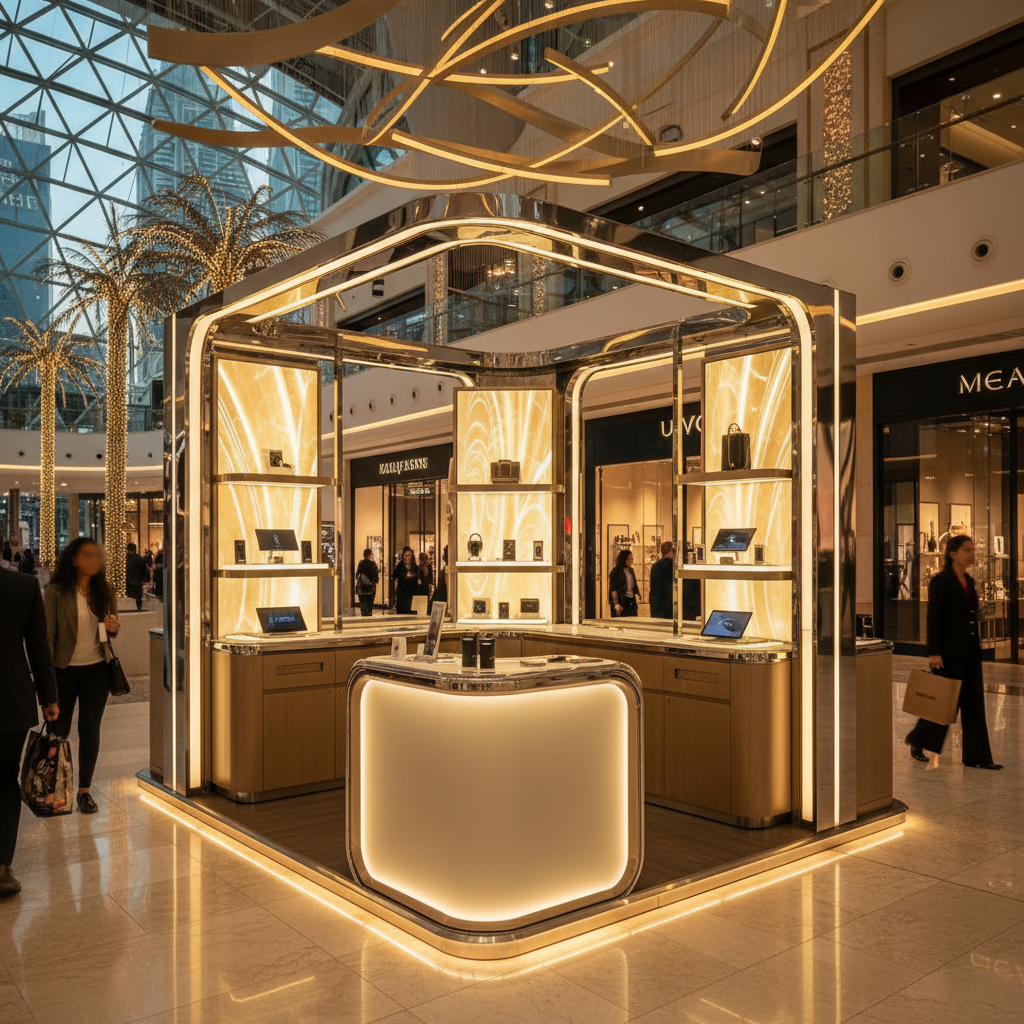
A kiosk is a small, freestanding retail unit typically operating within a mall, public space, airport, metro station, or outdoor event area. Unlike a full retail shop, a kiosk requires minimal floor space (usually 4–12 sqm), lower rental commitments, and a faster licensing timeline — making it the UAE’s most popular low-investment retail format.
Why Kiosks Are a Smart Business Entry Point in the UAE
- Low capital investment: Setup from AED 5,000 (temporary) to AED 25,000+ (permanent) vs. AED 150,000+ for a retail shop
- Prime foot traffic without premium rent: Access to Dubai Mall’s 90M+ annual visitors through kiosk leases at a fraction of full-store cost
- Ideal proof-of-concept vehicle: Test a product or brand in the market before committing to a full retail unit
- Flexible seasonality: Temporary permits let you operate only during peak seasons (Ramadan, Dubai Shopping Festival, winter)
- 100% foreign ownership: Available through free zones and now mainland under UAE’s 2021 foreign ownership reforms
- Fast licensing: Temporary permits can be issued in 7–14 days; permanent in 3–6 weeks
Popular Kiosk Locations in Dubai (2026)
- Malls: Dubai Mall, Mall of the Emirates, City Centre Deira, Ibn Battuta Mall, Al Ghurair Centre, Dragon Mart
- Metro Stations: RTA-managed stations (Union, Mall of the Emirates, Dubai Marina) — high commuter traffic
- Tourist Areas: Dubai Creek, La Mer, JBR The Walk, Global Village (seasonal)
- Airports: Dubai International Airport (DXB) — requires DNATA/Dubai Airports Corporation approval
- Outdoor Markets: Ripe Market, Night Souk, Farmers Markets — seasonal event permits
Kiosk Permits in Dubai: Temporary vs. Permanent (2026)
This is the distinction most guides gloss over — and it’s the most important decision you’ll make. Choosing the wrong permit type costs time and money.
| Feature | Temporary Kiosk Permit | Permanent Kiosk Permit |
|---|---|---|
| Validity | 1 to 90 days | 1 year (renewable annually) |
| Ideal For | Events, promotions, seasonal sales, product launches | Year-round retail, F&B, beauty, electronics |
| Approval Timeline | 7–14 business days | 3–6 weeks (with external approvals) |
| Starting Cost | From AED 5,000 | From AED 12,000 |
| External Approvals | Fewer (activity-dependent) | More rigorous (DM, Civil Defence, DHA) |
| Visa Eligibility | Generally not eligible | Investor visa eligible |
| Renewal | Re-apply per event/season | Annual renewal (simpler) |
| Jurisdiction | DED Mainland / Free Zone | DED Mainland / Free Zone |
Temporary Kiosk Permit — Details
Best for: Entrepreneurs wanting to test a concept, brands running seasonal promotions, international companies doing pop-ups, event-based sellers (Global Village, Dubai Shopping Festival, Ramadan markets).
Validity: 1 to 90 days. Can be renewed for subsequent events but not converted into a permanent license — you’d need a fresh application.
Starting Cost: From AED 5,000 for a basic temporary permit. Costs escalate with location desirability, event duration, and activity type.
Key Requirements: Event/location confirmation letter, passport copy, activity description, sometimes a layout plan of the kiosk.
Permanent Kiosk Permit — Details
Best for: Full-time kiosk operators in malls, food & beverage operations, beauty/cosmetics counters, electronics and accessories, souvenir and gift retail.
Validity: 1 year, renewed annually through DED or your Free Zone authority.
Starting Cost: From AED 12,000 for the license alone (DED mainland). Total setup including location, fit-out, and approvals typically runs AED 20,000–60,000 depending on mall and activity.
Key Requirements: Full company registration or trade license, Ejari/NOC from mall management, complete document set, external authority approvals by activity type.
Choosing the Right Permit
If your business is seasonal or you’re testing the market → start with Temporary. If you’re committed to year-round operations and want to build brand equity in a specific location → go Permanent from day one. Trying to upgrade a temporary permit mid-operation adds bureaucratic friction and delays.
Step-by-Step Guide: How to Get a Kiosk License in Dubai (2026)
Phase 1: Planning & Initial Approvals
Step 1: Define Your Business Activity & Niche
Your activity determines your regulator, approvals, and compliance requirements. Common kiosk activities in Dubai:
- Food & beverages → Dubai Municipality (DM) food safety mandatory
- Electronics, mobile accessories → Civil Defence NOC if selling batteries/chargers
- Beauty, skincare, cosmetics → Dubai Health Authority (DHA) or MOHAP approval
- Clothing, accessories, souvenirs → DED standard commercial permit
- Currency exchange → Dubai Economy + Central Bank of UAE approval
Be specific when registering — “general trading” is not accepted for food or health activities. Use DED’s official activity list when selecting.
Step 2: Choose Your Business Name & Reserve It
Trade name reservation via DED’s online portal (ded.ae) or DubaiNow app. Cost: approximately AED 620–1,000 for trade name reservation. Rules: no offensive words, no replication of existing names, must align with activity. Allow 1–3 business days.
Step 3: Select Your Kiosk Location & Secure Mall/Landlord Approval (NOC)
This is the step most guides underestimate. Mall management is an independent gatekeeper. Process:
- Contact the mall’s leasing department directly (not through agents)
- Submit your business concept, kiosk design renders, and product/brand portfolio
- Negotiate lease terms: typically charged per sqm per year or per month (AED 1,500–8,000/sqm/year in major malls)
- Obtain a Lease Agreement or NOC letter — this is a mandatory DED document
- Receive mall’s design standards and fit-out guidelines (compliance is mandatory)
Tip: Dubai Mall and Mall of the Emirates have 6–12 month waiting lists for premium kiosk locations. Smaller malls (Al Ghurair, Dragon Mart) are faster and cheaper — ideal for first-time operators.
Step 4: Obtain DED (Mainland) or Free Zone Initial Approval
Submit your initial approval application to DED via the Dubai Digital Economy portal or Service Centers. Required at this stage: trade name reservation certificate, owner passport/Emirates ID, initial business details. Initial approval cost: AED 200–500. Turnaround: 2–5 business days.
If going Free Zone: Apply through your chosen zone’s portal (DMCC, SHAMS, IFZA, RAKEZ). Free Zone initial approval is often bundled with the license package.
Phase 2: Documentation & External Approvals
Step 5: Prepare & Submit Core Documents
Standard document set for all kiosk license applications:
- Passport copy (all shareholders/owners)
- Emirates ID (UAE residents) or entry visa (overseas applicants)
- Passport-sized photos (white background)
- Memorandum of Association (MOA) — if LLC structure
- Trade name reservation certificate
- Initial approval certificate
- Tenancy contract or NOC from mall/landlord (Ejari-registered for mainland)
- Kiosk layout plan (scaled drawing — required for permanent permits)
- NOC from building/property management
Step 6: Secure Activity-Specific External Approvals
This is where most kiosk applications get stuck. Here’s exactly what’s needed by activity type:
Dubai Municipality (DM) — Food & Beverage Kiosks
- Food Establishment Registration with DM’s Food Safety Department
- Fit-out inspection by DM inspector before operations begin
- All staff handling food must have DM-issued Food Handler cards
- Requirements: approved surfaces, hand wash basin, food storage compliance, pest control contract
- Timeline: 2–4 weeks including inspection. Cost: AED 1,000–3,000
Civil Defence NOC — Electronics, Batteries & Hazardous Materials
- Required for any kiosk selling electronics, power banks, lithium batteries, or flammable goods
- Submit: kiosk layout, fire safety plan, list of products sold
- Inspector visits the physical location before approval
- Timeline: 1–3 weeks. Cost: AED 500–1,500
DHA / MOHAP — Health, Beauty & Wellness Products
- Required for: skincare, cosmetics, supplements, medical devices, optical products
- Each product sold may need individual DHA/MOHAP registration
- Staff providing services (beauty treatments) need individual DHA licenses
- Timeline: 3–8 weeks for product registration. Cost: AED 500–5,000+ (product-dependent)
Phase 3: Licensing & Setup
Step 7: Submit Final License Application & Pay Fees
Once all approvals are in hand, submit the complete file to DED or your Free Zone. Final step: pay the license fee. DED mainland commercial kiosk permit: approximately AED 5,060/year. Free Zone packages: AED 12,000–25,000 (all-inclusive).
Step 8: Receive Your Kiosk License & Begin Setup
License issued digitally via DED app or Free Zone portal. Print and display the license at the kiosk at all times (legal requirement). Fit-out your kiosk per the approved layout. DM/Civil Defence may conduct a final pre-opening inspection.
Step 9: Apply for Investor/Employee Visas (If Applicable)
Permanent kiosk license holders can apply for investor and employee visas. Investor visa: 2-year validity via GDRFA Dubai. Employee visas: through the Ministry of Human Resources (MoHRE). Visa quota varies by license type — typically 2–6 visas for a kiosk license depending on size and activity.
Kiosk License Cost Breakdown in Dubai (2026)
| Cost Component | Temporary Permit | Permanent (DED Mainland) | Permanent (Free Zone) |
|---|---|---|---|
| Trade Name Reservation | AED 620–1,000 | AED 620–1,000 | Included in package |
| Initial Approval | AED 200–300 | AED 200–500 | Included in package |
| Base License Fee (DED) | AED 3,000–5,000 | AED 5,060/year | AED 12,000–25,000 |
| Mall/Location NOC & Lease | Event-specific (AED 500–5,000) | Security deposit AED 5,000–20,000 + annual rent | Varies by location |
| External Approvals (DM / Civil Defence / DHA) | AED 500–2,000 (if applicable) | AED 1,000–5,000 | AED 1,000–5,000 |
| Kiosk Fit-Out & Design | AED 1,000–5,000 | AED 5,000–20,000 | AED 5,000–20,000 |
| Investor Visa (1 person) | Not applicable | AED 4,000–6,000 | AED 3,000–5,000 (often bundled) |
| Total Estimated Setup Cost | AED 5,000–12,000 | AED 18,000–55,000 | AED 20,000–55,000 |
Annual Renewal Costs
DED mainland kiosk license renewal: approximately AED 4,500–5,500/year. Free Zone renewal: AED 8,000–15,000 depending on the zone and package tier. External approvals (DM, Civil Defence) must also be renewed annually — budget AED 1,000–3,000 additional. Mall lease: typically increases 5–10% per year at renewal negotiation.
Free Zone Kiosk Options: DMCC, SHAMS & IFZA
- DMCC (Dubai Multi Commodities Centre): Packages from AED 15,000–25,000. Ideal for commodities, gold, food trading. Prestigious address in JLT.
- SHAMS (Sharjah Media City): Packages from AED 5,750 (freelancer) to AED 12,000+ (company). Cheaper but Sharjah-based — limited to specific activity types.
- IFZA (Dubai Silicon Oasis): From AED 12,900. Flexible activity list, visa packages available, popular with tech and e-commerce kiosk operators.
- RAKEZ (Ras Al Khaimah): From AED 5,000. Very cost-effective for seasonal or testing operations. UAE resident visas included in some packages.
Note: Free Zone licenses technically restrict direct sales to UAE mainland consumers. For kiosks in mainland malls, a DED license is typically required unless operating within a Free Zone territory (e.g., a kiosk inside DMCC’s JLT buildings).
Key Documents Required for Your Kiosk License Application
For Owner/Shareholders
- Valid passport copy (all pages if visa stamps relevant)
- UAE residence visa (if applicable)
- Emirates ID (front & back)
- 2 passport-sized photos (white background, recent)
- No Objection Certificate from current UAE employer (if employed elsewhere)
For the Business Entity
- Trade name reservation certificate
- Initial approval certificate from DED/Free Zone
- Memorandum of Association (MOA) — notarized for LLC
- Share distribution agreement (if multiple shareholders)
For the Kiosk Location
- Tenancy contract or signed lease agreement (Ejari-registered for mainland)
- NOC letter from mall/building management
- Scaled kiosk layout plan (architectural drawing)
- Mall’s design approval/fit-out NOC
Activity-Specific Additional Documents
- F&B: DM food safety registration, staff food handler cards, pest control contract
- Beauty/Health: DHA/MOHAP product registration certificates, staff professional licenses
- Electronics: Civil Defence NOC, product compliance certificates (ESMA)
- Currency Exchange: Central Bank of UAE approval, AML compliance documents
Navigating Challenges & Ensuring Compliance
Common Mistakes to Avoid
- Signing a mall lease before getting DED approval: Some malls demand a signed lease before you have a license. This creates a chicken-and-egg problem. Solution: Get initial approval from DED first, then use it to negotiate the mall lease.
- Choosing the wrong activity code: If your kiosk sells food but your license says “general trading,” DM will reject your application. Match the activity to what you actually sell.
- Operating during fit-out without approvals: Civil Defence and DM conduct random inspections. Operating without approvals — even during setup — can result in fines and closure orders.
- Underestimating external approval timelines: DHA product registrations alone can take 4–8 weeks. Don’t sign a lease starting in 30 days if you need DHA approval first.
- Generic kiosk design: Malls have strict design standards. A kiosk that doesn’t meet the mall’s aesthetic guidelines will be rejected at the NOC stage. Always review the mall’s design brief before fabricating.
Ongoing Compliance Requirements
- Display trade license visibly at the kiosk at all times
- Renew license 30–60 days before expiry (DED sends reminders)
- DM food safety re-inspection annually (for F&B kiosks)
- Update Emirates ID/visa details with DED if they change
- Keep employee visas renewed and staff trade passes up to date
- Comply with mall management’s operational guidelines (hours, display rules, noise levels)
Tips for Dealing with Mall Management
- Negotiate lease terms before committing: Key negotiables — rent per sqm, fit-out period (rent-free), marketing contributions, exclusivity zone
- Ask for a Trial Period: Some malls offer 3–6 month trial kiosk licenses at reduced rent. Perfect for testing viability.
- Understand turnover rent clauses: Larger malls may add a percentage of your revenue on top of base rent once you hit a threshold. Know what you’re signing.
- Build relationships with leasing managers: The best kiosk locations often go to operators they already know. Start the relationship early.
Already have a business license and looking to expand? Explore our guides on company formation in Dubai and free zone business setup to understand your full options. For cost comparisons across business structures, see our Dubai trade license guide.
Official resources: Dubai Department of Economic Development (DED) | Dubai Municipality Food Safety
Frequently Asked Questions: Kiosk License Dubai 2026
1. What is the cheapest type of kiosk license in Dubai?
A temporary kiosk permit is the cheapest option, starting from AED 5,000 for short-term events or seasonal operations. For permanent kiosks, the base DED mainland permit costs approximately AED 5,060/year — but total setup including location, fit-out, and approvals typically reaches AED 18,000–30,000. Free Zone packages start from AED 12,000 (all-inclusive) for permanent setup.
2. Can I set up a kiosk in a residential area of Dubai?
Generally, no — kiosks must operate in commercially zoned areas, malls, or approved public spaces. Residential zones are not permitted for commercial kiosk operations under DED and Dubai Municipality regulations. If you want to sell in a residential area, you’d need to look at home-based business licenses or delivery-only models instead.
3. What are the specific health and safety requirements for a food kiosk in Dubai?
Food kiosks require Dubai Municipality food safety registration, DM pre-opening inspection, an approved food safety management plan, pest control contract (renewed every 6 months), and Food Handler Cards for all staff handling food. The physical kiosk must have: approved surfaces (no wood in food contact areas), a handwash basin with hot and cold water, proper refrigeration, and adequate ventilation. DM also conducts unannounced inspections during operations.
4. How long does it typically take to get a permanent kiosk license in Dubai?
Without external approvals: 2–4 weeks. With external approvals (DM for F&B, DHA for health/beauty, Civil Defence for electronics): 4–8 weeks. The timeline bottleneck is almost always the external authority approval — not DED itself. Work in parallel where possible: apply for initial DED approval and external approvals simultaneously to cut total time.
5. Do I need a local sponsor to open a kiosk on Dubai Mainland?
As of the UAE’s 2021 ownership reform (Cabinet Resolution No. 16 of 2021), most commercial activities on Dubai mainland no longer require a local sponsor — foreigners can own 100% of their mainland company in most sectors. Certain regulated activities (government contracts, some utilities) still require Emirati partnership. For standard retail kiosk activities (F&B, fashion, electronics, beauty), 100% foreign ownership is permitted on mainland.
6. What is a No Objection Certificate (NOC) from mall management, and why is it needed?
A NOC from mall management is written confirmation that the mall approves your business operating at their location. DED requires this as proof that your kiosk location is legitimate and the property owner has agreed to your presence. Without it, DED will not issue the license. The NOC also confirms your kiosk’s approved layout and design — so any changes to the kiosk after NOC issuance require a new approval from mall management.
7. Can I apply for an investor visa with a kiosk license?
Yes — a permanent kiosk license (mainland DED or qualifying Free Zone) makes the owner eligible for a 2-year UAE investor visa through GDRFA Dubai. The investor visa also allows you to sponsor family members for residency. Temporary kiosk permits do not qualify for investor visa issuance. Note: your kiosk must be actively operational (not just licensed) for visa renewal.
8. What are the main differences between a temporary and permanent kiosk permit?
Temporary permits are event-based (1–90 days), cheaper (from AED 5,000), faster to obtain (7–14 days), and don’t qualify for visas. Permanent permits are annual, more expensive (from AED 12,000 + ongoing costs), require more approvals, but give you year-round operation rights, visa eligibility, and the ability to build a long-term brand presence. If you plan to operate for more than 3 months/year, the permanent permit is almost always more cost-effective.
9. Which free zones offer attractive packages for kiosk businesses in Dubai?
DMCC is best for premium positioning and commodities. IFZA (Dubai Silicon Oasis) offers flexible packages from AED 12,900 with investor visas. SHAMS (Sharjah) is cheapest (from AED 5,750) but Sharjah-based. For kiosk operators wanting to trade on Dubai mainland, a mainland DED license is generally recommended — Free Zone companies need a separate commercial permit or branch license to sell directly to mainland consumers.
10. What are the rules for advertising at a kiosk in a Dubai mall?
Mall management controls all in-mall advertising. Common rules: no flyers distribution beyond your kiosk footprint, no loudspeakers or disruptive audio, no lighting that bleeds into neighboring units, branded signage must be pre-approved by the mall’s marketing team, and promotional stands/displays must stay within your leased boundary. Some malls also have restrictions on price displays and promotional banners that face mall corridors. Always request the mall’s operations guidelines before your fit-out.
11. How much should I budget for annual renewal of a kiosk license?
Annual renewal budget: DED mainland license renewal AED 4,500–5,500 + DM/Civil Defence/DHA renewal AED 1,000–3,000 + mall lease (market rate, often increasing 5–10%) + visa renewal AED 1,500–3,000 per visa. Total annual operational cost (license + approvals + visa, excluding rent and operations): approximately AED 7,000–12,000.
12. What are the most common reasons a kiosk license application is rejected?
Top rejection reasons: (1) Mismatched activity code vs. actual business — use the exact DED-approved activity description. (2) Incomplete documents — missing MOA, NOC, or layout plan. (3) Mall lease not Ejari-registered (mainland requirement). (4) Activity requires external approval not yet obtained. (5) Trade name conflicts with existing trademarks. (6) Kiosk layout plan not approved by mall management before submission. Working with a business setup consultant eliminates most of these rejections before they happen.
Ready to Launch Your Kiosk in Dubai?
Noble Core Ventures handles the full process — from trade name reservation to DED approval, external NOCs, and mall negotiation. Most kiosk licenses completed in 3–5 weeks.
📞 Call us: +971 50 902 2955 | 💬 WhatsApp: +971 50 902 2955
Related guide: For the full guide covering every license category, costs, and renewal in Dubai, see Dubai Trade License — Complete Guide.
Related guides: Trade License Renewal UAE 2026: Costs, Steps Penalties by E… · Travel Agency License Dubai 2026: Cost, Types Step-by-Step …