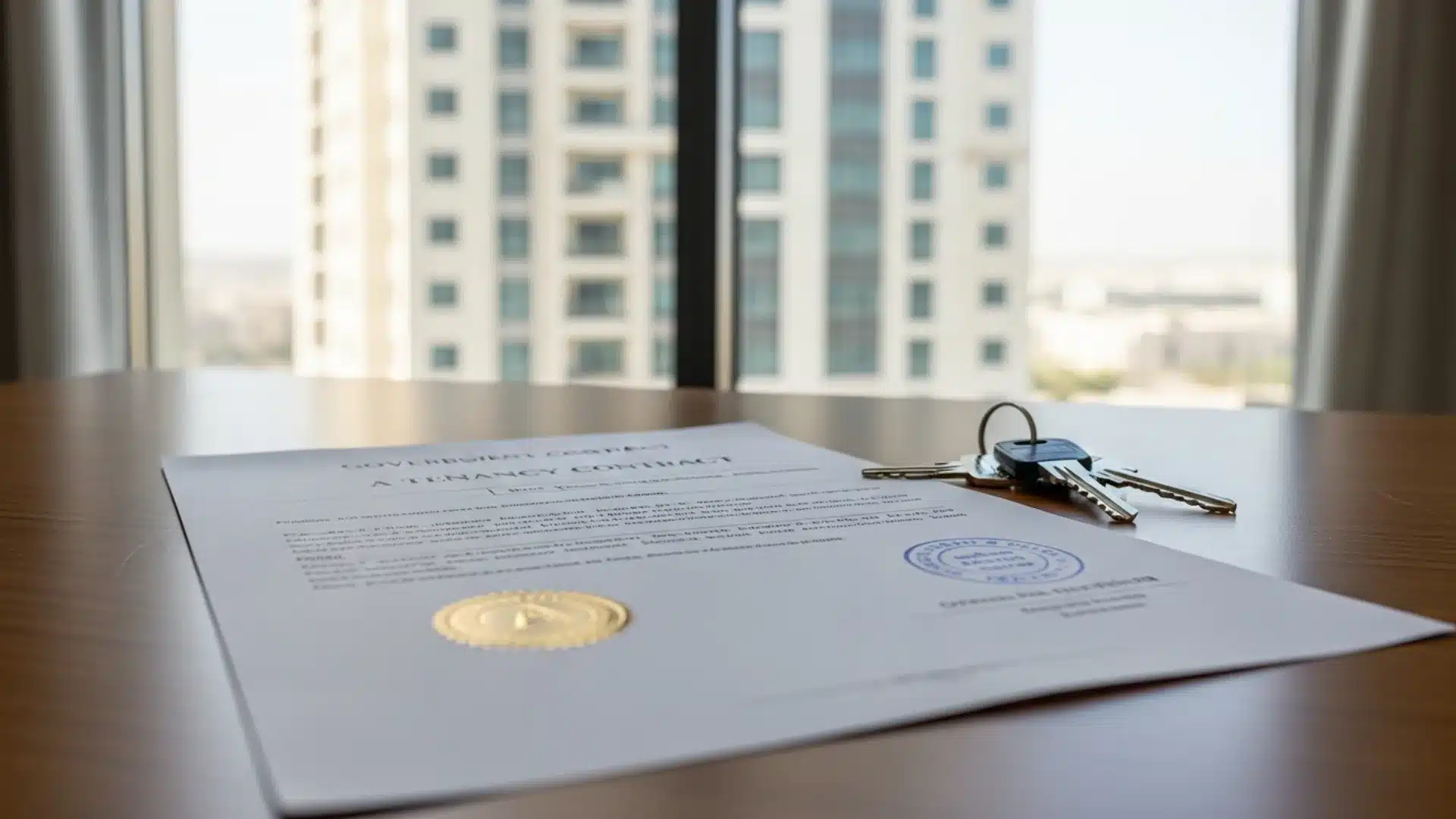
Quick AnswerEjari Dubai 2026 — what it is, how to register your tenancy contract, the documents, cost, renewal, and why businesses and tenants need it. Full guide.
If you rent a home or an office in Dubai, one word will come up again and again: Ejari. It is the system that turns your tenancy contract into an officially registered, legally recognised agreement — and you cannot get far without it. For businesses, it is a requirement for your trade licence; for residents, it is needed for utilities and family visas. This guide explains what Ejari is, how to register it, the documents and cost involved, and why it matters so much for setting up a business in Dubai. Whether you are a founder securing an office for your trade licence or a resident moving into a new home, understanding Ejari saves you from the frustrating discovery that a process you urgently need — a licence renewal, a utility connection, a family visa — is blocked simply because a tenancy was never properly registered.
It is one of the most quietly important pieces of admin in Dubai: invisible when it is done, and a hard stop when it is not. Getting it right, and keeping it current, is one of those small disciplines that keeps everything else flowing.
Ejari Download, Print and Online Registration
To download your Ejari certificate, log in to the Dubai REST app or the Dubai Land Department portal, open your registered tenancy contract, and save the PDF — the same place handles Ejari print, renewal and cancellation. Ejari registration online costs around AED 155–220 through the Dubai REST app, or slightly more at an Ejari typing centre near you.
Ejari meaning is simple: it is Dubai Land Department’s official register of tenancy contracts (from the Arabic إيجاري, “my rent”), and a valid Ejari is required for DEWA connection, family visas and your office lease when you set up a business in Dubai.
What is Ejari?
Ejari is Dubai's official system for registering tenancy (rental) contracts. The word "Ejari" means "my rent" in Arabic, and the system is run under the Dubai Land Department and its regulatory arm, RERA (the Real Estate Regulatory Agency). Its purpose is to bring all rental agreements in Dubai into a single, regulated, official framework.
When you register a tenancy contract through Ejari, that contract becomes legally recognised, and you receive an Ejari certificate — the official proof that your tenancy is registered. This certificate is not just a piece of paper; it is a gateway document required for a surprising number of essential processes. For businesses, it is needed to obtain and renew a trade licence. For residents, it is needed to connect utilities (DEWA), sponsor family visas, and complete various government transactions.
The system exists to protect both landlords and tenants by bringing rental relationships into a transparent, regulated structure, and to link tenancies to the official property and government systems. Before Ejari, rental agreements lived in a far less regulated space; the system brought order, transparency, and enforceability to one of the most important relationships in any resident's or business's life — the roof over their head or their place of work. In practical terms, an unregistered tenancy in Dubai leaves you unable to complete many of the things you need to do — which is why Ejari registration is effectively mandatory for anyone renting, whether for a home or for business premises.
Why Ejari is mandatory and matters
Registering through Ejari is mandatory in Dubai, and the reason it matters so much is the chain of processes that depend on it. Think of the Ejari certificate as a key that unlocks other doors.
For a business, the most important link is the trade licence. A Dubai mainland licence requires a registered tenancy for the company's premises — you cannot obtain or renew a mainland licence without a valid Ejari for your office or commercial space. This makes Ejari a non-negotiable step in setting up and maintaining a mainland company. The Ejari ties your business to a physical, legally registered address, which is a core requirement of mainland licensing.
For a resident, the Ejari is needed to connect utilities with DEWA (you generally cannot set up your electricity and water account without it), to sponsor family members' residence visas (a registered tenancy demonstrates suitable accommodation), and for other government and official transactions. Without a registered Ejari, these essential steps stall.
This dependency chain is why Ejari is not a bureaucratic afterthought but a foundational document. Whether you are a business needing a licence or a resident setting up your home and sponsoring family, the Ejari is the registration that makes the rest possible.
How to register an Ejari
Registering an Ejari is straightforward and can be done through several official channels. The main routes are:
- The Dubai REST app (the Dubai Land Department's official app), through which tenancies can be registered digitally.
- Approved typing centres, which handle the registration on your behalf.
- Authorised real estate services and management companies.
The process involves submitting your signed tenancy contract along with the required supporting documents, after which the registration is processed and your Ejari certificate is issued. Through the app, much of this can be done digitally; through a typing centre, staff handle the submission for you. For many tenancies, the registration can be completed quickly once all documents are in order.
The key to a smooth registration is having everything ready: the properly signed contract and the correct supporting documents. Missing paperwork is the main cause of delay, so preparing in advance — or using a service that knows exactly what is required — makes the process painless.
Documents you'll need
For Ejari registration, you typically need:
- The signed tenancy contract between landlord and tenant.
- The tenant's documents — Emirates ID for individuals, or the trade licence and company documents for a business registering a commercial tenancy.
- The landlord's documents — such as a copy of the landlord's passport/Emirates ID where required.
- The property title deed or proof of ownership.
- The DEWA premises number for the property.
For a business registering a commercial tenancy, the trade licence and company documents are central, because the Ejari ties the premises to the company. Having all documents ready before you start ensures the registration is processed without delays. If anything is missing or inconsistent — a mismatch in names, an expired document, or a missing title deed — it can hold up the process, so a quick check that everything is complete and current pays off.
What it costs
Ejari registration involves a government registration fee plus any service or typing-centre charges for processing. The total is modest, but it varies slightly depending on the channel — registering yourself through the Dubai REST app versus using a typing centre or a service provider that adds its own charge. Because fees can change and service charges differ, it is best to confirm the current cost through the official channel when you register.
For a business, the Ejari cost is a small part of the overall premises and licensing expenses — far smaller than the rent itself or the licence fees — but it is a required cost, so it should be budgeted as part of setting up or renewing. It is one of those small but essential line items that, if overlooked, can hold up the much larger and more important process of getting your licence issued or renewed.
Ejari for businesses — the licence link
For companies, it is worth emphasising just how tightly Ejari is woven into the business-setup and renewal process. When you set up a Dubai mainland company, securing premises and registering the Ejari is a key step, because the trade licence cannot be issued without a registered tenancy for the company's address. The Ejari effectively anchors your business to a real, registered location — which is part of why mainland licences carry more credibility and broader market access than lighter structures.
Just as importantly, the Ejari must be kept valid for licence renewal. Each year, when you renew your trade licence, a current Ejari is required. If your tenancy has expired and the Ejari has lapsed, your licence renewal can stall until it is sorted. This is why businesses treat the lease, the Ejari, and the licence renewal as a connected cycle — renew the lease, renew (or re-register) the Ejari, then renew the licence. Managing these together, often through a PRO or setup partner, ensures there is no gap that disrupts the business's legal standing.
For founders choosing premises, this also means the choice of office is not just an operational decision but a licensing one: the premises must be suitable and the tenancy registrable through Ejari for the licence to be issued. Flexible options like business centres and certain co-working arrangements that provide Ejari-eligible tenancies have become popular precisely because they satisfy this requirement efficiently, giving small businesses a compliant registered address without the cost of a full standalone office.
Renewing your Ejari
Because Ejari is tied to the tenancy contract, renewing your lease means renewing or re-registering your Ejari for the new contract period. Keeping a valid, current Ejari matters for the same reasons it mattered initially: businesses need it for trade-licence renewal, and residents need it for ongoing utilities and visa matters.
Letting an Ejari lapse alongside an expired tenancy creates avoidable problems — a stalled licence renewal, complications with utilities, or issues with visa processes. The simple discipline is to renew the Ejari in step with the lease, so it is always current. For businesses, building this into the annual compliance cycle — lease renewal, Ejari renewal, licence renewal — keeps everything aligned and avoids the scramble of discovering an expired Ejari when you urgently need a valid one for a licence renewal.
Ejari vs the tenancy contract — clearing the confusion
A common point of confusion is the difference between the tenancy contract and Ejari. They are related but distinct. The tenancy contract is the agreement between landlord and tenant, setting out the rent, term, and conditions. Ejari is the official registration of that contract with the Dubai Land Department's system, which makes it legally recognised and produces the Ejari certificate.
In short: the tenancy contract is the agreement; Ejari is the act of registering it officially. You need both — a proper tenancy contract and its Ejari registration. Crucially, for the processes that matter (licence renewal, utilities, visa sponsorship), it is the registered Ejari certificate that is accepted, not merely the unregistered contract. This is why simply having a signed lease is not enough; it must be registered through Ejari to unlock the things you need. Understanding this distinction prevents the mistake of assuming a signed contract alone is sufficient.
How Ejari fits into your Dubai setup
Pulling it together, Ejari sits at an important junction in establishing yourself in Dubai. For a business, the sequence is: choose suitable premises, sign the tenancy, register the Ejari, and use it to obtain your trade licence — then maintain all three in an annual renewal cycle. For a resident, it is: sign your home tenancy, register the Ejari, and use it to connect utilities and sponsor family. In both cases, the Ejari is the registration that connects your physical location to the official systems.
Because it touches licensing, utilities, and visas, getting the Ejari right and keeping it current is part of a smooth, compliant presence in Dubai — for your company and your family. It is a small step in itself, but one that unlocks much larger and more important processes, which is exactly why it deserves attention rather than being treated as an afterthought.
The pattern is worth internalising because it repeats across Dubai's systems: a single registered document acts as the key to a whole chain of services. With Ejari, the tenancy registration unlocks the licence, the utilities, and the visas. Miss it, and the chain breaks; get it right and keep it current, and everything downstream flows without friction. For a business especially, where an expired Ejari can hold up a licence renewal that in turn affects bank accounts and visas, the small habit of keeping the Ejari valid in step with the lease pays off many times over. It is the kind of unglamorous diligence that distinguishes a smoothly run operation from one that lurches from one administrative emergency to the next.
Ejari and connecting utilities (DEWA)
One of the most immediate reasons residents and businesses register an Ejari is to connect utilities through DEWA (Dubai Electricity and Water Authority). To open a DEWA account for a property and have electricity and water connected, a registered Ejari is generally required, because DEWA needs proof of a legally recognised tenancy tied to the premises. This is one of the clearest examples of how the Ejari acts as a gateway document — without it, you simply cannot get the lights on.
For a business, this matters because your office or commercial space needs utilities to operate, and the DEWA premises number is itself part of the Ejari registration, creating a tight link between the tenancy, the Ejari, and the utility account. For a resident, connecting DEWA is one of the first things you do when moving into a new home, and the Ejari is the document that makes it possible. Understanding this connection helps you sequence your move or your setup correctly: register the Ejari, then connect DEWA, rather than discovering at the last moment that the utility account is blocked for want of a registered tenancy.
Residential vs commercial Ejari
Ejari applies to both residential and commercial tenancies, but the context differs. A residential Ejari registers your home rental and is what you use for DEWA, family visa sponsorship, and personal government transactions. A commercial Ejari registers your business premises and is tied to your trade licence — it is the version that matters most for companies, anchoring the business to its registered address.
The registration process and documents are broadly similar, but for a commercial Ejari the trade licence and company documents are central, whereas for a residential Ejari the tenant's Emirates ID is the key personal document. For someone both living and running a business in Dubai, this means you may deal with Ejari twice — once for your home and once for your office — each serving its own set of downstream processes. Knowing which type you need, and which documents go with it, keeps both your personal and business affairs moving smoothly.
The Dubai REST app and digital registration
Like much of Dubai's government services, Ejari has been digitised through the Dubai REST app, the Dubai Land Department's official platform. The app allows tenancies to be registered and managed digitally, reducing the need to visit a typing centre or service office. Through it, eligible users can handle Ejari registration, access their tenancy information, and manage related real-estate services from their phone.
This digital route reflects the same convenience-focused approach seen across Dubai's government — UAE Pass login, online processing, and reduced paperwork. For those who prefer assistance, typing centres and authorised service providers remain available and handle the process for a service charge. Having both a self-service digital option and an assisted route means there is a path that suits everyone, from the tech-comfortable tenant registering their own contract in the app to the business that prefers to delegate the whole thing to a PRO. The digitisation has made what was once a more cumbersome process notably faster and more accessible.
How Ejari protects tenants and landlords
Beyond unlocking processes, Ejari serves a deeper purpose: it brings rental relationships into a regulated, transparent framework that protects both parties. By officially registering the tenancy, Ejari creates a clear, recognised record of the agreement and its terms, which supports the enforcement of rights and the fair resolution of any disputes. The rental framework, governed by RERA's regulations and supported by Dubai's Rental Dispute Centre, relies on registered tenancies to function.
For tenants, this means greater security and a clear basis for their rights regarding rent, renewal, and the return of deposits. For landlords, it means a recognised, enforceable record of the tenancy and its terms. The system discourages informal, unregistered arrangements that can leave either party exposed. In this sense, Ejari is not merely an administrative hoop but a piece of consumer and commercial protection — part of what makes Dubai's rental market relatively orderly and trustworthy compared with unregulated markets elsewhere. For businesses leasing commercial space, this protection extends to the certainty of their premises, which underpins the stability of the business itself.
Official source
Ejari operates under the Dubai Land Department and RERA, and the authoritative information and digital services are available through the official channels at dubailand.gov.ae and the Dubai REST app. Because fees and procedures can be updated, relying on the official source ensures you have the current requirements, and for businesses, coordinating the Ejari with the trade-licence process through an experienced setup partner keeps the whole sequence aligned.
A quick recap
To summarise the essentials: Ejari is the official registration of your Dubai tenancy contract with the Dubai Land Department, producing the Ejari certificate that you need for trade-licence issuance and renewal, DEWA utility connections, and family visa sponsorship. You register it through the Dubai REST app or a typing centre with your signed contract and supporting documents, for a modest fee, and you renew it in step with your lease. The tenancy contract is the agreement; Ejari is its official registration — and only the registered certificate is accepted for the processes that matter. Keep it current, and everything downstream flows; let it lapse, and you create avoidable blockages. For a business, treat the lease, the Ejari, and the licence as one connected annual cycle.
Common Mistakes to Avoid
- Thinking a signed lease is enough. Only the registered Ejari certificate is accepted for licences, utilities, and visas — register it.
- Letting the Ejari lapse. It must be current for trade-licence renewal; renew it in step with your lease.
- Missing or mismatched documents. Incomplete paperwork is the main cause of delay — have everything ready and consistent.
- Choosing premises without checking Ejari-eligibility. For a mainland licence, the tenancy must be registrable through Ejari.
- Forgetting Ejari in your setup budget and timeline. It's small but required — factor it into premises and licensing planning.
- Treating lease, Ejari, and licence separately. They're a connected annual cycle — manage them together.
- Confusing Ejari with the tenancy contract. The contract is the agreement; Ejari is its official registration — you need both.
Set up your Dubai business with the premises and Ejari handled
Securing the right premises and registering the Ejari correctly is a key step in getting your Dubai trade licence — and keeping it valid. Noble Core Ventures helps businesses set up on the Dubai mainland end to end: choosing Ejari-eligible premises, registering the tenancy, obtaining the trade licence through the Department of Economy and Tourism, and managing the annual lease–Ejari–licence renewal cycle — so your business stays compliant and your licensing never stalls over a lapsed Ejari.
Talk to Our Experts
Dubai business setup, office leasing and trade licensing
Frequently Asked Questions
What is Ejari?
Ejari is Dubai’s official system for registering tenancy (rental) contracts, run under the Dubai Land Department and its regulatory arm RERA. The word ‘Ejari’ means ‘my rent’ in Arabic. Registering a tenancy contract through Ejari makes it legally recognised and is mandatory for rental agreements in Dubai. An Ejari certificate is required for many essential processes — including connecting utilities, sponsoring family visas, and, for businesses, obtaining and renewing a trade licence. It brings rental contracts into a regulated, official framework that protects both landlords and tenants.
Is Ejari mandatory in Dubai?
Yes. Registering your tenancy contract through Ejari is mandatory in Dubai. A rental agreement should be registered with Ejari to be officially recognised, and the Ejari certificate is required for key processes: businesses need it to obtain and renew their trade licence (mainland licences require a registered tenancy for the premises), and residents need it for utility connections (DEWA), family visa sponsorship, and other government transactions. Operating without a registered Ejari leaves gaps that block these essential steps, so registration is a practical necessity, not just a formality.
How do I register an Ejari in Dubai?
You register an Ejari by submitting the tenancy contract and required documents through the official Ejari channels — the Dubai REST app, approved typing centres, or authorised real estate services. You provide the signed tenancy contract, copies of the landlord’s and tenant’s documents (Emirates ID/trade licence as applicable), the title deed or ownership proof, and DEWA premise details. Once processed, you receive the Ejari certificate. The process is straightforward and can often be completed quickly through the app or a typing centre.
What documents are needed for Ejari registration?
For Ejari registration you typically need the signed tenancy contract, the tenant’s Emirates ID (for individuals) or trade licence and related documents (for businesses), the landlord’s documents, the property title deed or ownership proof, a copy of the landlord’s passport/Emirates ID where required, and the DEWA premises number. For a business registering a commercial tenancy, the trade licence and company documents are central. Having all documents ready ensures the registration is processed without delays.
How much does Ejari registration cost?
Ejari registration involves a government registration fee plus any service or typing-centre charges for processing, so the total is modest but varies slightly depending on the channel used (the Dubai REST app versus a typing centre or service provider). Because fees can change and service charges differ by provider, it is best to confirm the current cost through the official channel. For businesses, the Ejari cost is a small part of the overall premises and licensing expenses, but it is a required one, so it should be budgeted as part of setting up or renewing.
Why do businesses need Ejari?
Businesses need Ejari because a Dubai mainland trade licence requires a registered tenancy for the company’s premises — you cannot obtain or renew a mainland licence without a valid Ejari for your office or commercial space. The Ejari links your business to a physical, legally registered address, which is a requirement of mainland licensing. This is why securing premises and registering the Ejari is a key step in the company-setup process, and why keeping the Ejari valid is essential for annual licence renewal.
Do I need to renew my Ejari?
Yes. An Ejari registration is tied to the tenancy contract, so when you renew your lease you also renew (or re-register) the Ejari for the new contract period. Keeping a valid, current Ejari matters because it is required for trade-licence renewal (for businesses) and for ongoing processes like utilities and visa matters (for residents). Letting your Ejari lapse alongside an expired tenancy can create problems for licence renewal and other transactions, so it should be kept current in step with your lease.
What is the difference between Ejari and a tenancy contract?
A tenancy contract is the agreement between landlord and tenant setting out the rental terms. Ejari is the official registration of that contract with the Dubai Land Department’s system, which makes it legally recognised and gives you the Ejari certificate. In other words, the tenancy contract is the agreement, and Ejari is the act of registering it officially. You need both: a proper tenancy contract and its Ejari registration. Only the registered Ejari certificate is accepted for processes like licence renewal, utilities, and visa sponsorship.
Contact Us For Free Consultation
Licensed UAE consultancy. One reply, no spam.
Thank you.
A consultant will reply on WhatsApp shortly.