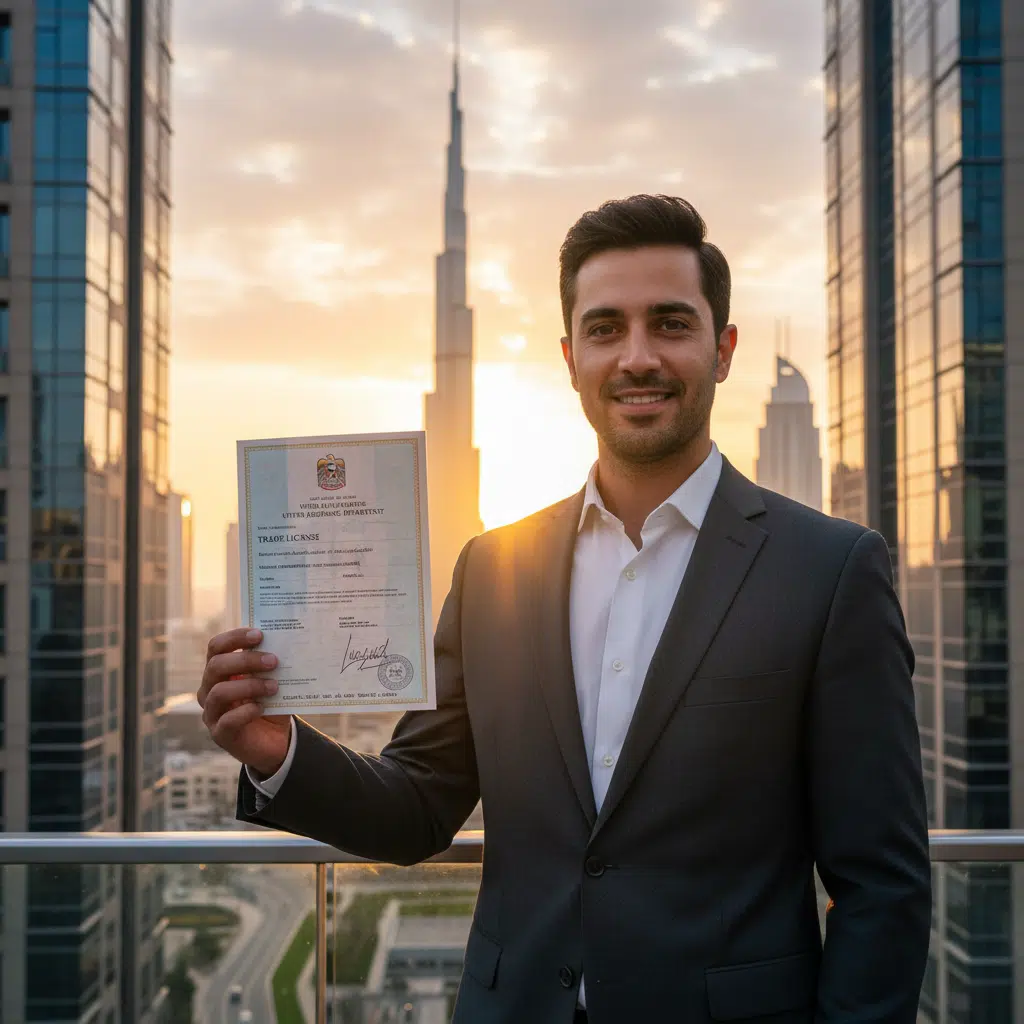
Quick answer
Foreigners can own 100% of a Dubai company since the 2021 legal reform. Setup takes 3–7 business days for Free Zones, 5–10 for Mainland locations.
- Free Zone setup starts from AED 5,750; Mainland from AED 12,000
- Total cost including visa and service fees: AED 20,860 (Free Zone) or AED 21,775 (Mainland)
- You can set up and own a company 100% remotely without living in Dubai
Best for: Foreigners seeking full ownership with minimal local sponsorship requirements
The UAE’s landmark 2021 legal reform changed everything — foreigners can now own 100% of a company in Dubai, no local sponsor required. But most entrepreneurs still don’t know how to actually do it, how much it costs, or which setup is right for them. This guide breaks it all down, step by step, for 2026. When navigating start business Dubai foreigner, it helps to work with experienced local consultants familiar with UAE regulations.
Your setup cost, in 10 seconds
Package prices. Health insurance is required by law and not included.
Thank you.
Your written quote follows on WhatsApp.
Can Foreigners Really Own 100% of a Dubai Company?
Yes — and this is the biggest change in UAE business law in decades. Federal Decree-Law No. 32 of 2021 removed the requirement for a local UAE national sponsor holding 51% of your company. Today, full foreign ownership is available for:
- All Free Zone companies — 100% ownership has always applied here
- Most Mainland companies — now permitted for the vast majority of business activities
- Offshore structures — always fully owned by foreigners
Exceptions: A small number of “strategic” sectors — oil & gas, defence, banking, telecom — still have ownership restrictions. For 99% of entrepreneurs, these don’t apply.
Free Zone vs Mainland: Which Is Right for You?
This is the first decision every foreigner faces — and it has a big impact on cost, flexibility, and how you operate.
| Factor | Free Zone | Mainland |
|---|---|---|
| Foreign Ownership | 100% ✅ | 100% ✅ |
| Cost (starting from) | AED 5,750 | AED 12,000 |
| UAE Mainland Trading | Via distributor only | Direct ✅ |
| Office Requirement | Flexi-desk available | Physical space needed |
| Visa Allocation | 1–6 (varies by zone) | Based on office space |
| Best For | Freelancers, consultants, online businesses | Retail, services, UAE-focused businesses |
How to Start a Business in Dubai as a Foreigner: Step-by-Step
Choose Your Business Activity
The UAE has 2,000+ licensed business activities — from consulting and trading to e-commerce and manufacturing. Your activity determines your license type (commercial, professional, or industrial) and which jurisdiction suits you best.
Select Your Jurisdiction
Decide between Free Zone (IFZA, DMCC, RAKEZ, DIFC) or Mainland (DED). For most foreigners starting out, a Free Zone is faster, cheaper, and simpler.
Reserve Your Trade Name
Submit 3 name options. Names must not include offensive terms, religious references, or match existing registered names. Approval takes 1–2 business days. Businesses and individuals dealing with start business Dubai foreigner matters should ensure all documentation is complete and up to date.
Submit Documents & Get Initial Approval
Required documents: passport copy, Emirates ID (if resident), proof of address, and completed application form. Some activities require additional approvals from sector regulators.
Secure Office Space / Flexi-Desk
Free Zones offer virtual office or flexi-desk packages from AED 3,000/year — ideal for businesses that don’t need a physical presence. Mainland requires a tenancy contract (Ejari).
Receive Your Trade License
Pay the final license fees and receive your trade license. This is your legal permission to operate. Timeline: 3–7 business days for Free Zone, 5–10 for Mainland.
Apply for Your Residence Visa
As a company owner, you can sponsor your own UAE residence visa (2-year or 3-year). Process: entry permit → medical & biometrics → Emirates ID → visa stamping. Timeline: 15–25 days.
Open a Corporate Bank Account
Apply to Emirates NBD, FAB, ADCB, or Mashreq. Free Zone companies typically get accounts faster (2–4 weeks vs 4–8 weeks for Mainland). Noble Core handles bank account opening — we know which banks approve fastest.
Real Costs: How Much Does It Actually Cost?
Here’s an honest, complete breakdown for 2026 — no hidden fees:
Free Zone Setup (e.g. IFZA — Most Popular for Foreigners)
| Trade License | AED 12,900 |
| Noble Core Service Fee | AED 3,000 |
| Investor Visa (1 visa) | AED 4,000 |
| Medical & Emirates ID | AED 710 |
| Corporate Tax Registration | AED 250 |
| Total | AED 20,860 |
Mainland Setup (Dubai DED)
| Mainland License Fee | AED 12,000 |
| MOA Signing | AED 510 |
| Initial Approval & Trade Name | AED 980 |
| Establishment Card | AED 575 |
| Noble Core Service Fee | AED 3,000 |
| Investor Visa (1 visa) | AED 4,000 |
| Medical & Emirates ID | AED 710 |
| Total | AED 21,775 |
Do You Need to Live in Dubai to Own a Company There?
No. You can set up and own a UAE company entirely remotely. Many of our clients are based in India, UK, Europe, or the US and run their Dubai companies without living there. You’ll need to visit once for the visa stamping process (if you want a UAE residence visa), but the company setup itself can be done 100% remotely through Noble Core. The process of handling start business Dubai foreigner has become more streamlined in 2026 thanks to updated government digital platforms. The official mainland licensing authority is the Dubai Department of Economy and Tourism (DET) — the primary licensing body for mainland businesses for the most accurate and up-to-date information.
Best Free Zones for Foreigners in Dubai 2026
Not all free zones are equal. Here’s our current recommendation by business type:
- IFZA (Dubai) — Best overall for cost + flexibility. Ideal for consultants, freelancers, trading companies. From AED 12,900.
- DMCC (Dubai) — Best for trading, commodities, crypto. Prestigious address. From AED 20,000.
- RAKEZ (Ras Al Khaimah) — Cheapest option available. From AED 5,750. Good for startups on a budget.
- DIFC (Dubai) — Best for financial services, fintech, fund management. Premium jurisdiction.
- Ajman Free Zone — Budget-friendly, good for light manufacturing and trading. Ajman trade license from AED 5,750.
Ready to Start Your Dubai Business?
Noble Core Ventures has helped 5,000+ businesses launch in the UAE. We handle everything — license, visa, bank account — so you can focus on building your business.
Or call us: +971 52 290 3501
Frequently Asked Questions
Can a foreigner own 100% of a company in Dubai?
Yes. Since the 2021 Commercial Companies Law reform, foreigners can own 100% of mainland companies in most sectors. Free Zone companies have always allowed 100% foreign ownership.
How much does it cost to set up a company in Dubai as a foreigner?
A complete setup including trade license, investor visa, medical & Emirates ID starts from approximately AED 20,860 for a Free Zone company and AED 21,775 for Mainland (2026 prices with Noble Core).
Do I need to be in Dubai to set up the company?
No — the company formation process can be done 100% remotely. You only need to visit Dubai for the residence visa stamping if you wish to become a UAE resident. Seeking professional guidance on start business Dubai foreigner can significantly reduce processing time and avoid costly mistakes.
How long does it take to set up a business in Dubai?
Free Zone company registration takes 3–7 business days. Mainland takes 5–10 days. The full process including residence visa and bank account typically takes 3–6 weeks.
Which is better for foreigners — Free Zone or Mainland in 2026?
For most foreigners, a Free Zone is better to start — lower cost, faster setup, no need for office space, and you still get 100% ownership. Choose Mainland if you plan to sell directly to UAE customers or government contracts.
What documents do I need to start a business in Dubai as a foreigner?
Typically: valid passport copy (min 6 months validity), proof of residential address, completed application forms, and for some activities — a business plan or NOC from a previous employer.
Planning to set up in Abu Dhabi instead? Read our complete Abu Dhabi business setup guide 2026 — covering mainland, ADGM, KIZAD and all major free zones with costs and timelines.
Noble Core Ventures is a licensed business setup consultancy in Dubai, UAE. We have helped 5,000+ entrepreneurs and companies establish their presence in the UAE. For a free consultation, call +971 52 290 3501 or visit noblecoreventures.com. Full regulatory guidance for new businesses is available on the UAE Government portal on starting and managing a business to review current requirements and procedures.
Frequently Asked Questions
Can a foreigner own 100 percent of a company in Dubai?
Yes. Federal Decree-Law No. 32 of 2021 removed the old requirement for a local UAE sponsor holding 51 percent. Full foreign ownership now applies to all free zone companies, most mainland companies and offshore structures. Only a small set of strategic sectors, such as oil and gas, defence, banking and telecom, still carry ownership restrictions, which do not affect most entrepreneurs.
How much does it cost a foreigner to set up in Dubai in 2026?
The guide’s complete free zone package, using IFZA as the example, totals AED 20,860: trade licence AED 12,900, service fee AED 3,000, one investor visa AED 4,000, medical and Emirates ID AED 710, and corporate tax registration AED 250. The equivalent mainland setup through Dubai DED totals AED 21,775, including the licence, MOA signing, initial approval, establishment card and visa costs.
Do I need to live in Dubai to own a company there?
No. The company can be set up and owned entirely remotely, and many owners run Dubai companies from India, the UK, Europe or the US. You only need to visit once, for visa stamping, if you want a UAE residence visa. The residence visa process itself, covering entry permit, medical, biometrics, Emirates ID and stamping, takes roughly 15 to 25 days.
Should a foreigner choose free zone or mainland in Dubai?
For most foreigners starting out, a free zone is faster, cheaper and simpler: setup from AED 5,750, flexi-desk options instead of physical offices, and one to six visas depending on the zone. Mainland, from AED 12,000, is the right choice if you plan to trade directly with UAE customers or pursue government contracts, since free zone companies reach the mainland only via distributors.
How long does Dubai company formation take for a foreigner?
Free zone registration takes three to seven business days, while mainland registration takes five to ten. Trade name approval takes one to two business days, and the full journey including residence visa and corporate bank account typically spans three to six weeks. Free zone companies also tend to open bank accounts faster, in about two to four weeks versus four to eight for mainland.
Which free zones does the guide recommend for foreigners in 2026?
IFZA is rated best overall for cost and flexibility, from AED 12,900, suiting consultants, freelancers and traders. DMCC, from AED 20,000, is preferred for trading, commodities and crypto with a prestigious address. RAKEZ, from AED 5,750, is the cheapest option for startups on a budget, DIFC is best for financial services and fintech, and Ajman Free Zone suits light manufacturing and trading.
Contact Us For Free Consultation
Licensed UAE consultancy. One reply, no spam.
Thank you.
A consultant will reply on WhatsApp shortly.