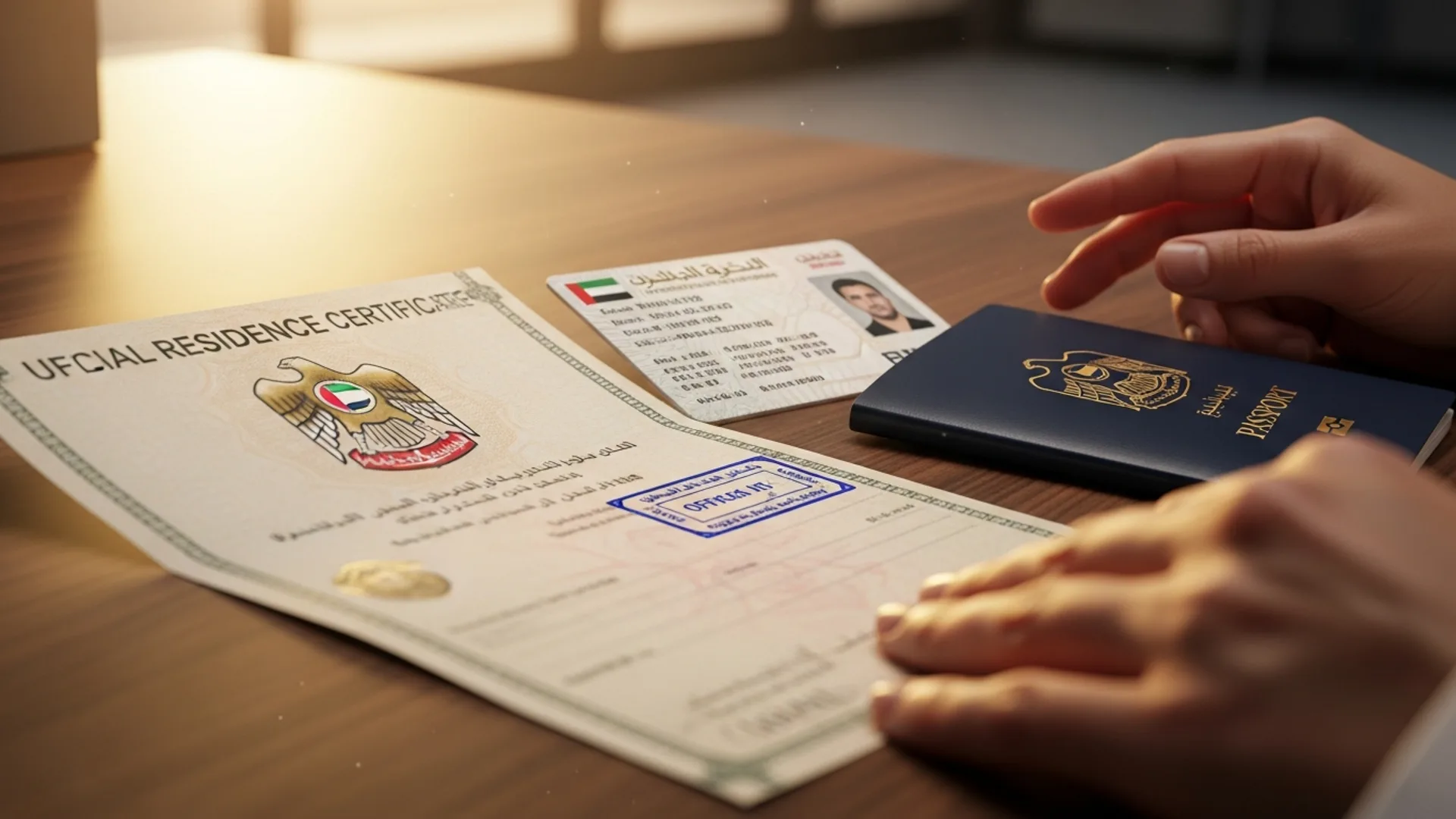
Quick AnswerUnified number UAE 2026 — what the UID is, how to find it, difference from Emirates ID and file number, and why it matters for visas and residence.
The unified number — often called the UID — is one of the most important yet least understood pieces of UAE residence documentation. While most residents know their Emirates ID number, far fewer understand the unified number, what makes it different, and why it matters. This guide explains exactly what the unified number is, how to find yours, how it differs from the Emirates ID and file number, and why it's the permanent thread connecting your entire UAE immigration history.
📋 This guide is part of our complete UAE Government Services & Portals directory — every federal and Dubai e-service in one place.
UID Number Meaning and How to Do a UID Number Check
Your UID number (also written “uid”) is the Unified Identification Number the UAE immigration authorities, ICP and GDRFA, assign when you first enter the country, linking every visa and entry-permit record to you. The uid meaning is simply this immigration file identifier, and it is printed on your residence visa and entry permit.
To run a uid number check, log in to the ICP smart-services portal at icp.gov.ae with your passport details, or read it directly off your visa. It is separate from your Emirates ID, which you can verify via our Emirates ID status check guide.
UID Number: What It Is and How to Find It (2026)
The UID (unified identification) number is a unique number the UAE immigration authorities (ICP and GDRFA) assign to everyone who enters the country; it links all your visa and entry-permit records. You can find your UID printed on your residence visa and entry permit, or look it up through the ICP smart-services portal at icp.gov.ae using your passport details. It is different from your Emirates ID number and your immigration file number.
UAE Unified Number (UID) — What It Is and How to Find It (2026)
The UAE unified number (UID) is a unique identification number the immigration authorities assign to everyone who enters the UAE, printed on your visa and entry-permit documents. It links all your UAE immigration records across visas and renewals. To find your unified number, check your residence visa or entry permit, or look it up via the ICP smart-services portal using your passport details.
What the unified number actually is
The unified number, or UID (Unified Identification Number), is a permanent identification number assigned to every foreign national by the Federal Authority for Identity, Citizenship, Customs and Port Security (icp.gov.ae) — the authority commonly known as ICP. It is assigned when you first enter the UAE immigration system, typically with your first entry permit or visa, and it stays with you permanently.
The defining characteristic of the unified number is its permanence. Unlike most other identifiers in the UAE residence system, the unified number never changes. Whether you change employers, switch from an employment visa to an investor visa, move from one emirate to another, or even leave the UAE and return years later, your unified number remains the same. It is the constant identifier that links all your UAE immigration records across your entire history with the country.
This permanence serves an important administrative function. The UAE immigration system needs a way to track an individual's continuous history even as their specific visas change. The unified number provides this continuity, allowing authorities to connect your current visa with all your previous ones, your entry and exit history, and your complete immigration record — all under one permanent number.
Unified number vs Emirates ID vs file number
One of the most common sources of confusion is the difference between the three main numbers in the UAE residence system: the unified number, the Emirates ID number, and the file number. Understanding each clarifies how the system works.
The unified number (UID) is permanent and lifelong. It never changes regardless of visa changes, sponsor changes, or even leaving and re-entering the country. It is the constant thread of your immigration identity.
The Emirates ID number is the number on your physical Emirates ID card. It links to your current residence and identity record. While the Emirates ID card is renewed with your visa, the Emirates ID number itself is also designed to be persistent for the individual, serving as your identity number for daily transactions — banking, telecom, government services, and more.
The file number (also called the visa file number or residence file number) is the number that changes. Each time you get a new visa under a new sponsor, a new file number is generated. The file number identifies a specific visa file, so when you change employers or visa types, you get a new file number for the new visa. This is why the file number alone cannot track your continuous history — it changes with each visa.
The relationship between them: the unified number is the permanent umbrella that connects all your file numbers over time, while the Emirates ID is your identity card number for daily use. When authorities need to verify your complete immigration history, the unified number is the key that links everything together.
How to find your unified number
Finding your unified number is straightforward once you know where to look. The most common place is your UAE residence visa. On the visa page or e-visa document, look for a field labelled "Unified No." or "U.I.D No." — it is typically a multi-digit number located near the top of the document, separate from the file number and the Emirates ID number. The visa document usually displays all three numbers, so take care to identify the one specifically labelled as unified or UID.
Your entry permit, issued before your residence visa, also displays the unified number in a similar format. If you have kept your entry permit documentation, the unified number appears there.
If you cannot locate your unified number on your documents, the ICP portal at icp.gov.ae can help you retrieve it. Using your passport details, you can access your immigration records, which include your unified number. The ICP UAE app provides the same capability, letting you find your unified number through your phone.
For residents who have been in the UAE through multiple visas, the unified number on your current visa is the same as on all your previous ones — that's the point of its permanence. So any of your UAE visa documents, current or historical, should display the same unified number.
Why the unified number matters
Understanding why the unified number matters helps clarify why it's worth knowing yours. The unified number serves several important functions in the UAE residence system.
First, it provides continuity across visa changes. When you change jobs and your sponsor changes, your file number changes, but your unified number stays the same. This allows the new visa to be linked to your immigration history, ensuring continuity. Without this permanent identifier, tracking an individual across multiple visas would be far more difficult.
Second, it is required for many residence transactions. When applying for a new visa, transferring sponsorship, or conducting various immigration transactions, the unified number is often required to link the new transaction to your existing record. Having it readily available smooths these processes.
Third, it supports accurate immigration records. The unified number ensures that your entry and exit history, your visa history, and your overall immigration record are accurately connected under one permanent identifier, preventing the fragmentation that would occur if only changeable file numbers existed.
Fourth, it matters for status checks and verification. Because it's permanent and reliable, the unified number provides dependable access to your immigration records for status checks and verification purposes.
For most residents, the unified number operates in the background — you may not need to use it daily. But in key moments, particularly visa changes and immigration transactions, having your unified number available and understanding its role smooths the process.
The unified number in visa transitions
The unified number's value becomes most apparent during visa transitions, which are common for UAE residents over time. Consider a typical scenario: you arrive in the UAE on an employment visa with one company, work for a few years, then change to a new employer. Your new employer sponsors a new visa, generating a new file number. Later, you start your own business and switch to an investor visa under your company, generating yet another file number.
Through all these changes, your unified number remains constant. This permanence allows the immigration system to recognise that all these visas belong to the same person with one continuous history. When you apply for each new visa, the unified number links it to your record, ensuring continuity and accurate history.
This continuity matters for several reasons. It ensures your immigration history is accurate and complete, which can be relevant for long-term residence considerations, Golden Visa applications, and other situations where your UAE history is considered. It also prevents the complications that would arise if each visa change created a disconnected record. The unified number is the administrative mechanism that makes your UAE residence a continuous, trackable journey rather than a series of disconnected episodes.
Common situations where you need your unified number
Several common situations require knowing your unified number. When changing sponsors or employers, the new visa application often requires your unified number to link the new visa to your record. When transferring your visa from one type to another — say, from employment to investor visa — the unified number ensures continuity.
When applying for family visas, your unified number as the sponsor connects the family applications to your record. When conducting various immigration transactions through ICP, the unified number may be required or helpful for accessing your records. When dealing with any situation where your complete immigration history is relevant, the unified number is the key identifier.
For these reasons, it's worth knowing where to find your unified number and keeping it accessible. While you won't need it daily, having it available when these situations arise smooths the process and prevents delays.
Contact Us For Free Consultation
or
Ask on WhatsApp insteadLicensed UAE consultancy. One reply, no spam.
Thank you.
A consultant will reply on WhatsApp shortly.
Common Mistakes people make with the unified number
A frequent mistake is confusing the unified number with the file number, leading to errors in applications and transactions. Remember: the unified number is permanent; the file number changes with each visa. Using the right number in the right place prevents complications.
Another mistake is not knowing where to find the unified number, causing delays when it's needed. Knowing it's labelled "Unified No." or "U.I.D" on your visa documents lets you locate it quickly.
Some people assume the unified number changes with each visa, like the file number, and worry when they get a new file number. Understanding that the unified number stays constant provides reassurance and prevents confusion during visa transitions.
Others don't keep their unified number accessible, having to search for it under time pressure when it's needed for a transaction. Noting it somewhere accessible saves time in key moments.
Finally, some confuse the unified number with the Emirates ID number. While both are persistent, they serve different functions — the Emirates ID for daily identity and the unified number for immigration history continuity. Understanding the distinction clarifies the system.
How the unified number fits the broader UAE residence system
The unified number is one part of the integrated UAE residence and identity system administered by the Federal Authority for Identity, Citizenship, Customs and Port Security. This system connects with MOHRE for the labour and work permit side, with the Emirates ID system for daily identity, and with the broader immigration database that tracks entry, exit, and residence.
Within this system, the unified number plays its specific role as the permanent immigration identifier. The Emirates ID handles daily identity verification. The file number identifies specific visa files. MOHRE handles work permits. Together, these elements form a comprehensive system, with the unified number providing the permanent thread of immigration continuity.
Understanding how these pieces fit helps residents navigate the system efficiently. When you understand that the unified number is your permanent immigration identifier, the Emirates ID is your daily identity number, and the file number is your current visa identifier, the various numbers and their purposes become clear rather than confusing.
The unified number for business sponsors
For business owners and sponsors, understanding the unified number takes on additional dimensions beyond personal residence. As a business sponsor of employee visas, you interact with the unified number system for each employee you sponsor, and understanding how it works helps manage employee residence efficiently.
Each employee you sponsor has their own permanent unified number, just as you do. When you hire an employee and sponsor their work visa, their unified number links the new visa to their immigration history. If you hire someone who previously worked elsewhere in the UAE, their unified number connects their new visa under your sponsorship to their prior history. This continuity is part of what makes the UAE immigration system coherent across the job changes that are common in the workforce.
When an employee leaves and you cancel their visa, their unified number persists, ready to link to their next visa under a new employer. This permanence means that the immigration system maintains a continuous record of each individual across all their employers, which supports accurate immigration administration and helps prevent the fragmentation that changeable identifiers alone would cause.
For businesses managing multiple employees, understanding that each has a permanent unified number while their file numbers change with each visa helps make sense of the documentation. When processing visa transactions for employees, the unified number is often required to link the transaction to the employee's record. Maintaining accurate records of employee unified numbers, alongside their current file numbers and Emirates IDs, supports smooth visa administration.
How the unified number supports long-term residence planning
For residents planning a long-term future in the UAE, the unified number's permanence supports the continuity that long-term planning requires. As you progress through your UAE journey — perhaps starting as an employee, then becoming a business founder, then qualifying for a Golden Visa — your unified number remains constant, tying together this entire progression.
This continuity matters for long-term residence considerations. When you apply for a Golden Visa, your immigration history, linked through your unified number, is part of your record. When you make significant residence transitions, the unified number ensures your history follows you. For residents building a decade-long or longer presence in the UAE, the unified number is the permanent thread that makes their residence a continuous, coherent journey rather than a series of disconnected visas.
Understanding this helps long-term residents appreciate the role of the unified number in their overall UAE journey. While individual visas come and go, the unified number is the constant that connects them, supporting the continuity that long-term residence and the relationships, history, and standing it builds depend upon.
The broader documentation picture for new residents
For newcomers to the UAE, the array of numbers and documents can initially seem confusing — passport, entry permit, residence visa, Emirates ID, file number, unified number. Understanding how they fit together provides clarity and confidence in navigating the system.
The passport is your home country identity document. The entry permit authorises your initial entry. The residence visa establishes your right to reside, and within it appear both the file number (specific to that visa) and the unified number (your permanent identifier). The Emirates ID is your daily identity card for transactions within the UAE. Together, these documents and numbers form your residence identity.
For new residents, the practical advice is to understand each document's role, keep them accessible, and note your key numbers — particularly your Emirates ID number for daily use and your unified number for immigration continuity. As you settle into UAE life and potentially move through different visas over the years, this understanding serves you well, making each transition clearer and smoother.
The UAE has invested heavily in making its residence and identity system coherent and digitally accessible. For residents who take the time to understand the system — the role of each number and document, how they connect, and where to find them — navigating residence matters becomes straightforward rather than confusing. The unified number, as the permanent thread of immigration identity, is a key part of this understanding.
Keeping your residence documentation organised
Given the array of numbers and documents in the UAE residence system, keeping them organised serves you well across your time in the country. A simple approach is to maintain a secure record of your key documents and numbers — passport details, residence visa with its file number and unified number, Emirates ID number, and entry permit documentation. Having these accessible saves time whenever a transaction requires them.
For families, maintaining this organisation for each family member helps the sponsoring resident manage the household's residence matters efficiently. For business sponsors, maintaining organised records of employee residence documentation, including unified numbers and current file numbers, supports smooth visa administration as employees are hired, renewed, and eventually offboarded.
The unified number, as the permanent identifier, is particularly worth recording because it stays constant and connects everything. While your visa documents display it, having it noted separately means you can readily access it even between visa documents or during transitions. This small organisational habit smooths your interactions with the UAE residence system over the years.
Digital organisation through secure storage, alongside the increasing digital accessibility of records through the ICP portal and UAE Pass integration, makes managing residence documentation easier than ever. Residents who take a few minutes to organise their documentation and understand their key numbers find that residence administration becomes a routine, low-friction part of UAE life rather than a source of confusion or delay.
Understanding your unified number, alongside your Emirates ID and file number, gives you a clear picture of your residence identity in the UAE. This clarity pays off whenever you transition between visas, sponsor family, or conduct immigration transactions, turning what can feel like a confusing array of numbers into a coherent and navigable system that supports your residence journey over the years. Knowing your unified number and where to find it is one of those small but genuinely useful pieces of practical knowledge that makes living and doing business in the UAE noticeably smoother across the years you spend in the country.
What to do next
If you're managing UAE residence — your own or your family's, or as a business managing employee residence — understanding the unified number and the broader residence documentation system helps you navigate transactions smoothly. We help individuals and businesses navigate UAE residence and identity matters, from visa transitions to family sponsorship to business employee residence management. A 20-minute call clarifies any residence documentation questions you have.
For most residents, the practical takeaway is simple: know where to find your unified number (labelled "Unified No." or "U.I.D" on your visa documents), understand that it's permanent and constant across all your visas, and keep it accessible for the key moments — visa changes and immigration transactions — when it's needed. This small piece of knowledge smooths your interactions with the UAE residence system.
The unified number reflects the thoughtful design of the UAE's residence and identity system — a permanent identifier that ensures continuity across the visa changes that are a normal part of expatriate life in the UAE. Understanding it, alongside the Emirates ID and file number, gives you clarity about your residence documentation and confidence in navigating the system. Whether you're a long-term resident who has been through multiple visas or a newcomer establishing your first UAE residence, knowing your unified number and its role is part of understanding your standing in the UAE residence system in 2026.
Talk to Our Experts
UAE residence and identity documentation
Frequently Asked Questions
What is a unified number in the UAE?
The unified number (also called UID) is a permanent identification number assigned by the Federal Authority for Identity, Citizenship, Customs and Port Security to every foreign national in the UAE. Unlike the visa file number, which changes when you change sponsors, the unified number stays with you for life across all visas, making it the consistent identifier for your immigration history.
What is the difference between unified number, Emirates ID and file number?
The unified number (UID) is a permanent lifelong identifier that never changes. The Emirates ID number is on your physical ID card and links to your current residence. The file number (visa file number) changes each time you change sponsor or visa. The unified number is the constant thread connecting all your UAE immigration records over time.
How do I find my unified number in the UAE?
Find your unified number on your UAE residence visa (printed on the visa page or e-visa), on entry permits, or through the Federal Authority for Identity, Citizenship, Customs and Port Security at icp.gov.ae using your passport details. It is typically a multi-digit number labelled ‘Unified No’ or ‘U.I.D’ on visa documents.
Why is the unified number important?
The unified number is important because it links all your UAE immigration records permanently. When you change jobs, sponsors, or visa types, your file number changes but your unified number stays the same, allowing authorities to track your continuous immigration history. It’s required for many residence transactions and ensures continuity across visa changes.
Does the unified number change when I change jobs?
No. The unified number is permanent and never changes, even when you change employers, sponsors, or visa types, or if you leave and re-enter the UAE. This permanence is its key feature — while your visa file number changes with each new visa, the unified number remains your constant identifier throughout your time in the UAE across all visas.
Where can I find my unified number on my visa?
On a UAE residence visa, the unified number appears as ‘Unified No.’ or ‘U.I.D No.’ typically near the top of the visa page or e-visa document, separate from the file number and Emirates ID number. On entry permits it appears similarly. If you can’t locate it, the ICP portal at icp.gov.ae can help you retrieve it using your passport details.
Do UAE citizens have a unified number?
The unified number system primarily applies to foreign nationals (residents and visitors) for immigration tracking. UAE citizens have their own national identity systems. For expatriate residents, the unified number is the permanent immigration identifier that persists across all visa changes throughout their time in the UAE.
Can I check my visa status with my unified number?
Yes. The unified number can be used to check visa status and access immigration records through the Federal Authority for Identity, Citizenship, Customs and Port Security at icp.gov.ae or the ICP UAE app. Because it’s permanent, it provides reliable access to your complete immigration history across all your past and current visas.
Related Noble Core deep-dives
Setting up or growing a business in the UAE?
If you’re navigating UAE government services because you’re starting or running a business here, these guides help you set up the right way:
- Business setup in Dubai — complete guide
- Dubai trade license — cost and process
- Cheapest trade license in Dubai 2026
- Cost of starting a business in Dubai 2026
And if you’d like an instant cost estimate, try our free UAE business-setup cost calculator.
For details, see our guide to Emirates ID status check.
Related: see our full guide to ICA Smart Services login.
Related: UAE visa number.