Your setup cost, in 10 seconds
Package prices. Health insurance is required by law and not included.
Thank you.
Your written quote follows on WhatsApp.
Food Truck Dubai: Comprehensive Guide to Setup, Licensing & Costs in 2025
Starting a food truck business in Dubai presents an exciting opportunity for entrepreneurs seeking a dynamic, flexible, and profitable venture in one of the Middle East’s fastest-growing markets. With Dubai’s vibrant food culture, active tourism, and diverse population, a food truck can become a popular choice, provided you understand the essentials of business setup in UAE, including licensing, permits, operational costs, and regulatory compliance. This comprehensive guide for 2025 covers everything you need to know to launch your food truck Dubai business efficiently, legally, and successfully, ensuring you leverage the market's full potential.
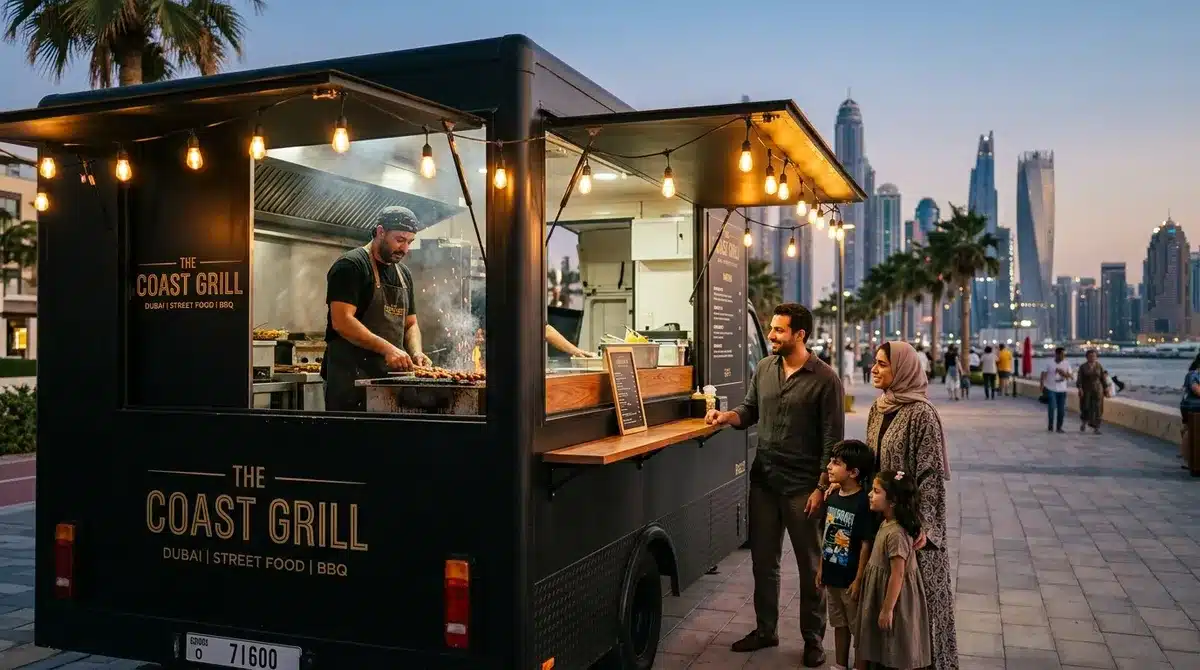
Why Start a Food Truck Business in Dubai? Advantages & Market Insights
Dubai’s food truck sector is rapidly expanding, fueled by increasing demand for diverse culinary experiences, convenient dining options, and unique street food concepts. The attractive climate, year-round events, and cosmopolitan population create the perfect environment for mobile food businesses. Here's why Dubai is an ideal location:
- Vibrant Tourism & Events Scene: Dubai hosts numerous festivals, concerts, and public events throughout the year, offering prime locations for food trucks to capture large audiences.
- Diverse Population: A melting pot of cultures creates demand for a wide range of international cuisines, allowing food trucks to cater to niche markets or broad tastes.
- Lower Overhead Costs: Compared to traditional brick-and-mortar restaurants, food trucks typically have lower initial investment and operational expenses, making them an attractive entry point for culinary entrepreneurs.
- Flexibility & Mobility: The ability to move to different high-demand locations or participate in various events offers unparalleled flexibility and market reach.
- Growing Demand for Casual Dining: There's a rising preference for informal, quick, and high-quality food options, which food trucks are perfectly positioned to provide.
Understanding these market dynamics is crucial for crafting a successful business plan and identifying your target audience within the dynamic food truck Dubai landscape.
Choosing Your Business Structure: Mainland vs. Free Zone for Food Trucks
When considering company registration in UAE for a food truck, two primary pathways are available for business setup:
- Mainland Business Setup (DED License): This is overwhelmingly the recommended and practical path for a food truck Dubai business. Licensing under the Dubai Department of Economic Development (DED) allows you to operate throughout Dubai and across the UAE without geographical restrictions within free zones.
- Free Zone Setup: While free zones offer benefits like 100% foreign ownership and full repatriation of profits, they are generally not suitable for food truck businesses. Free zones are designated economic areas with their own regulations, and companies licensed within them are typically restricted to operating within the free zone's boundaries. They do not allow commercial trade or physical operations on Dubai’s public roads or general mainland areas. Therefore, a free zone license would severely limit your food truck’s mobility and market access, making it impractical for this business model.
Given the mobility requirement of a food truck, a DED license as a mainland business is essential to facilitate full access to Dubai’s vibrant market and public spaces. Recent amendments to the UAE Commercial Companies Law now permit 100% foreign ownership for most commercial activities on the mainland, including food trucks. This eliminates the previous 51% local sponsorship requirement for most commercial activities, providing greater control and flexibility for international investors.
Licensing and Permits Required for a Food Truck in Dubai (2025)
To operate a food truck Dubai business legally and safely, you must acquire multiple licenses and permits. This multi-layered approval process ensures compliance with commercial, health, and safety regulations.
- Trade License from Dubai DED: This is the foundational license. Your business activities must be registered under specific categories such as “Food Truck,” “Mobile Catering Services,” or “Restaurant Management & Operation.” This trade license is mandatory for all commercial activities in Dubai mainland and dictates the legal scope of your operations.
- Food Safety Permit from Dubai Municipality: This is arguably the most critical permit for a food business. It requires strict compliance with food handling, preparation, storage, hygiene, and safety standards. Dubai Municipality conducts thorough inspections of your food truck vehicle and operational procedures to ensure public health safety.
- Vehicle Licensing & Road Permits: The food truck vehicle itself must be registered with the Roads and Transport Authority (RTA) in Dubai as a commercial vehicle. This includes ensuring it meets all RTA specifications for mobile food units, passes regular inspections, and is adequately insured for commercial use. You will also need specific permits for operating on public roads or at designated locations.
- Ejari Registration (if applicable): While a food truck is mobile, you might require a base kitchen, commissary, or storage facility for preparation, cleaning, or resupply. If you lease such a physical space, an Ejari lease contract (the official registration of tenancy contracts in Dubai) is mandatory to document the tenancy agreement. This is crucial for verifying your business address and operations.
- Community and Location Permits: Operating your food truck at specific events, festivals, private properties, or designated public zones (e.g., parks, beaches, business districts) will require additional permissions. These permits are issued by event organizers, property management, or relevant local authorities (e.g., Dubai Tourism, Dubai Festival City, etc.).
- No Objection Certificates (NOCs): Depending on your specific business activity and location, you might need NOCs from various government entities, such as the Civil Defense Department for fire safety, or even the Department of Tourism and Commerce Marketing (DTCM) for certain public events.
Navigating these permits can be complex, and expert guidance ensures you avoid delays and costly mistakes. Noble Core specializes in obtaining all necessary permits for food businesses in Dubai.
Step-by-Step Food Truck Business Setup Process in Dubai (2025)
The following outlines the key steps to legally register and operate your food truck Dubai business. While durations are estimates, working with a professional consultancy can significantly expedite the process:
| Step | Description | Typical Duration (Approx.) |
|---|---|---|
| 1. Business Activity Selection & Trade Name Reservation | Define your exact food truck business activities with DED. Then, reserve your unique company name through the DED’s online portal. Ensure compliance with naming conventions. | 1-2 days |
| 2. Initial Approval from DED | Submit your initial application for approval. This confirms that the DED is willing to allow you to proceed with setting up a food truck business in Dubai. Required documents include passport copies of owners/partners and a filled application form. | 1-3 days |
| 3. Obtain Dubai Municipality Food Safety Certificate | This is a critical pre-requisite. Your food truck design, equipment, and proposed operational plan must be submitted for approval. Following this, an inspection of your vehicle (and any base kitchen/commissary) will be conducted by Dubai Municipality to verify compliance with stringent hygiene and food safety standards. This often involves several rounds of review. | 7-21 days (can vary) |
| 4. Secure Location & Ejari Registration (if required) | If your business plan necessitates a leased commissary kitchen, storage space, or staff accommodation, you must secure a physical location and register its tenancy contract (Ejari) with the Real Estate Regulatory Agency (RERA). | 3-7 days |
| 5. Final Trade License Issuance | Once all initial approvals (including Food Safety) and Ejari (if applicable) are in place, submit all required documents (MOA, Ejari, NOCs, etc.) and pay the final DED trade license fees. The license is then issued. | 3-5 days |
| 6. Vehicle Registration and Approvals (RTA & Dubai Police) | Register your customized food truck vehicle with the RTA. This involves vehicle inspection, ensuring it meets all commercial vehicle standards, and obtaining appropriate commercial vehicle insurance. You will also need to ensure compliance with Dubai Police regulations for mobile businesses. | 7-14 days |
| 7. VAT Registration & Bank Account Opening | If your projected annual turnover exceeds AED 375,000, you must register for Value Added Tax (VAT) with the Federal Tax Authority (FTA). Simultaneously, proceed with opening a corporate bank account, a crucial step for managing your business finances. | 7-21 days (for bank account) |
The total time for food truck Dubai setup typically ranges from 4 to 8 weeks, depending on the complexity of approvals and the readiness of your documentation.
Cost Breakdown for Food Truck Business Setup in Dubai (2025 Estimates)
Understanding the commercial costs upfront is vital for robust financial planning. These are estimated figures for 2025 and can vary based on specific business activities, the size of your operation, and any additional services required:
| Expense Category | Typical Cost (AED) | Comments |
|---|---|---|
| 1. DED Trade License Fee | 15,000 – 25,000 | Annual fee for commercial license, including trade name reservation, initial approval, and market fees. Varies based on activity and structure. |
| 2. Dubai Municipality Food Safety Permit | 2,000 – 5,000 | Includes application, inspection, and certification fees. Essential for food-related businesses. |
| 3. Food Truck Vehicle Purchase/Customization | 80,000 – 350,000+ | Highly variable. Basic used truck conversion vs. new, fully equipped custom-built unit. This is often the largest single expense. |
| 4. Vehicle Registration & Commercial Insurance | 8,000 – 15,000 | Annual vehicle registration with RTA and mandatory commercial vehicle insurance. |
| 5. Kitchen Equipment & Inventory | 20,000 – 80,000+ | Cooking equipment, refrigeration, serving tools, initial food stock. |
| 6. Ejari Lease Registration (if applicable) | 1,000 – 2,000 | For registration of a leased commissary, storage, or office space. |
| 7. Visa and Staffing Costs | 5,000 – 7,000 per visa | Includes application fees, medical tests, Emirates ID, and labor cards per employee (owner/staff). |
| 8. Professional Consultancy Fees | 5,000 – 15,000+ | For expert guidance, document preparation, submission, and follow-up with authorities. Highly recommended for efficiency. |
| 9. Miscellaneous Fees & Contingency | 5,000 – 10,000 | Document attestation, translation, courier fees, unforeseen costs. |
Total Estimated Initial Investment: AED 150,000 – AED 500,000+. This range highlights the significant impact of your choice of vehicle and equipment on overall costs. It's advisable to factor in additional working capital for the first few months of operation.
Contact Us For Free Consultation
or
Ask on WhatsApp insteadLicensed UAE consultancy. One reply, no spam.
Thank you.
A consultant will reply on WhatsApp shortly.
Staffing and Visa Requirements for Food Truck Businesses in Dubai
Operating a food truck Dubai business efficiently requires skilled personnel. As a business owner, you will need to apply for your own investor/partner visa, and for any foreign staff, you must sponsor their employment visas. The process generally involves:
- Owner/Investor Visa: Once your trade license is issued, you (and any partners) can apply for an investor visa, granting you residency in the UAE.
- Employment Visas for Staff: For foreign employees (e.g., chefs, food handlers, cashiers), you will apply for employment visas through the Ministry of Human Resources and Emiratisation (MOHRE).
- Medical Fitness Test: All visa applicants must undergo a mandatory medical fitness test (for communicable diseases) at an authorized medical center in the UAE.
- Emirates ID: Following visa approval and medical tests, you and your staff will apply for an Emirates ID card, which serves as the official identification document in the UAE.
- Labor Card/Contract: For employees, a labor contract and labor card issued by MOHRE are required, outlining terms of employment.
Visa costs generally include application fees, medical tests, Emirates ID fees, and labor card fees, collectively ranging from AED 5,000 to AED 7,000 per person, depending on the visa type and duration. Noble Core offers specialized visa and immigration consultancy services to streamline workforce sponsorship and ensure full compliance with MOHRE regulations, making your staffing process seamless.
Key Compliance and Operational Considerations for Food Truck Dubai
Beyond initial licensing, ongoing compliance is crucial for the sustained success and legality of your food truck Dubai business.
- Health & Safety Compliance (Dubai Municipality): This is paramount. Regular inspections by Dubai Municipality ensure your food truck maintains stringent hygiene, sanitation, and proper food storage/preparation standards. This includes adherence to HACCP (Hazard Analysis and Critical Control Points) principles, safe cooking temperatures, cross-contamination prevention, and waste management protocols. Food handlers must also possess valid health cards. Learn more from the official Dubai Municipality Food Control.
- VAT Registration & Compliance: Businesses with an annual turnover exceeding AED 375,000 must register for VAT with the Federal Tax Authority (FTA). You will need to maintain proper accounting records, issue VAT-compliant invoices, and file quarterly VAT returns. Non-compliance can lead to significant penalties.
- Location Restrictions & Event Permits: Operating in public spaces, private events, or designated zones requires specific permits from local authorities (e.g., RTA for roadside parking, event organizers for festivals). Some areas have time or location-specific restrictions on where food trucks can operate. Always verify and obtain necessary permissions in advance.
- Waste Management: Proper disposal of food waste, greywater, and other refuse is regulated. Ensure you have agreements with authorized waste management companies or facilities to comply with environmental regulations.
- Insurance: Beyond vehicle insurance, consider public liability insurance to protect against claims from customers, and property insurance for your truck and equipment.
- Trade Mark and Brand Protection: As your business grows, consider registering your brand name and logo as a trademark with the Ministry of Economy to protect your intellectual property in Dubai and the UAE.
- Staff Training: Ensure all staff handling food are adequately trained in food hygiene, safety procedures, and customer service.
Choosing the Right Food Truck Vehicle and Setup
The food truck itself is your mobile kitchen and storefront. The choice and customization of your vehicle are critical:
- Vehicle Type: Options range from converted vans and purpose-built trailers to large, custom-fabricated trucks. Your choice will depend on your budget, menu complexity, and required storage/preparation space.
- Layout & Equipment: Design an efficient layout that maximizes space and workflow. Essential equipment includes commercial-grade cooking appliances, refrigeration units, sinks (for handwashing and dishwashing), water tanks, and a proper ventilation system.
- Power & Utilities: Consider generators for electricity, gas lines for cooking, and a robust plumbing system for water supply and waste disposal. All installations must comply with Dubai Civil Defense and Municipality safety standards.
- Branding & Aesthetics: Your food truck's exterior is your primary marketing tool. Invest in professional wraps or paintwork that reflect your brand identity and attract customers.
- Regular Maintenance: Mobile kitchens undergo significant wear and tear. Regular maintenance of the vehicle and kitchen equipment is crucial for safety, compliance, and uninterrupted operation.
Marketing Your Food Truck Business in Dubai
Once your food truck Dubai is operational, effective marketing is key to attracting customers and building a loyal following:
- Social Media Presence: Actively use platforms like Instagram, TikTok, and Facebook to announce locations, daily specials, and engage with your audience. High-quality food photography is a must.
- Partnerships & Events: Collaborate with event organizers, local businesses, and community initiatives to secure prime spots at festivals, markets, and private functions.
- Loyalty Programs: Implement loyalty cards or digital programs to encourage repeat business.
- Online Food Delivery Platforms: Consider partnering with popular food delivery apps (e.g., Talabat, Deliveroo, Noon Food) to expand your reach, even if your truck is mobile.
- Customer Feedback: Actively solicit and respond to customer feedback to improve your menu and service. Online reviews are highly influential.
- Unique Selling Proposition (USP): What makes your food truck special? Whether it's a unique cuisine, signature dish, or exceptional service, highlight your USP to stand out in Dubai's competitive F&B market.
Common Challenges and How Noble Core Helps Overcome Them
While exciting, setting up a food truck Dubai business can come with its share of challenges:
- Navigating Complex Regulations: The multi-agency approval process (DED, Municipality, RTA, Civil Defense) can be overwhelming. Noble Core provides end-to-end guidance, simplifying documentation and liaising with authorities on your behalf.
- High Initial Investment: The cost of purchasing and customizing a food truck, coupled with licensing fees, can be substantial. Our consultants help you understand all costs upfront and can advise on cost-effective solutions.
- Finding Prime Locations: Securing profitable operating spots often involves complex negotiations and permits. We can provide insights into popular zones and assist with permit applications for events and public areas.
- Staffing & Visa Hurdles: Sponsoring visas for foreign workers can be time-consuming. Noble Core's dedicated visa team streamlines this process, ensuring all MOHRE requirements are met efficiently.
- Food Safety Compliance: Adhering to Dubai Municipality's strict food safety standards requires meticulous planning. We can connect you with experts to help design compliant operations and prepare for inspections.
Noble Core’s experienced consultants provide tailored support for business setup in UAE with specialized expertise in food service licensing, visa applications, and compliance management. From initial planning to trade license procurement and operational guidance, Noble Core ensures your food truck achieves a smooth market launch and long-term success.
Frequently Asked Questions (FAQs) About Food Trucks in Dubai
1. What is the minimum capital required to start a food truck business in Dubai?
There is no fixed minimum capital requirement for food truck licenses by the DED. However, estimated initial investments, including licensing fees, vehicle purchase/customization, kitchen equipment, initial inventory, and staffing costs, typically start around AED 150,000 to AED 500,000+. This can vary significantly based on whether you buy a new or used truck and the extent of customization.
2. Can a foreigner own 100% of a food truck business in Dubai?
Yes, with the recent amendments to the UAE Commercial Companies Law, 100% foreign ownership is now permitted for most mainland commercial activities, including food truck businesses. This means international investors can have full control over their food truck Dubai ventures without the need for a 51% local sponsor.
3. How long does it take to get a food truck license in Dubai?
The entire process for obtaining all necessary licenses and permits for a food truck in Dubai typically takes between 4 to 8 weeks. This duration depends on the completeness of your documentation, the complexity of your food truck setup, and the efficiency of approvals from various government entities like DED, Dubai Municipality, and RTA.
4. Are there restrictions on the type of food I can sell from a food truck?
Yes, Dubai Municipality stringently regulates the type of food based on safety, halal certification, and hygiene standards. Certain raw or high-risk foods may require additional permits or be restricted if adequate preparation and storage facilities are not confirmed on the truck or at a licensed commissary. All food must comply with UAE food standards and regulations.
5. Do I need a special permit to operate at events or festivals?
Yes, absolutely. In addition to your main trade and food safety licenses, location-specific permits and approvals from event organizers or relevant local authorities (e.g., Dubai Festivals and Retail Establishment, property management) are mandatory for operating on their premises or at public events. These permits often cover specific dates, times, and locations.
6. What are the ongoing compliance requirements for a food truck in Dubai?
Ongoing requirements include regular health and safety inspections by Dubai Municipality, annual renewal of your DED trade license and RTA vehicle registration, adherence to VAT filing if applicable, and obtaining specific permits for each operational location or event. Proper waste management and staff health card renewals are also crucial.
Launching a food truck business in Dubai demands careful planning, compliance, and attention to detail in licensing and operations. Engaging with experts like Noble Core can help you navigate all regulatory requirements with confidence and efficiency. Our team ensures your setup is seamless, allowing you to focus on your culinary passion. Speak to Noble Core today for expert guidance and start your food truck journey in Dubai on solid ground.