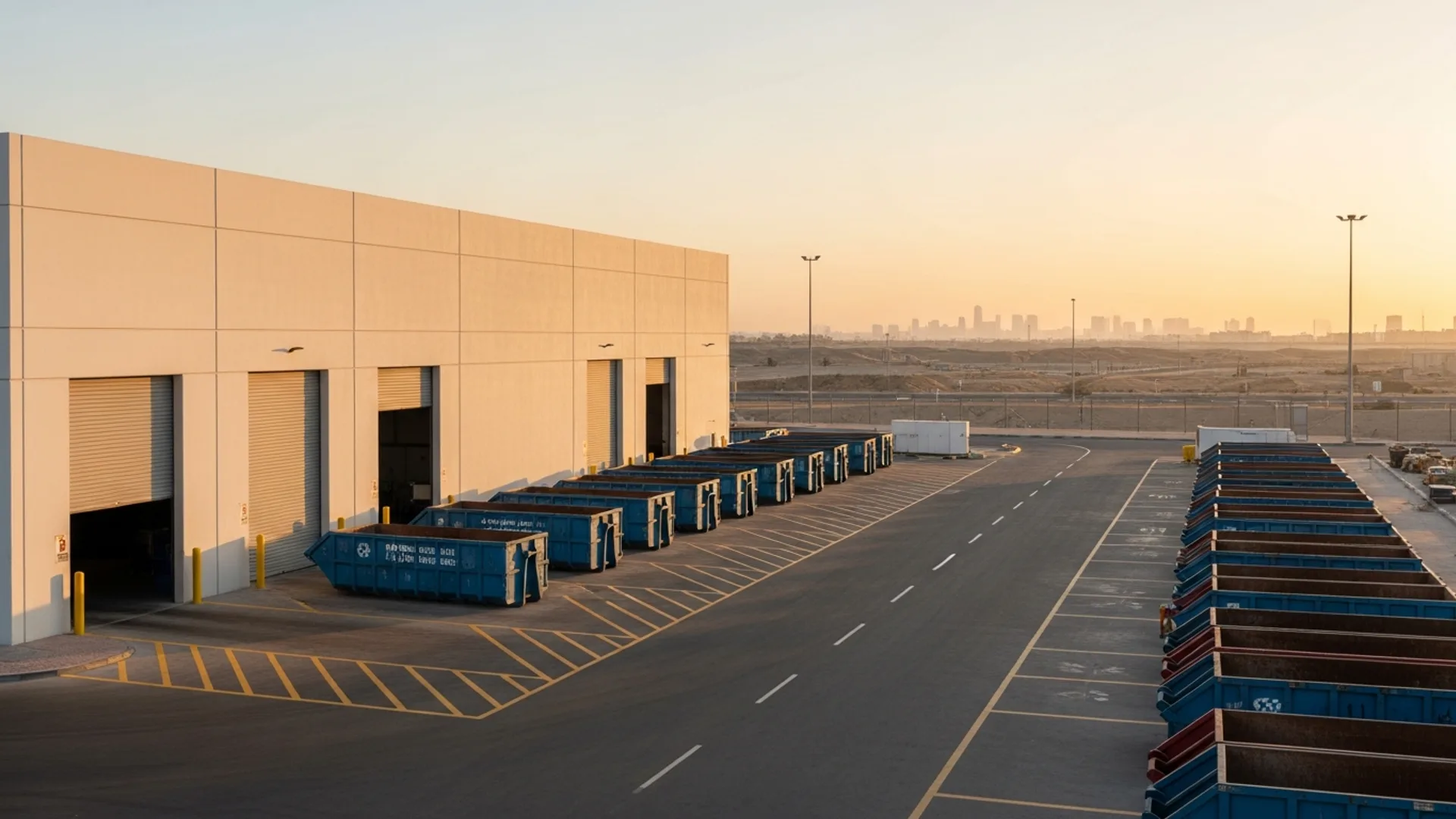
Quick AnswerEnvironmental compliance UAE 2026: which activities need permits, Dubai Municipality approvals, waste and effluent rules, and the 7-year record duty.
Environmental compliance in the UAE is one of those obligations founders discover in the wrong order. The trade licence arrives, the lease is signed, the fit-out starts, and then an inspector explains that this particular activity in this particular premises needed an environmental permit before the first contractor arrived. Rework follows, the opening date slips, and the cost lands entirely on the tenant. None of it was hidden. It was simply never checked, because environmental compliance in the UAE is not administered from one desk — it follows from the activity code you selected, the emirate you chose and the building you leased.
That is the practical shape of the subject. For an office-based consultancy the burden is close to zero. For a restaurant, a workshop, a laundry, a printing operation, a clinic or anything that emits, discharges, stores chemicals or generates waste in volume, the environmental layer is real, sits mostly with Dubai Municipality or its equivalent in other emirates, and renews annually alongside the licence. This guide sets out who is caught, what approvals exist, how the process runs, what it costs in time, and where the traps sit.
Know your activity? Get the exact licence price.
Your setup cost, in 10 seconds
Package prices. Health insurance is required by law and not included.
Thank you.
Your written quote follows on WhatsApp.
What does environmental compliance in the UAE require in 2026?
Environmental compliance in the UAE depends on your licensed activity and premises. Office activities generally need no permit; activities producing emissions, effluent, hazardous waste or noise require environmental approval from Dubai Municipality or the relevant free zone authority before fit-out. Permits renew annually alongside the trade licence, and supporting invoices must be retained for at least 7 years for Federal Tax Authority substantiation.
The federal layer sets policy, standards and national targets on climate and environment, and the ministry responsible for climate change and environment issues federal regulations — but for the overwhelming majority of SMEs it is not the licensing counter. Day-to-day environmental permitting, inspection and enforcement sits with the local authority: Dubai Municipality in Dubai, the equivalent municipality or environment agency in each other emirate, and the zone authority for businesses inside a free zone. Civil Defence handles fire and life safety, which overlaps with chemical storage. The Department of Economy and Tourism issues the mainland trade licence that determines which of these you will meet.
| Approval or obligation | Authority | When required | Cycle |
|---|---|---|---|
| Trade licence activity selection | DET (Dubai mainland) or free zone authority | Before incorporation | Annual renewal |
| Environmental permit / NOC | Dubai Municipality or zone authority | Before fit-out, for regulated activities | Annual |
| Fit-out and building modification approval | Dubai Municipality | Before construction works | Per project |
| Food establishment registration | Dubai Municipality | Before opening, for all F&B | Annual |
| Grease trap and effluent approval | Dubai Municipality | F&B and wet processes | Annual, with servicing records |
| Waste transfer contract | Licensed private hauliers, approved by authority | On opening | Continuous, manifests retained |
| Hazardous waste manifest | Dubai Municipality-approved route | Per consignment | Per movement |
| Environmental impact assessment | Dubai Municipality or zone authority | Larger or higher-risk projects | Per project |
| Green building compliance (Al Sa'fat) | Dubai Municipality | New builds and major refits | Design and completion stages |
| DEWA connection conditions | DEWA | At premises connection | Per connection |
| Civil Defence approval | Civil Defence | Chemical storage, fire systems | Annual |
| Record retention for deductions | Company, evidenced to Federal Tax Authority | Continuous | Minimum 7 years |
Note what the table does not contain: exact fees. Environmental permit fees in the UAE vary by activity, premises area, risk category and emirate, and the authority publishes them on the relevant service page. Any article quoting a single universal figure is guessing. Budget for the fee as a modest line item and for the professional and engineering work behind the application as the larger one.
Which businesses are actually caught
The dividing line is what the activity does to air, water, land, and noise — not how large the company is.
Almost never caught: management consultancy, marketing, software development, recruitment, general trading conducted from an office with no storage, and most professional services. These businesses need a licence, a tenancy and Ejari, and nothing environmental beyond ordinary building rules.
Almost always caught: food and beverage of any kind, including cloud kitchens and small cafés. Manufacturing and assembly. Vehicle workshops, body shops and tyre operations. Laundries and dry cleaners. Printing and packaging. Paint, coating and chemical handling. Metal fabrication. Waste collection, scrap and recycling. Marine and diving operations. Agriculture and landscaping at scale. Construction and demolition contractors. Salons and clinics generating clinical or chemical waste, which also fall under health regulator requirements — the Dubai Health Authority's rules apply to clinical waste from licensed facilities.
Sometimes caught, depending on scale and premises: warehousing, where chemical or hazardous goods storage triggers both environmental and Civil Defence requirements; e-commerce fulfilment with packaging waste volumes; fitness and leisure with pool chemicals; pet services with waste and noise considerations; and any office operation running a generator or a significant cooling plant.
The determinant is the activity you selected on the licence. This is why activity selection deserves more thought than the ten minutes it usually gets. Two businesses doing similar work can sit on opposite sides of the permit line because one chose a trading activity and the other chose a manufacturing or workshop activity. Getting this alignment right before incorporation — activity, premises type, emirate and permit burden considered together — is a core part of how we approach business setup in Dubai, and it is far cheaper than amending a licence and re-permitting a fitted-out unit.
The permit process, step by step
For a regulated activity in Dubai, the sequence runs roughly as follows.
Step one: confirm the activity and the premises category. Before signing a lease, establish whether the unit is zoned and classified for your activity. Industrial activities need industrial-zoned premises; food preparation needs a unit with the right drainage, ventilation provision and floor construction. A warehouse in the wrong category cannot be permitted for a workshop no matter how good the fit-out.
Step two: initial approval and NOC. Submit the activity description, premises details, layout drawings and process description. The authority assesses the environmental risk category and states what is required — a straightforward permit, additional studies, or specific engineering controls.
Step three: environmental studies where required. Higher-risk or larger projects require an environmental impact assessment. The scope scales with the project: a screening note for a moderate operation, a full study with baseline monitoring, impact prediction and a mitigation plan for a significant industrial development. Studies are prepared by consultants approved by the authority — using an unapproved consultant is a common and entirely avoidable rejection.
Step four: design and fit-out approvals. Drainage and grease trap design, ventilation and exhaust routing, emission control equipment, chemical storage bunding, waste storage areas and noise attenuation are all reviewed before works begin. Dubai Municipality's building and environmental teams and Civil Defence review in parallel, and the sequence matters — approvals granted after construction usually mean rework. Dubai Municipality's service information is published at dm.gov.ae.
Step five: connection and commissioning. DEWA connection conditions apply to electricity and water supply, including trade effluent discharge conditions where relevant. Commissioning inspections verify that what was built matches what was approved.
Step six: operating permit issue and inspection. The environmental permit is issued, usually aligned to the licence cycle. Inspections follow, initially at opening and then periodically or on complaint.
Step seven: ongoing obligations. Waste manifests, grease trap servicing records, emission monitoring where required, maintenance logs for control equipment, staff training records, and the renewal application each year.
Realistic timing: a low-risk regulated activity in an already-suitable unit can be permitted in a few weeks. A workshop requiring fit-out approvals typically runs two to three months from lease to opening. An industrial facility requiring an environmental impact assessment should be planned in quarters, not weeks.
Waste, effluent and the obligations that never stop
Permits are episodic. Waste and effluent obligations are daily, and they are what inspections actually examine.
General and recyclable waste must go to authorised collection. Commercial premises contract with licensed haulers, and the contract itself is a document inspectors ask for. Segregation requirements have tightened across UAE emirates, with recyclable streams separated at source.
Food waste and used cooking oil carry specific requirements for F&B. Used cooking oil must be collected by an authorised recycler with a manifest — pouring it into the drain is a serious violation that also blocks the municipal sewer network, and it is one of the most frequently enforced infringements in the sector.
Trade effluent covers anything discharged to drain beyond ordinary domestic wastewater. Restaurants require correctly sized grease traps, installed to approved design and serviced on a documented schedule. Workshops require oil and silt interceptors. Laundries and processing operations may require pre-treatment. Discharge quality conditions apply, and unauthorised discharge is treated seriously because it damages downstream infrastructure.
Hazardous waste — solvents, waste oil, paints, batteries, contaminated rags, chemical containers, clinical waste, and electronic waste in some categories — must be segregated, stored in bunded and labelled areas, and transferred only through authorised carriers to approved treatment facilities. The generator remains legally responsible until the waste reaches its approved destination. Manifests must be retained. "The contractor took it away" is not a defence if the contractor was not authorised.
Electronic waste has its own growing framework, with restrictions on landfill disposal and requirements for approved recyclers.
Refrigerants and ozone-depleting substances are controlled. Air conditioning and refrigeration servicing must be performed by qualified technicians, with recovery rather than venting, and certain substances are restricted or phased down. Restaurants, cold stores, supermarkets and facilities-management businesses are all affected.
Single-use plastics. UAE emirates have progressively restricted single-use plastic bags and certain disposable items, with charges and substitution requirements for retailers. Requirements and effective dates differ by emirate and product category, so a retailer operating across Dubai, Sharjah and Abu Dhabi should check each separately rather than assuming a single national rule.
Construction, noise, air quality and green building
Businesses that build or refit carry a distinct set of obligations, and they apply to the tenant as well as the contractor.
Dust and air quality controls on construction sites require screening, damping, covered material transport and restrictions on open burning — which is prohibited. Fine material stockpiles must be managed against wind entrainment.
Noise is regulated by permitted working hours and by limits at the boundary. Work outside permitted hours requires a specific permit, and complaint-driven enforcement is common in mixed-use areas where a fit-out sits above residential units.
Construction and demolition waste must be transported by licensed haulers to approved disposal or recycling facilities, with tipping records retained. Fly-tipping attracts serious enforcement.
Green building. Dubai's Al Sa'fat green building system applies to new buildings and major refurbishments, setting requirements across energy efficiency, water conservation, materials selection, waste management during construction and indoor environmental quality. Compliance is assessed at design stage and confirmed at completion. Tenants doing significant fit-outs in newer buildings will encounter these requirements through the landlord's compliance obligations even where they do not apply directly.
Energy and water efficiency requirements come through DEWA connection standards, equipment specifications and, for larger consumers, retrofit and demand-management programmes. Businesses occupying older premises often find that efficiency upgrades pay back quickly on tariff alone, independently of compliance.
The midday break rule deserves a mention here because it intersects with outdoor work. Under the federal labour framework, outdoor work is prohibited between 12:30 and 15:00 from mid-June to mid-September. It is a labour rule enforced by MOHRE rather than an environmental one, but it governs the same sites and the same seasons, and site managers should plan for both together.
Contact Us For Free Consultation
or
Ask on WhatsApp insteadLicensed UAE consultancy. One reply, no spam.
Thank you.
A consultant will reply on WhatsApp shortly.
Free zones, industrial estates and the jurisdiction question
Free zone status changes who administers environmental rules, not whether they apply.
Commercial free zones hosting office-based businesses impose little beyond building rules. Zones hosting light industrial and warehouse operations — DMCC's industrial offerings, and similar facilities across the emirates — apply their own environmental conditions within the lease and licence terms, typically mirroring municipal standards for waste, storage and emissions.
Industrial estates such as KEZAD run detailed regimes, because that is what their tenant base requires: emissions permits, effluent discharge consents, chemical inventory declarations, spill response requirements, and periodic environmental audits. For a genuine industrial operation this is a feature rather than a burden — the infrastructure exists, the approvals pathway is well-trodden, and the neighbours are similarly regulated.
The choice between mainland and free zone for an industrial or semi-industrial business should therefore weigh permit pathway alongside cost and market access. A mainland licence from DET gives unrestricted access to the local market but places you under municipal permitting for a facility that may sit in a general commercial area. An industrial free zone gives you purpose-built infrastructure and a specialist regulator but structures your local market access differently.
Cost transparency varies enormously. Some free zones publish licence pricing clearly; a substantial number publish none at all, which makes comparison shopping harder than it should be. Among published options, Ajman Media City's zero-visa licence at AED 4,999 sits at the entry point, while packages including a visa allocation start from around AED 9,450 at KEZAD and AED 12,500 at UAQ FTZ. Those figures cover the licence — not the environmental permit, the fit-out, or the engineering controls, all of which are activity-specific and quoted separately.
Records, inspections and the tax connection
Environmental compliance produces documents, and the documents are what protect you.
Keep, in one accessible file: the environmental permit and every renewal; the approved layout and fit-out drawings; the waste contractor agreement and their authorisation; waste transfer manifests, particularly for hazardous streams; grease trap or interceptor servicing records; maintenance and calibration records for any control or monitoring equipment; refrigerant handling records; staff training records; inspection reports and evidence of how any observation was closed out; and the environmental impact assessment if one was required.
Inspections in the UAE are typically graduated. A first inspection finding a minor issue produces an observation and a deadline. Failure to close it produces a fine. Serious or repeated breaches — unauthorised discharge, hazardous waste mishandling, operating without a permit — escalate to substantial penalties, suspension of the activity, or closure of the premises. Because the environmental permit is generally tied to the licence cycle, an unresolved violation can also block the trade licence renewal, which stops visa processing and everything that depends on it.
The tax dimension is worth stating plainly. Environmental compliance spending — permit fees, consultant studies, waste contracts, control equipment, servicing and training — is ordinarily deductible business expenditure. Capital items such as emission control plant follow the applicable capital allowance treatment. What makes the deduction stand up is documentation: the invoice, the contract and the evidence of the work. Corporate tax applies at 0% up to AED 375,000 of taxable income and 9% above, with returns due nine months after year-end, and supporting records must be retained for at least seven years. The Federal Tax Authority's guidance and services are at tax.gov.ae, and the substantiation standard is set out further in our UAE corporate tax guide.
Two worked examples make the shape concrete. A 120-seat restaurant in Dubai: food establishment registration, grease trap design approval and installation, ventilation and exhaust approval, licensed collection contracts for food waste and used cooking oil, refrigerant-compliant servicing, pest control records, staff food safety training, and an annual permit renewal aligned to the licence. Expect two to three months from lease to opening if the unit was previously an F&B use, longer if it was not. A light-industrial workshop doing metal fabrication and spray coating: industrial-zoned premises, environmental permit with emission controls for the spray booth, Civil Defence approval for paint and solvent storage with bunded and ventilated store, hazardous waste manifests for solvent and contaminated waste, noise assessment if adjacent to sensitive uses, and effluent interceptor if wet processes are involved. Plan a quarter, and involve the environmental consultant before the fit-out contractor.
Sustainability expectations beyond the permit
Permits are the floor. Increasingly, the commercial pressure on UAE businesses comes from customers and counterparties rather than inspectors, and it arrives without a deadline attached — which makes it easy to ignore until a tender is lost.
Procurement requirements are the most immediate. Government entities, large corporates and multinational buyers now routinely ask suppliers for environmental credentials as part of prequalification: waste management arrangements, energy consumption data, certifications held, and in some cases carbon reporting. A small contractor bidding for facilities work at a large campus may find that the environmental questionnaire carries real weight in the scoring. Businesses that already keep permit documents, waste manifests and DEWA consumption data can answer in an afternoon. Those that do not spend two weeks assembling something incomplete.
Certification is voluntary but commercially useful. ISO 14001 environmental management system certification is the common benchmark, and for many UAE tenders it functions as a shortcut past the detailed questionnaire. The work involved — documented environmental policy, aspects and impacts register, objectives, operational controls, internal audit and management review — overlaps almost entirely with what a well-run permitted facility already does. For a business already holding an environmental permit, certification is largely a matter of formalising existing practice.
Landlord and building requirements form a third layer. Newer commercial buildings operating under green building certification pass obligations to tenants through the lease: separated waste streams, restrictions on fit-out materials, submetering, and cooperation with building-level reporting. Read the environmental clauses in a lease before signing, because they can require capital spend that was not in the fit-out budget.
Reputational and staff considerations complete the picture. UAE consumers, particularly in food and retail, respond to visible waste reduction and packaging changes, and younger employees increasingly ask about it. None of this is regulatory. All of it is cheaper to build in at fit-out than to retrofit later, which is the same lesson the permitting process teaches.
Common Mistakes UAE Businesses Make With Environmental Compliance
- Signing the lease before checking the premises category. A unit that is not zoned or built for your activity cannot be permitted regardless of fit-out spend. Confirm zoning, drainage provision and ventilation capability before committing to rent.
- Starting fit-out before approvals. Drainage, ventilation, chemical storage and emission controls are reviewed at design stage. Building first and applying afterwards routinely means demolition and rework, entirely at the tenant's cost.
- Choosing the licence activity for cost rather than fit. A cheaper trading activity that does not cover the work you actually do leaves you operating outside your licence and outside your permit, which is worse than paying for the correct activity from the start.
- Using an unapproved environmental consultant. Studies must come from consultants approved by the relevant authority. A technically sound report from an unapproved firm is rejected, and the time lost is usually weeks.
- Handing waste to whoever quotes cheapest. The generator remains responsible until waste reaches an authorised destination. Verify the hauler's authorisation, keep the contract, and retain manifests for every hazardous consignment.
- Neglecting servicing records. Grease traps, interceptors and control equipment must be serviced on schedule and the records kept. Inspectors ask for the log before they look at the equipment, and a missing log is treated as a missing service.
- Assuming a free zone removes the obligation. Free zone authorities apply their own environmental conditions, and industrial zones apply detailed ones. The regulator changes; the requirement does not.
- Discarding compliance invoices. Permit fees, consultant reports and waste contracts are deductible, but only if evidenced. Retain the documentation for at least seven years alongside the rest of your accounting records.
Planning Your Compliance Burden with Noble Core
The single most useful thing a founder can do about environmental compliance in the UAE is to establish the burden before committing to an activity, an emirate and a lease. Almost every expensive environmental problem we see began as a sequencing error — the right approvals sought in the wrong order, after money had already been spent.
Noble Core Ventures works that question backwards from the operation you actually intend to run. When we handle business setup in Dubai, the activity code, the premises category, the jurisdiction and the resulting permit pathway are decided together, so you know before signing a lease whether you are looking at a straightforward registration or a three-month approvals programme with an environmental study attached.
The same discipline extends to the obligations that sit beside it. We make sure compliance spending is captured and substantiated for UAE corporate tax purposes with records that survive the seven-year test, keep your beneficial ownership records current so licence and permit renewals do not stall on a stale register, and assess whether your operating model triggers the economic substance regulations. If you are planning a facility, a kitchen, a workshop or a warehouse and want a realistic view of the approvals and the timeline before you commit, book a free 20-minute consultation.
This guidance is general compliance information for UAE businesses and is not legal advice. Environmental requirements, fees and permit categories vary by emirate, free zone, activity and premises, and are updated periodically. Confirm your position with the relevant municipality or zone authority before acting.
Talk to Our Experts
Noble Core aligns your licence activity, premises and permit burden before you sign a lease — so environmental approvals, municipality inspections and renewals are planned rather than discovered. Free 20-minute consultation.
Frequently Asked Questions
Which activities need an environmental permit in the UAE?
Activities generating emissions, effluent, hazardous waste or significant noise — including manufacturing, workshops, food preparation, chemical handling, laundries, printing and construction. Office-based consultancies generally do not require one.
Who issues environmental permits in Dubai?
Dubai Municipality handles environmental permits, waste approvals, food safety and fit-out consents for mainland premises. Free zone authorities administer equivalent approvals for facilities located inside their zones.
What is an environmental impact assessment?
A study of a project’s likely environmental effects and proposed mitigation. It is required for larger or higher-risk developments, with the scope and depth scaled to the project’s potential impact.
Do restaurants need special environmental approvals?
Yes. Food establishments require grease trap installation, licensed waste oil and food waste collection, ventilation approval and food safety registration alongside the standard trade licence and fit-out consent.
How is hazardous waste handled?
It must be segregated, stored safely and transferred only to authorised carriers and treatment facilities, with manifests retained. Generators remain responsible for waste until it reaches an approved destination.
Are there rules on single-use plastics?
Yes. UAE emirates have progressively restricted single-use plastic bags and certain disposable items, with retailers required to charge for or replace them. Requirements differ by emirate and product category.
What are green building requirements in Dubai?
New buildings must meet the Al Sa’fat green building system, covering energy efficiency, water conservation, materials and indoor environmental quality, with compliance assessed at design and completion stages.
Can environmental compliance costs be deducted for tax?
Permit fees, waste contracts and compliance works are ordinarily deductible business expenses. Keep invoices and contracts for at least 7 years to substantiate deductions to the Federal Tax Authority.
What happens if an inspection finds a violation?
Authorities typically issue a warning and corrective deadline for minor issues, escalating to fines, suspension or closure for repeated or serious breaches that create health or environmental risk.
Do free zone companies escape environmental rules?
No. Free zone authorities apply their own environmental conditions, often mirroring municipal standards. Industrial free zones such as KEZAD run detailed permit regimes for emissions, waste and chemical handling.