Quick AnswerDubai event permit 2026: DET ePermits, Civil Defence and Municipality approvals, lead times from 30 days, plus 5% VAT and 9% corporate tax rules.
Every concert, exhibition, conference, sports fixture, product launch and pop-up market held publicly in Dubai runs on a Dubai event permit issued by the Department of Economy and Tourism through its ePermits system. The permit is the visible output of a much larger approvals file: venue consent, Civil Defence fire and crowd-safety sign-off, Dubai Municipality clearances for temporary structures and food, police and RTA input where roads and crowds interact, and media clearance for the content itself. Apply at least 30 days ahead for a straightforward corporate event and 60 to 90 days for anything with a stage, a ticket price or an international artist.
The system is well organised and, once you know the sequence, predictable. What catches organisers out is that the permit is not a single form — it is the last domino in a chain, and every upstream approval has its own lead time, its own documentation and its own capacity to reject drawings. This guide sets out the permit categories, who can apply, the supporting approvals each event type triggers, realistic lead times, the cost structure, the tax position and the mistakes that cost organisers their dates.
What Is a Dubai Event Permit and Who Needs One?
A Dubai event permit is a DET approval authorising a named event at a specific venue on specific dates, applied for through the ePermits platform by a licensed organiser. Standard corporate events need roughly 30 days' lead time; concerts and large exhibitions need 60 to 90. Ticket sales attract 5% VAT, and organiser profits above AED 375,000 are taxed at 9%.
The permit exists so that the authorities responsible for public safety, consumer protection and content standards can see what is happening, where, and at what scale, before it happens. Practically, it means DET coordinates a file that includes your event plan, venue agreement, floor plans, crowd capacity, safety arrangements, programme content and — where relevant — the approvals of Civil Defence, Dubai Municipality, Dubai Police and the RTA.
You need a permit if your event is ticketed, publicly advertised, open to the public, held in a public or shared venue, involves temporary structures or staging, involves performers or exhibitors, or affects public space such as roads, beaches or parks. You generally do not need one for a genuinely private gathering held in private premises with no public advertising and no temporary build — an internal team meeting or a private dinner in a licensed venue's existing function room, for example. The grey zone is corporate events in hotels: many are covered by the venue's own approvals, but the moment you bring in external staging, a stage build, a public audience or ticketing, the organiser's permit obligation activates. When in doubt, ask, because retrofitting a permit two weeks out is rarely possible.
Here is the indicative cost picture. Event permit fees vary by category, scale, duration and the approvals triggered, and are confirmed at application.
| Cost item | Indicative range (AED) | When | Notes |
|---|---|---|---|
| Event management trade licence | 15,000 – 30,000 | Annual | Prerequisite for most organisers |
| DET event permit (standard corporate) | 500 – 5,000 | Per event | Scales with size and duration |
| DET permit (concert / large public event) | 5,000 – 50,000+ | Per event | Category and capacity driven |
| Venue NOC and hire | Highly variable | Per event | Commercial negotiation |
| Civil Defence approval | 1,000 – 25,000 | Per event | Depends on structures and capacity |
| Dubai Municipality approvals | 500 – 15,000 | Per event | Temporary structures, food, waste |
| Police and security deployment | Variable | Per event | Based on assessed risk |
| RTA road, parking or transport approvals | Variable | Per event | Where public roads affected |
| Media content clearance | 500 – 5,000 | Per event | Performance and advertising content |
| Public liability insurance | 3,000 – 40,000 | Per event | Capacity and risk driven |
| Performer entry permits | 1,000 – 3,000 per person | Per event | Processed via ICP and GDRFA |
| VAT on ticket sales | 5% | Per ticket | Threshold AED 375,000 turnover |
| Corporate tax on profit | 0% to AED 375,000, 9% above | Annual | Federal Tax Authority |
Event Permit Categories in Dubai
DET's ePermits system handles distinct event categories, and knowing which one you are in determines your lead time and your approvals list.
Concerts and live entertainment. Ticketed musical performances, comedy, theatre and touring productions. The heaviest category: content clearance, performer permits, crowd management planning, Civil Defence sign-off on capacity and egress, and typically police involvement. Lead time 60 to 90 days, longer for stadium-scale productions.
Exhibitions, trade shows and conferences. Multi-day events with exhibitor stands, often at purpose-built venues. Venue approvals cover much of the base, but stand construction, temporary electrical work, catering and any raised platforms trigger their own approvals. Exhibitor visa support for international participants is a workstream in its own right.
Corporate events. Product launches, gala dinners, award ceremonies, AGMs and conferences. Usually the lightest category if held in a hotel or established venue using in-house facilities. Lead time 30 days is often sufficient. It escalates quickly if you add external staging, outdoor space or public ticketing.
Sports events. Races, tournaments, fitness events and community runs. Road-based events pull in the RTA for closures and diversions and the police for marshalling, which are the long-lead items. Medical cover, insurance and participant waivers are scrutinised. Guidance on road-related approvals is published at https://www.rta.ae/.
Community, cultural and seasonal events. Markets, festivals, national-day celebrations and neighbourhood programmes. Often free to attend, which does not remove the permit requirement. Municipality involvement is heavy where food stalls, temporary structures or public parks are involved.
Temporary retail, pop-ups and activations. Mall activations, brand experiences, kiosks and pop-up stores. These sit at the boundary between event permits and promotional permits — if the primary purpose is selling or promoting a product, a promotion permit may be required alongside or instead of an event permit.
Who Can Apply: The Licence Behind the Permit
The permit applicant is normally a company with an appropriate trade licence. In most cases that means a mainland event management or event organising licence issued by DET. This is the first thing to fix, because a brilliantly planned event with no eligible applicant cannot be permitted.
There are three routes. A licensed event management company applies on behalf of clients — the standard model and the reason most brands appoint an agency. A venue applies for events it hosts under its own licence and approvals, which is why hotel-hosted corporate events are often simpler. A licensed corporate entity may apply for its own event where the activity is incidental to its business, such as a company hosting its own product launch, though this is assessed case by case.
Free zone companies — DMCC, IFZA, DAFZA and others — face a limitation here. A free zone entity generally cannot deliver commercial event services onshore in mainland Dubai. Since Executive Council Resolution 11 of 2025, a Dubai free zone company can also apply to Dubai Economy and Tourism for a mainland branch licence (AED 10,000 a year) or a temporary activity permit (AED 5,000 for six months) for approved activities. Free zone event businesses commonly work through a licensed mainland organiser, or establish a mainland entity, when the event itself is on the mainland.
If you are setting up as an organiser, the licensing sequence is conventional: trade name reservation, DET initial approval, tenancy and Ejari, MOA notarisation, licence issue, establishment card, MOHRE registration, then residence visas through ICP and GDRFA. Budget four to eight weeks and do not plan a launch event inside that window.
Supporting Approvals: The Real Work
Venue NOC. Nothing proceeds without written venue consent, a signed hire agreement and confirmation of what the venue's own approvals already cover. Get this in writing early; verbal holds are not approvals.
Civil Defence. Required for most crowd events. The assessment covers occupant capacity against exit width, escape route design and signage, fire extinguishing provision, emergency lighting, temporary structure fire ratings, pyrotechnics and special effects, generator and fuel storage, and emergency vehicle access. You will submit scaled floor plans showing stage, seating, exits, bars, catering points and back-of-house. Expect at least one revision cycle. Pyrotechnics, flame effects and complex rigging significantly extend the timeline and require specialist approved contractors.
Dubai Municipality. Its remit covers temporary structures and marquees, food safety for any catering or food stalls, waste management plans, public health at outdoor events, and signage. Any food service requires approved suppliers and trained food handlers. Municipality services and requirements are published at https://www.dm.gov.ae/.
Dubai Police. Security assessment, deployment where crowd size or profile warrants it, and traffic and crowd-flow input. Larger events are assigned a security plan requirement and, often, licensed private security in defined ratios.
RTA. Road closures, diversions, parking arrangements, shuttle and drop-off design, and any use of public transport interchanges. Road-based events must be lodged early because closure approvals coordinate with wider traffic planning.
Media and content clearance. Performance content, film and photography, and public advertising material require clearance. Content must respect UAE cultural and community standards — this is a normal, well-understood part of programming in Dubai and is best handled by submitting set lists, scripts, visuals and creative early rather than at the deadline.
Insurance. Public liability cover is effectively mandatory and often specified by both venue and authority. Note that cover is typically void if the event proceeds without valid permits, which converts a compliance failure into an uninsured risk.
Timelines and Sequencing
The order that works is: confirm venue and dates, then lodge Civil Defence and Municipality applications with draft plans, then submit the DET ePermit application referencing those approvals, then finalise police, RTA and content clearances, then confirm insurance, then open ticket sales.
The order that fails is: announce the event, sell tickets, then discover the venue's capacity under Civil Defence assessment is 30% below the number of tickets you have sold. Refunding an oversold public event in Dubai is both expensive and a consumer-protection matter.
Practical lead times: corporate event in an established venue, 30 days. Exhibition or conference, 45 to 60 days. Concert or ticketed public entertainment, 60 to 90 days. Outdoor event with temporary build, 90 days. Road-based sports event, 90 to 120 days. International performers add a further two to four weeks for entry permits, and content clearance should be started as soon as programming is confirmed rather than when marketing needs assets.
Build in a revision cycle. Civil Defence drawings very rarely pass first time on a complex build, and each cycle costs one to two weeks. Organisers who submit three weeks before doors are gambling their date on a first-pass approval.
Performers, Crew and Short-Term Work Arrangements
International artists, technical crew, exhibitors and speakers coming to work at a Dubai event need appropriate entry arrangements. Visit entry alone is not the right basis for paid performance work. Short-term work and mission-type permits are processed through the federal ICP channels at https://icp.gov.ae/ and, for Dubai residence-related matters, GDRFA.
Practical requirements typically include passport copies with adequate validity, the event permit or letter from the organiser, the performance or service contract, and sponsor undertakings from the licensed organiser. Where crew are employed by your UAE entity rather than visiting, standard MOHRE employment contracts and residence visas apply instead.
Two points organisers underestimate. First, lead time: entry permits for a touring party of twenty are not a same-week task, and passport collection from a touring artist's management is often the slowest link in the chain. Second, accountability: the sponsoring organiser carries responsibility for the visiting party's compliance, including departure. Build the paperwork into the tour advance rather than treating it as a local logistics detail.
Tax and Financial Compliance for Event Organisers
Corporate tax applies at 0% on taxable income up to AED 375,000 and 9% above. Registration with the Federal Tax Authority through EmaraTax is mandatory regardless of profitability, and the return is due nine months after the financial year-end. Full guidance is published at https://tax.gov.ae/.
VAT at 5% is where event businesses most often go wrong, because event revenue is heterogeneous. Ticket sales, sponsorship, exhibitor stand fees, licensing of content, and recharges of production costs each need a documented treatment, and place-of-supply rules matter when the client is overseas but the event is in the UAE. Registration is mandatory once taxable turnover exceeds AED 375,000 in the preceding twelve months or is expected to in the next thirty days; voluntary registration is available from AED 187,500. Because event revenue arrives in lumps, organisers frequently cross the threshold mid-year without noticing — monitor rolling turnover monthly, not annually.
Cash flow deserves particular attention. Event businesses pay venues, contractors and permit fees before revenue arrives, and hold ticket money in advance of delivery. Keep client funds and operating funds clearly separated in your accounting, retain records of every permit fee and supplier invoice, and reconcile each event as its own cost centre. When a dispute or an inspection arises, per-event records are the difference between a five-minute answer and a five-week exercise.
Venue Choice: How Much It Changes Your Permit Burden
The single biggest lever on permitting effort is the venue, and it is a decision most organisers make on price and capacity alone.
Purpose-built exhibition and conference centres. These operate under comprehensive standing approvals. Their fire strategy, capacity assessments, emergency systems and food-safety arrangements are already certified, and their in-house event teams know exactly what DET, Civil Defence and Dubai Municipality expect. Your incremental approvals shrink to stand construction, any raised or double-decker structures, special effects and your own content clearance. For a first-time organiser, the premium these venues charge frequently costs less than the delay and consultancy a raw space would generate.
Hotels and established function venues. Similar logic at smaller scale. Ballrooms and function rooms come with approved capacities, existing egress provision and licensed catering. Corporate events held entirely within a hotel's own facilities are the lightest permitting scenario in Dubai. The moment you bring in external staging, rig heavy production, extend into outdoor space or open ticketing to the public, you re-enter full permit territory — and organisers routinely assume the hotel's approvals stretch further than they do. Ask the venue explicitly, in writing, what its approvals cover and what remains yours.
Malls and retail atriums. These sit at the boundary between event and promotional permitting. The mall will have its own internal approval process, a mandatory contractor list, strict build and de-rig windows, and specific requirements on structure heights and sightlines. Where the activation's purpose is selling or promoting a product, a promotion permit may apply alongside or instead of an event permit — clarify which regime you are in before designing the build.
Outdoor and public spaces. Beaches, parks, plazas, waterfronts and public roads carry the heaviest burden: land-owner or authority consent, temporary structure approvals, weather and wind-loading assessments for any tented or rigged structure, waste and sanitation planning, power generation and fuel storage approvals, and RTA involvement wherever access, parking or roads are affected. Nothing about an outdoor event is quick. Budget ninety days minimum and expect the site consent, not the DET permit, to be your critical path.
Private venues and villas. Genuinely private, unadvertised gatherings in private premises generally sit outside the permit regime. This exemption is narrower than organisers hope. Public advertising, ticketing, external suppliers building temporary structures, or crowd sizes beyond what the premises are designed for all pull the event back into scope.
A useful discipline at feasibility stage: for each shortlisted venue, list what its standing approvals already cover and what you would need to obtain yourself. The cheapest venue is often the most expensive event.
Worked Example: A 3,000-Capacity Ticketed Concert
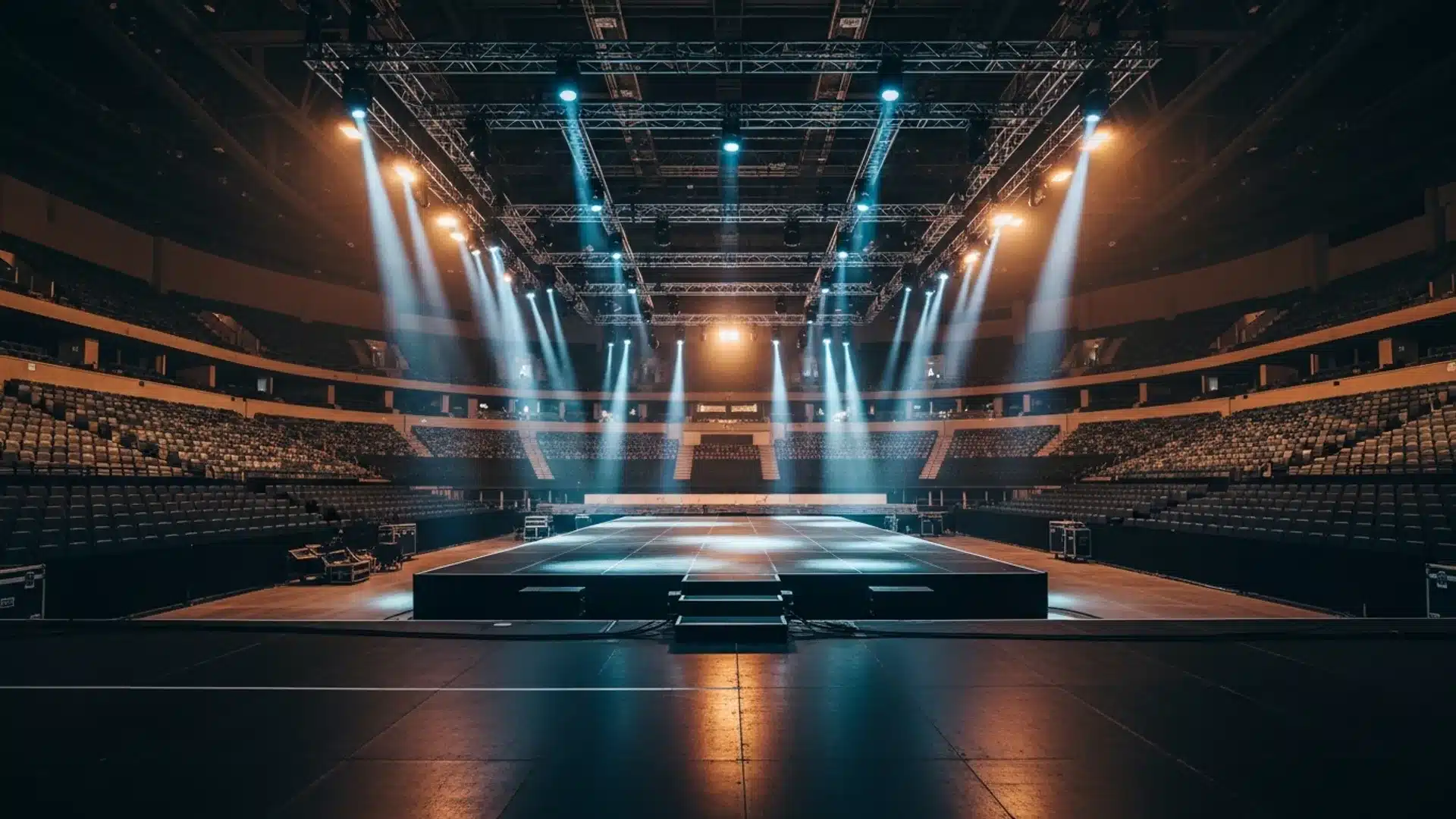
Consider a Dubai-licensed event management company promoting a single-night touring act at an indoor arena, 3,000 tickets, with a rented stage, video wall, moving-light rig and a support act.
Week one, the venue is contracted and the date secured, with a written schedule of what the venue's standing approvals cover — egress, base capacity, in-house catering — and what the organiser must obtain: stage and rig loading, special effects, content clearance, performer permits and public liability cover.
Week two, production drawings go to Civil Defence: stage footprint, rigging points and loading, seating and standing zones, exit widths, aisle geometry, extinguisher and emergency lighting provision, and back-of-house access. Civil Defence returns comments in week five requiring a wider cross-aisle and revised barrier placement, which reduces the assessed standing capacity from 3,200 to 2,950. Because tickets have not yet gone on sale, this is a scheduling note rather than a crisis. Approval lands in week seven.
In parallel, the Dubai Municipality submission covers food and beverage service points and the waste plan. Content clearance for the set list, stage visuals and advertising creative is lodged in week three and cleared in week six — early enough that marketing assets are not held hostage.
The DET ePermit application is submitted in week seven referencing the completed approvals, and issued in week nine. Dubai Police confirm the security deployment and required private-security ratio. Entry permits for the eleven-person touring party are lodged through the ICP and GDRFA route in week eight and issued in week eleven, having lost a week waiting for passport scans from the artist's management — the single most predictable delay in touring work.
Tickets go on sale in week ten at the approved 2,950 capacity. Public liability insurance is bound against the issued permit. Show day is week fourteen.
On the financial side, ticket revenue carries 5% VAT and the company, already well above the AED 375,000 threshold, accounts for it in the normal quarterly cycle. Sponsorship income and the overseas co-promoter's fee are treated separately after advice on place of supply. The event is reconciled as its own cost centre, and the year's taxable profit is assessed against the 0% band to AED 375,000 and 9% above it when the Federal Tax Authority return falls due nine months after year-end.
Total elapsed time: fourteen weeks. Nothing in it was unusual; it simply started early.
After the Permit: On-Site Compliance and Close-Out
The permit is a condition, not an achievement. Inspectors may attend, and what they check is whether the event as built matches the event as approved.
Keep the approved drawings on site and build to them. Barrier positions, aisle widths, exit signage and capacity counts are the usual points of difference between plan and reality, and moving a barrier for sightlines can breach the egress assessment that underpinned your capacity. Maintain door counts against approved capacity and stop entry when you reach it.
Have the document pack physically available: the DET permit, Civil Defence approval, Municipality clearances, venue NOC, insurance certificate, performer permits and supplier licences. Contractors on site — riggers, caterers, security, power — must be licensed and their staff properly documented, and findings against a supplier attach to the organiser.
After the event, de-rig within the agreed window, complete waste removal to plan, settle any venue or authority obligations, and reconcile the event file. Retain the full pack: it is your evidence base for insurance, for tax records, and for the next permit application, where a clean history measurably speeds review.
Common Mistakes in Dubai Event Permitting
- Selling tickets before capacity is approved. Civil Defence assesses occupant capacity against exit provision, and it is frequently lower than the venue's marketing figure. Overselling forces refunds and creates a consumer-protection problem.
- Submitting the permit application before supporting approvals. DET's permit sits at the end of the chain. Lodging it without venue NOC, Civil Defence and Municipality clearances simply parks the file.
- Underestimating drawing revision cycles. Complex builds almost never pass Civil Defence review first time. Each cycle costs one to two weeks, and organisers who submit three weeks out are gambling their date.
- Bringing performers in on the wrong entry basis. Paid performance work needs proper short-term permits through ICP and GDRFA channels. Visit entry is not a substitute and the sponsoring organiser carries the consequence.
- Leaving content clearance until marketing needs assets. Set lists, scripts, visuals and advertising creative all require clearance. Submitting late compresses the one workstream that cannot be rushed.
- Assuming a free zone licence covers mainland event delivery. Free zone entities generally cannot deliver commercial event services onshore. Work through a licensed mainland organiser or establish a mainland entity.
- Treating insurance as a formality. Public liability cover is typically void if the event runs without valid permits, turning a paperwork failure into an uninsured catastrophic risk.
- Missing the VAT threshold mid-season. Event revenue arrives in lumps and crosses AED 375,000 without warning. Monitor rolling twelve-month turnover monthly and register before you trip the threshold, not after.
Permit Your Dubai Event with Noble Core
Event permitting in Dubai rewards early, organised work and punishes optimism. The organisers who never lose a date are the ones who lock the venue, get Civil Defence drawings in first, and treat DET's ePermit as the confirmation of a completed file rather than the start of the process.
Noble Core Ventures runs that file for organisers, venues and brands. We establish the event management entity where you need one, prepare and lodge the DET ePermit application, coordinate venue NOCs, Civil Defence and Dubai Municipality submissions with your production team, manage police, RTA and content clearances, arrange performer and crew entry permits through the ICP and GDRFA routes, and register the business with the Federal Tax Authority for corporate tax and VAT before ticket revenue starts landing.
If you are building an events business rather than permitting a single show, our Dubai event management licence guide covers the trade licence, activity selection and staffing in depth. If your programme includes delegate travel, transfers or incentive itineraries, those are regulated tourism services — see our guide to the travel agency licence in Dubai before you contract them. To see how event activities sit alongside every other mainland option, browse our Dubai business licence directory. And if you are establishing your first UAE entity, start with our complete guide to business setup in Dubai.
Book a free 20-minute consultation. Tell us the venue, the date and the format, and we will map the exact approvals your event needs, what they cost, and the last safe date to start.
Talk to Our Experts
Noble Core secures Dubai event permits end to end — DET ePermits, venue NOCs, Civil Defence and Municipality approvals, performer entry permits and tax registration. Free 20-minute consultation.
Frequently Asked Questions
What is a Dubai event permit?
It is an official approval from the Department of Economy and Tourism authorising a specific event at a specific venue and date, issued through DET’s ePermits system after supporting approvals are cleared.
Do I need a licence before applying for a permit?
Usually yes. The applicant is normally a licensed event management or organising company holding a valid trade licence. Venues and licensed corporate entities may apply for their own events.
How far in advance should I apply?
Apply at least 30 days ahead for standard corporate events and 60 to 90 days for concerts, large exhibitions or anything with temporary structures, road closures or international performers.
Are private events exempt from permits?
Genuinely private gatherings in private premises usually are. Anything ticketed, publicly advertised, held in a public venue or involving temporary structures typically requires a permit.
Do I need Civil Defence approval for an event?
Yes for most events involving crowds, temporary structures, staging, pyrotechnics or non-standard layouts. Civil Defence assesses fire safety, escape routes, crowd capacity and emergency access.
Is VAT charged on event tickets?
Yes, at 5% where the supply is made in the UAE. Registration is mandatory once taxable turnover exceeds AED 375,000, with voluntary registration available from AED 187,500.
Can overseas performers work at a Dubai event?
Yes, with the correct entry and work arrangements. Short-term permits are processed through ICP and GDRFA channels, and performance content requires separate media content clearance.
What happens if I run an event without a permit?
The event can be halted, fines issued against the organiser and venue, and repeat breaches escalate toward licence suspension. Insurance cover is also typically void without valid permits.
Does an event company pay corporate tax?
Yes. Corporate tax is 0% up to AED 375,000 of taxable income and 9% above. Registration with the Federal Tax Authority via EmaraTax is mandatory regardless of profit.
Do I need permits for a free community event?
Usually yes if it is publicly advertised or held in a public or shared venue. Being free removes the ticketing dimension, not the crowd-safety and venue approval requirements.
Contact Us For Free Consultation
Licensed UAE consultancy. One reply, no spam.
Thank you.
A consultant will reply on WhatsApp shortly.