Quick AnswerGet an esports business license in the UAE from AED 12,500. 2026 guide to activities, free zones, costs, visas and corporate tax.
If you want to launch a competitive gaming team, a tournament organiser, a streaming studio or a gaming lounge, the good news is that the UAE welcomes you and the cost is more accessible than most founders expect. A free zone package for an esports business license in the UAE commonly starts from around AED 12,500, and you can be trading within a couple of weeks. There is, however, no single document literally called an "esports licence" in the country.
Instead, you assemble the right combination of licensed activities that match what your business actually does. This guide explains exactly how that works in 2026, what it costs, which free zones and authorities matter, how to handle visas and corporate tax, and the mistakes that quietly cost founders time and money. Everything here uses realistic figures and current UAE regulations so you can plan with confidence.
Your setup cost, in 10 seconds
Package prices. Health insurance is required by law and not included.
Thank you.
Your written quote follows on WhatsApp.
How Do You Get an Esports Business License in the UAE?
To get an esports business license in the UAE, you register a company through a free zone or the Dubai Department of Economy and Tourism (DET) and select activities such as electronic games organisation, software development or media content production. Free zone packages commonly start from around AED 12,500, most licences are issued within 2 to 14 working days, and 100% foreign ownership is standard.
The process is straightforward once you understand the logic. UAE licensing authorities license activities, not industry buzzwords. "Esports" is an umbrella term covering many different commercial actions: running a professional team, organising tournaments, producing gaming content, streaming, developing games, or operating a physical venue where people pay to play. Each of those maps to one or more official activity codes that you attach to your trade licence.
Your first decision is jurisdiction. A free zone gives you 100% foreign ownership, simple administration and cost-effective packages, and it suits digital-first esports businesses such as teams, content studios and game developers. The mainland, licensed through DET, is the route when you need to operate a public-facing venue anywhere in Dubai or sign certain government and local commercial contracts directly. Both are legitimate; the right answer depends on your model.
Once jurisdiction and activities are settled, you reserve a trade name, submit incorporation documents, receive your licence, then open a corporate bank account and apply for residence visas. Below is an indicative cost picture before we break each element down in detail.
| Cost component | Indicative range (AED) | Notes |
|---|---|---|
| Free zone licence package (digital esports) | 12,500 – 30,000+ | Varies by free zone, activities and visa allocation |
| Mainland DET licence (base) | 15,000 – 30,000+ | Excludes external approvals and premises |
| External / special approvals | 2,000 – 15,000+ | For venues, media content or amusement activities |
| Residence visa (per person) | 3,000 – 6,000 | Includes medical, Emirates ID and stamping |
| Flexi-desk / office | 5,000 – 25,000+ | Flexi-desk cheapest; physical venue far higher |
| Gaming lounge fit-out & DM approvals | 50,000 – 300,000+ | Highly dependent on size and location |
Figures are indicative for planning only. Actual fees depend on the chosen free zone or emirate, activity mix, number of visas and premises. Always confirm current pricing before committing, as authorities update their schedules periodically.
What Counts as an Esports Business in the UAE?
Esports in the UAE is a broad, fast-growing sector, and the licence you need depends entirely on your specific model. Understanding these categories helps you pick activities accurately and avoid paying for approvals you do not need.
Professional teams and clubs. If you sign players, pay salaries or stipends, and compete for prize money, you are running a sports and talent management style operation. This typically pairs a commercial management activity with content and sponsorship activities, because modern teams earn through media, merchandise and brand deals as much as winnings.
Tournament and event organisers. Running competitions, leagues or LAN events falls under events organisation and electronic games organisation activities. Physical events additionally require venue permits and event approvals, which we cover later. The UAE hosts world-class gaming events, and the annual Dubai eSports & Games Festival has helped position the emirate as a regional hub, so this is a well-trodden path.
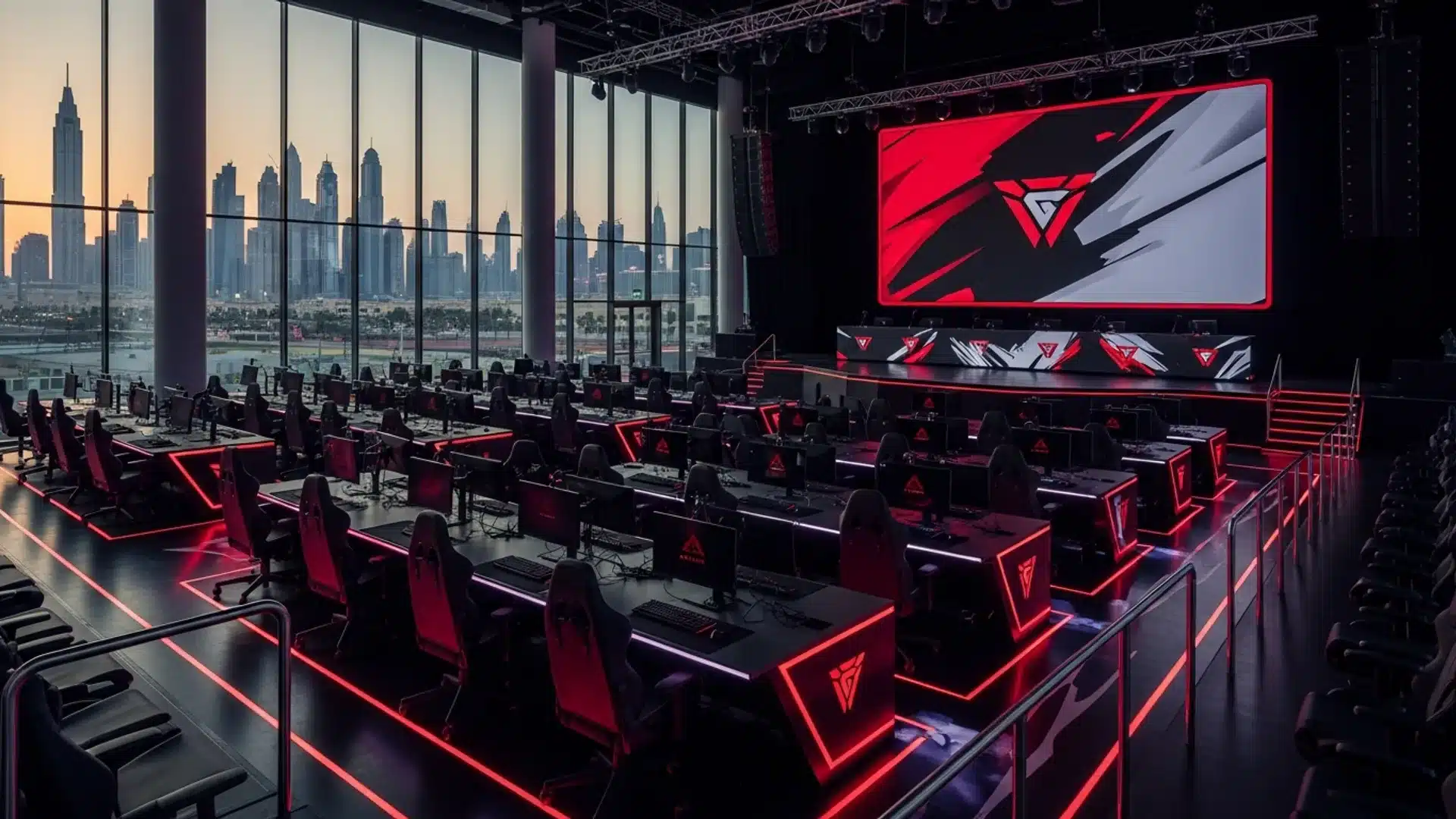
Gaming lounges and venues. A pay-to-play centre where customers use consoles, PCs or VR is an amusement or gaming café style activity. This is the most regulated model because it involves public premises, so expect municipality, civil defence and DET requirements plus fit-out costs.
Streaming, content and creator businesses. If you produce videos, livestreams, podcasts or manage creators, you are in media content production and digital publishing territory, ideally licensed through a media free zone.
Game development and software. Building games, engines, tools or backend platforms is a software development and IT activity. This overlaps heavily with the broader tech ecosystem, which is why many studios choose technology-focused free zones.
One firm rule applies across all categories: gambling and betting are prohibited in the UAE and cannot be licensed under any circumstances. Esports licences cover competition, entertainment, content and development only. Never build a model that relies on wagering, real-money gaming of chance, or casino-style mechanics.
Free Zone vs Mainland: Which Should You Choose?
This is the decision that shapes your cost, ownership and operating scope, so it deserves careful thought.
A free zone is a designated economic area with its own registration authority. Free zones offer 100% foreign ownership, streamlined digital setup, competitive packages and, in many cases, ready-made bundles that include a licence, a flexi-desk and a set number of visas. For an esports team, a content studio, a creator agency or a game developer, a free zone is usually the most efficient home. Relevant zones for gaming, media and tech include Dubai Internet City, Dubai Studio City, twofour54 in Abu Dhabi, Sharjah Media City (Shams), IFZA and Meydan Free Zone. Each has different activity lists, pricing and prestige, so matching the zone to your activity mix matters.
The mainland, licensed by the Dubai Department of Economy and Tourism (DET, formerly the DET), lets you operate anywhere in Dubai, including public retail and venue locations, and trade directly across the local market without a distributor. The reforms of recent years mean most commercial and professional activities now allow full foreign ownership on the mainland too, so the old requirement for a 51% local partner no longer applies to typical esports activities. The trade-off is that mainland setup often involves more approvals and a mandatory physical office, which raises cost.
The practical guidance: if your business is digital, choose a free zone. If your core is a physical, public-facing gaming venue in Dubai, the mainland via DET is frequently the cleaner route, because operating a public commercial space is squarely a mainland activity. Some founders even run a hybrid, holding a free zone company for content and IP and a separate mainland licence for the venue.
Choosing the Right Activities for Your Esports Licence
Activity selection is where esports setups succeed or stumble. Because there is no single esports code, you must list every action your business will perform. Get this right and your licence is future-proof; get it wrong and you face restrictions, top-up fees or, worse, operating outside your permitted scope.
Common activities that esports businesses combine include electronic games organisation, sports events management, software design and development, media content production, digital content publishing, advertising and marketing services, talent and artist management, and amusement or gaming centre operation. You will rarely need all of them. A content studio might combine media production, digital publishing and advertising. A developer might combine software development and IT services. A venue combines amusement activity with retail and food and beverage if it serves refreshments.
Be deliberate but not greedy. Adding activities you will never use can inflate fees and, for regulated activities such as media content and amusement, trigger external approvals you did not need. At the same time, under-listing forces expensive amendments later. A short scoping conversation with an experienced consultant almost always pays for itself here, because activity naming conventions differ between free zones and DET.
Step-by-Step: Setting Up Your Esports Company
Here is the typical journey from idea to trading licence.
1. Define the model and activities. Decide whether you are a team, organiser, venue, studio or developer, and list the exact activities. This drives every later step.
2. Select jurisdiction. Choose a free zone or the mainland based on the ownership, location and cost analysis above.
3. Reserve a trade name. Submit two or three name options that comply with UAE naming rules. Avoid names referencing gambling, offensive terms, or unauthorised use of another brand.
4. Prepare and submit documents. These usually include passport copies of shareholders, a business plan for some activities, and application forms. Regulated activities such as media content may need an activity-specific approval at this stage.
5. Receive initial approval and licence. Once documents clear, the authority issues your licence. Free zone licences can arrive within a few working days; mainland and venue-based licences take longer due to inspections and external clearances.
6. Secure premises. Take a flexi-desk, office or, for venues, a commercial unit. Physical venues then go through municipality and civil defence approvals.
7. Open a corporate bank account. Prepare a clear business description, expected turnover and shareholder details. Esports is well understood by UAE banks, but a tidy compliance file speeds things along.
8. Apply for visas and register for tax. Establishment card, immigration file and residence visas follow, along with corporate tax registration with the Federal Tax Authority.
Full Cost Breakdown for an Esports Business
Costs fall into predictable buckets, and understanding them prevents nasty surprises. The licence fee itself is only the starting point.
The licence package is your headline cost. Digital-focused free zone packages commonly start from around AED 12,500 and rise toward AED 30,000 or more depending on the zone, the number of activities and the included visa allocation. Prestige media and tech zones sit at the higher end, while cost-optimised zones such as IFZA and Meydan Free Zone are frequently chosen by early-stage founders.
Visas are the next line. Each residence visa typically costs between AED 3,000 and AED 6,000 once medical testing, Emirates ID and stamping are included. If you are bringing a full roster of players or a content team, multiply accordingly, and note that your package's visa quota is tied to your office type.
Premises vary enormously. A flexi-desk suits a small digital team and may be bundled into your package. A dedicated office adds annual rent. A physical gaming lounge is a different order of magnitude entirely, because fit-out, gaming hardware, furniture, air conditioning and interior approvals can run from tens of thousands to several hundred thousand dirhams depending on scale and location.
Approvals and add-ons include external approvals for regulated activities, name reservation, establishment card, document attestation, and optional services such as PRO support. For venues, municipality and civil defence approvals are mandatory and should be budgeted from the outset rather than treated as afterthoughts.
Finally, keep working capital for the softer costs: bank account minimum balances, accounting software, insurance, and the first months of salaries. A realistic all-in budget for a lean digital esports company is far lower than for a customer-facing venue, so be honest with yourself about which you are building.
Visas and the Golden Visa for Esports Talent
The UAE has actively positioned itself to attract gaming and creative talent, and its visa framework reflects that ambition.
A standard company setup lets you sponsor residence visas for shareholders and employees, with the number tied to your licence package and office space. This is how you bring players, coaches, analysts, editors and developers into the country legally and give them Emirates ID, banking access and the ability to sponsor family members.
Beyond standard visas, the Golden Visa offers long-term residence, typically ten years, to exceptional individuals. Its categories include specialists, coders and technical talent, creatives, and athletes, several of which map neatly onto the esports world. An elite competitive gamer, a widely followed content creator, or a senior game developer may qualify under the relevant talent, creative or sports category, subject to meeting the achievement thresholds and securing endorsement from the appropriate UAE authority. For a serious esports organisation, the ability to offer top talent a decade of stable residence is a genuine recruiting advantage over many other regions.
The practical takeaway is to plan visas early. Your choice of free zone package and office size directly caps how many people you can sponsor, so align that with your hiring roadmap from day one rather than scrambling to upgrade later.
Premises and Venue Rules for Gaming Lounges
If your model is a physical gaming lounge, arcade or esports arena, your regulatory picture is more involved than a digital business, and getting it right protects both your customers and your licence.
A public gaming venue must occupy approved commercial premises. That means the unit's zoning permits your activity, and the fit-out satisfies municipality and civil defence standards for safety, fire escapes, electrical load and crowd capacity. Because gaming lounges pack in electronics, cabling and often long operating hours, these inspections are taken seriously. Plan your layout with compliance in mind, not as an afterthought once the neon is installed.
Expect requirements around ventilation, emergency exits, accessibility, and sometimes operating-hour rules, particularly where minors are among your customers. If you serve food or drink, you add food safety approvals. If you host live events or spectators, additional event and crowd permits may apply. None of this is prohibitive, and thousands of entertainment venues operate happily across the UAE, but it does mean your timeline and budget must accommodate approvals and a professional fit-out. This is a major reason many venue operators choose the mainland through DET, since operating public commercial premises in Dubai is fundamentally a mainland activity.
Event Permits for Tournaments and Live Competitions
Running tournaments and live esports events is one of the most exciting parts of the sector, and the UAE is an established host for major gaming happenings, with events like GITEX and the broader Dubai technology calendar drawing global audiences. If you organise competitions, you will encounter event-specific requirements on top of your trade licence.
A ticketed or public event usually needs an event permit from the relevant authority, covering the venue, safety arrangements, crowd management and, where applicable, media and content approvals for anything broadcast or recorded. If your event features sponsorship activations, prize pools funded by entry fees, or streamed coverage, ensure each element sits within your licensed activities and the event permit's scope. Broadcasting and content elements may involve media approvals, which is why organisers often hold media content activities in their licence.
Prize pools are permitted as long as they reward skill-based competition and are not structured as gambling. This distinction matters: a tournament where players compete on skill for a sponsored prize is fine, while any format that resembles betting or paid games of chance is not. When in doubt, structure prizes as sponsor-funded rewards for performance and keep the model transparent.
Tax Treatment for UAE Esports Companies
Tax is often a pleasant surprise for founders arriving from higher-tax jurisdictions, but it still requires proper registration and record-keeping.
The UAE levies no personal income tax, so salaries, streaming income earned personally, and prize money received by individuals are not subject to income tax. This is a significant advantage for players and creators relocating to the country.
At the company level, UAE corporate tax applies at a rate of 9% on taxable profit above AED 375,000. Profit up to that threshold is effectively taxed at 0%, which shelters early-stage and smaller businesses. Crucially, registration is mandatory for all companies regardless of profit level, so you must register with the Federal Tax Authority (FTA) even if you expect to fall below the threshold. You can register and learn the current rules through the FTA at https://tax.gov.ae/. Some qualifying free zone businesses may access a 0% rate on qualifying income if they meet specific substance and activity conditions, but this is technical and should be confirmed for your exact situation rather than assumed.
Value Added Tax (VAT) at the standard rate may also apply to certain supplies once you cross the registration threshold, so factor VAT into your pricing for ticketing, merchandise and services. For authoritative government information on doing business, visas and services in the UAE, the official portal at https://u.ae/ is a reliable starting point. Because tax rules evolve and depend on your structure, a short session with a qualified advisor is money well spent, ensuring you register correctly and keep compliant books from day one.
How Long Does Setup Take?
Timelines depend almost entirely on your model. A digital free zone esports company, such as a team or content studio, can often be licensed within a few working days to around two weeks once your documents are in order and your activities are agreed. Bank account opening then adds a variable period, typically a couple of weeks, depending on the bank's compliance checks.
A mainland setup takes a little longer because of the additional approvals and mandatory office. A physical gaming venue is the longest journey, since premises selection, fit-out and municipality and civil defence approvals cannot be rushed and often span one to three months or more. The clearest way to protect your timeline is to prepare complete documentation, choose activities carefully so you avoid amendments, and sequence premises and approvals early rather than discovering requirements halfway through. Good preparation, more than anything else, is what turns a slow setup into a fast one.
Common Mistakes When Applying for an Esports Licence
Founders repeat the same avoidable errors. Steer clear of these and you will save weeks and thousands of dirhams.
- Assuming a single "esports licence" exists. It does not. You must assemble the correct activities for your specific model, and misunderstanding this leads to the wrong licence entirely.
- Under-listing or over-listing activities. Too few activities restrict what you can legally do; too many inflate fees and trigger unnecessary approvals. Scope precisely.
- Choosing the wrong jurisdiction. Trying to run a public gaming venue on a purely digital free zone licence, or over-paying for a mainland setup when a free zone would do, are both costly missteps.
- Ignoring venue approvals until late. Municipality and civil defence requirements for gaming lounges must be planned from the start, not bolted on after signing a lease.
- Forgetting mandatory FTA registration. Corporate tax registration is required even below the AED 375,000 threshold, and missing it risks penalties.
- Building any model that touches gambling. Betting and games of chance are prohibited and can never be licensed. Keep everything skill-based and transparent.
- Under-budgeting visas and premises. The licence fee is only the start; visas, office and, for venues, fit-out are where real costs sit.
- Skipping professional advice on activities and tax. A short consultation prevents expensive amendments and compliance errors later.
Set Up Your Esports Business with Noble Core
Launching an esports company in the UAE is genuinely achievable, but the difference between a smooth setup and a frustrating one comes down to getting the details right: the correct activities, the best-fit jurisdiction, an efficient visa plan and clean tax registration from day one. That is exactly where Noble Core Ventures adds value.
Our team structures your esports or gaming business end to end. We start by mapping your model to the precise licensed activities, then recommend whether a free zone or a mainland setup via DET serves you best. We handle the licence, corporate bank account introductions, residence and Golden Visa applications for your talent, and Federal Tax Authority registration, so nothing falls through the cracks.
Because esports sits at the intersection of technology, media and entertainment, we also help you plan adjacent capabilities. If your model leans on game development or backend platforms, our guidance on software company setup in Dubai and IT company setup in Dubai ensures your technical activities are correctly licensed. And if you plan to sell merchandise, in-game items or digital goods, our e-commerce license guidance makes sure your storefront is fully compliant.
Whether you are building a professional team, a tournament brand, a streaming studio, a game studio or a flagship gaming arena, we translate the regulations into a clear, costed plan and execute it with you. Book a free 20-minute consultation with Noble Core Ventures and let us turn your esports ambition into a licensed, tax-registered, visa-ready UAE company.
Talk to Our Experts
Noble Core structures your UAE esports or gaming company end-to-end: activity selection, free zone vs mainland, licence, visas and tax registration. Free 20-minute consultation.
Frequently Asked Questions
Is there a specific esports business license in the UAE?
No single esports licence exists. You choose activities such as electronic games organisation, software development, media content production or amusement gaming, then licence them through a free zone or DET on the mainland.
How much does an esports business license cost in the UAE?
Free zone packages commonly start from around AED 12,500 to AED 30,000. Mainland and physical gaming venues cost more once external approvals, premises and fit-out are added. Fees vary by activity and visa count.
Can I own 100% of my esports company in the UAE?
Yes. All UAE free zones allow 100% foreign ownership, and most mainland commercial and professional activities now permit full foreign ownership through DET as well, with no local partner required.
Which free zone is best for an esports startup?
Dubai Internet City, Dubai Studio City, twofour54, Sharjah Media City (Shams), IFZA and Meydan Free Zone are popular for gaming, media and tech activities. The best choice depends on activity mix and budget.
Do esports professionals qualify for the UAE Golden Visa?
Yes. Elite gamers, content creators and specialists may qualify under talent, creative or athlete categories. Approval depends on achievements, recognition and endorsement from the relevant UAE authority.
Is online gambling or betting allowed under an esports licence?
No. Gambling and betting are prohibited in the UAE and cannot be licensed. Esports licences cover competition, teams, content, venues and game development only, never wagering.
How long does it take to set up an esports company in the UAE?
A free zone licence can be issued in a few working days to about two weeks. Mainland setups and physical gaming venues take longer because of external approvals and premises inspections.
Do esports companies pay tax in the UAE?
There is no personal income tax. UAE corporate tax of 9% applies to taxable profit above AED 375,000. All companies must register with the Federal Tax Authority regardless of profit level.
Do I need a physical office for an esports licence?
A digital or content business can often use a free zone flexi-desk. A gaming lounge or venue needs approved commercial premises meeting municipality, civil defence and DET requirements.
Contact Us For Free Consultation
Licensed UAE consultancy. One reply, no spam.
Thank you.
A consultant will reply on WhatsApp shortly.